
About Paul Weiss
Lived 1901 – 2002 (aged 101). Paul Weiss was an American philosopher and university teacher.
Paul Weiss (; May 19, 1901 – July 5, 2002) was an American philosopher. He was the founder of The Review of Metaphysics and the Metaphysical Society of America.
Early life and education Paul Weiss grew up on the Lower East Side of New York City. His father, Samuel Weiss (d. 1917), was a Jewish emigrant who moved from Europe in the 1890s. He worked as a tinsmith, a coppersmith, and a boilermaker. Paul Weiss's mother, Emma Rothschild (Weiss) (d. 1915), was a Jewish emigrant who worked as a servant until she married Samuel. Born into a Jewish family, Paul lived among other Jewish families in a working-class neighborhood in the Yorkville section of Manhattan. Originally given the Hebrew name "Peretz," Weiss says in his autobiography that the name "Paul" was his "registered name" and "part of his mother's attempt to move upward in the American world." He had three brothers, two older and one younger.
Weiss graduated from Public School #77. He later enrolled at the High School of Commerce where he learned shorthand and how to type; however, he felt that he did not benefit much from the available courses. His grades began to fall, and with a little encouragement from his mother, he eventually dropped out of high school. The first six volumes of Peirce's work would eventually be published between 1931 and 1935. Weiss was mainly responsible for the second, third, and fourth volumes. Two more volumes, both edited by Arthur Burks, would later appear in the 1950s.
Teaching In 1931 Paul Weiss left Harvard and began teaching philosophy at Bryn Mawr. As Weiss explains, Bryn Mawr was at the time "the self-chosen destination of the most intellectual, intelligent, determined, and well-prepared young women in America." During his prime, Weiss maintained a style of philosophy that was considered by many to be out-of-date. Weiss was opposed to various philosophies that were popular at the time, including that of the analytics, that of the logical positivists, and that of the Marxists. His was a philosophy which engaged in grand-scale philosophical system-building, much in the style of Kant, Hegel, or Peirce.
As a philosopher, Weiss's students reported that he could be "fierce in argument" while maintaining "gentleness" and "personal regard for his students." John Silber, one of Weiss's former students, said of him, "In order to study philosophy with Paul, one had to philosophize. And Paul's dialectical powers gave credence to Plato's account of those powers exercised by Socrates himself."
Death Weiss died on July 5, 2002 at the age of 101. His final book, Surrogates, was published shortly after his death. Most of Weiss's papers were donated to the Morris Library at Southern Illinois University Carbondale. After his death, his remaining papers and his extensive library (and also the legal papers, French and Russian translations, novels, and other non-fiction books of his son) were bequeathed to the Institute for American Thought housed at Indiana University–Purdue University Indianapolis (IUPUI) and the IUPUI University Library.
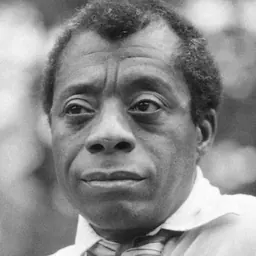
In popular media In a June 13, 1968, guest appearance on the nationally televised The Dick Cavett Show, Weiss argued that fellow guest James Baldwin was excessively focused on the Black experience. The exchange was featured in Raoul Peck's documentary I Am Not Your Negro, and described by media reviewer A. O. Scott: the "initial spectacle of mediocrity condescending to genius is painful, but the subsequent triumph of [Baldwin's] self-taught brilliance over credentialed ignorance is thrilling to witness".
Don’t just read it —
keep it.
Full-length biographies made to live with: read them, listen on the way to work, watch them tonight.
- E-book
- Audio
- Video
Instant download · yours to keep · every purchase keeps this site free
Important facts
People in Paul Weiss's life
Named in this biography and alive at the same time





Related people
Same field, nearest in time


Contemporaries
People whose lives overlapped Paul Weiss's


Frequently asked questions
Who was Paul Weiss?
American philosopher (1901–2002)
When was Paul Weiss born?
Paul Weiss was born on 19 May 1901 in New York City.
When did Paul Weiss die?
Paul Weiss died on 5 July 2002 in Washington, D.C..
What was Paul Weiss's occupation?
Paul Weiss was a philosopher and university teacher.
What nationality was Paul Weiss?
Paul Weiss was American.
Sources & further reading
· DBpedia: Paul Weiss (philosopher)
Cite this page
APA: Biography.guide. (2026). Paul Weiss. https://biography.guide/paul-weiss-philosopher/
MLA: "Paul Weiss." Biography.guide, https://biography.guide/paul-weiss-philosopher/.
Chicago: "Paul Weiss." Biography.guide. https://biography.guide/paul-weiss-philosopher/.
Data last updated: 2026-09-20 · Spot an error? Report a correction.
Page generated 2026-09-27 05:08 UTC