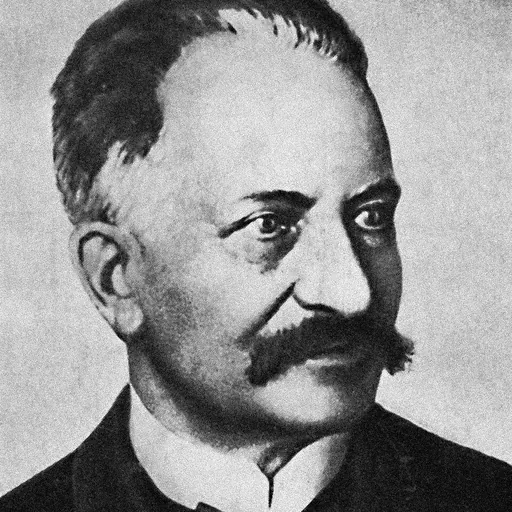
About Paul Walden
Lived 1863 – 1957 (aged 93). Paul Walden was a German, Latvian and Russian chemist, inventor, university teacher and historian of science, known for Conductivity (electrolytic), Ethylammonium nitrate and Walden inversion.
Paul Walden (; ; ; 26 July 1863 – 22 January 1957) was a Russian, Latvian and German chemist known for his work in stereochemistry and history of chemistry. In particular, he discovered Walden's rule, he invented the stereochemical reaction known as Walden inversion and synthesized the first room-temperature ionic liquid, ethylammonium nitrate.
Early life and education Walden was born in Rozulas in the Russian Empire (now Stalbe parish, Pārgauja municipality, Latvia) in a large Latvian peasant family. At the age of four, he lost his father and later his mother. Thanks to financial support from his two older brothers who lived in Riga (one was a merchant and another served as a lieutenant in the military) Walden managed to complete his education – first graduated with honors from the district school in the town of Cēsis (1876), and then from the Riga Technical High School (1882).
In December 1882, he enrolled into the Riga Technical University and became seriously interested in chemistry. In 1886, he published his first scientific study on the color evaluation of the reactions of nitric and nitrous acid with various reagents and establishing the limits of sensitivity of the color method to detection of nitric acid.
In April 1887, Walden became an active member of the Russian Physico-chemical Society. During this time, Walden started his collaboration with Wilhelm Ostwald (Nobel Prize in Chemistry 1909) which greatly influenced his development as a scientist. Their first work together was published in 1887 and was devoted to the dependence of the electrical conductivity of aqueous solutions of salts on their molecular weight.
Work in chemistry In 1888, Walden graduated from the university with a degree in chemical engineering and continued working at the Chemistry Department as an assistant to professor C. Bischof.
Under his guidance, Walden began compiling "Handbook of Stereochemistry" which was published in 1894. In preparation of this handbook, Walden had to perform numerous chemical syntheses and characterizations which resulted in 57 journal papers on stereochemistry alone, published between 1889 and 1900 in Russian and foreign journals 57 articles on the stereochemistry. He also continued his research in the field of physical chemistry, establishing in 1889 that the ionizing power of non-aqueous solvent is directly proportional to the dielectric constant.
During the summer vacations of 1890 and 1891, Walden was visiting Ostwald at the University of Leipzig and in September 1891 defended there a master thesis on the affinity values of certain organic acids. Ostwald suggested that he stay in Leipzig as a private lecturer, but Walden declined, hoping for a better career in Riga. This topic became the basis for his habilitation thesis defended in March 1899 at St. Petersburg University.
After 1915, due to the difficulties caused by the World War I, political unrest in Russia and then October Revolution, Walden had reduced his research activity and focused on teaching and administrative work, taking numerous leading positions in science. Due to the political unrest in Latvia, Walden had immigrated to Germany. He was appointed as professor of inorganic chemistry at the University of Rostock where he worked until retirement in 1934. In 1924 he was invited back to Riga, where he gave a series of lectures. He was offered leading positions in chemistry in Riga and in St. Petersburg, but declined. Despite his emigration, Walden retained his popularity in Russia, and in 1927 he was appointed as a foreign member of the Russian Academy of Sciences. Later, he also became a member of the Swedish (1928) and Finnish (1932) Academies.
Don’t just read it —
keep it.
Full-length biographies made to live with: read them, listen on the way to work, watch them tonight.
- E-book
- Audio
- Video
Instant download · yours to keep · every purchase keeps this site free
Important facts
People in Paul Walden's life
Named in this biography and alive at the same time
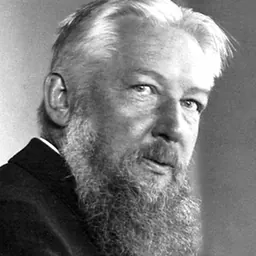
Related people
Same field, nearest in time



Contemporaries
People whose lives overlapped Paul Walden's



Frequently asked questions
Who was Paul Walden?
Baltic German chemist (1863-1957)
When was Paul Walden born?
Paul Walden was born on 14 July 1863 in Livonia Governorate.
When did Paul Walden die?
Paul Walden died on 22 January 1957 in Gammertingen.
What was Paul Walden's occupation?
Paul Walden was a chemist, inventor, university teacher and historian of science.
What was Paul Walden known for?
Paul Walden was known for Conductivity (electrolytic), Ethylammonium nitrate and Walden inversion.
What nationality was Paul Walden?
Paul Walden was German, Latvian and Russian.
Sources & further reading
Cite this page
APA: Biography.guide. (2026). Paul Walden. https://biography.guide/paul-walden/
MLA: "Paul Walden." Biography.guide, https://biography.guide/paul-walden/.
Chicago: "Paul Walden." Biography.guide. https://biography.guide/paul-walden/.
Data last updated: 2026-09-20 · Spot an error? Report a correction.
Page generated 2026-09-27 05:09 UTC