
About Paul ten Bruggencate
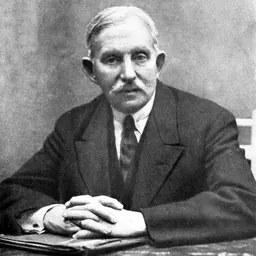
Lived 1901 – 1961 (aged 60). Paul ten Bruggencate was a German astronomer, university teacher and astrophysicist.
Paul ten Bruggencate (24 February 1901 – 14 September 1961) was a German astronomer and astrophysicist.
Youth and education Ten Bruggencate was born in Arosa, Switzerland, and went to several schools in Switzerland, in the Netherlands and in Germany. He further studied at the Ludwig-Maximilians-Universität München and started his PhD work with Hugo von Seeliger. However, due to health problems, Seeliger had to hand over the supervision of his PhD students to Hans Kienle.
Ten Bruggencate graduated from the Ludwig-Maximilians-Universität München and in 1924, together with Hans Kienle, moved to the Göttingen University Observatory. Ten Bruggencate stayed as an assistant at the Göttingen University until 1926, when he traveled to Java. He worked there with the Dutch astronomer Joan Voûte at the Bosscha Observatory near Lembang and started a survey of Cepheid variable stars. After two years at the Bosscha Observatory, he visited the Mt. Wilson Observatory and the Harvard College Observatory In the United States. In 1929, he moved to the University of Greifswald in northern Germany, where he finished his habilitation on Cepheid variable stars in 1935. Most of this work was based on the observations carried out in Lembang.
Academic career Ten Bruggencate became chief astronomer at the Potsdam Observatory in 1935. The most valuable equipment at that time at Potsdam was the solar telescope in the Einstein Tower. From that time on, the main focus of ten Bruggencate's research became the Sun. In 1941, during World War II, ten Bruggencate became the director at the Göttingen University Observatory. In pursuing his interest in observing the Sun, he looked for a new solar telescope. The already existing observatory at the Hainberg, southeast of Göttingen, provided the best location within the surrounding area. The interest of the military in the effect of the Sun on short wave radio communication made it possible to build this observatory during the war. Military patronage and ten Bruggencate's profound knowledge of the solar telescope in Potsdam assisted construction of the new telescope.
After the war, the observations were continued. Ten Bruggencate established a second solar observatory in Switzerland where the weather conditions were more favorable compared to the often cloudy skies over Germany. The Locarno Observatory was planned and built in the late 1950s. Ten Bruggencate was the president of the Academy of Sciences Göttingen from 1958 until 1961. Teide Observatory also hosts telescopes of the Kiepenheuer Institute for Solar Physics.
The crater Ten Bruggencate on the Moon is named after him.
Don’t just read it —
keep it.
Full-length biographies made to live with: read them, listen on the way to work, watch them tonight.
- E-book
- Audio
- Video
Instant download · yours to keep · every purchase keeps this site free
Important facts
People in Paul ten Bruggencate's life
Named in this biography and alive at the same time

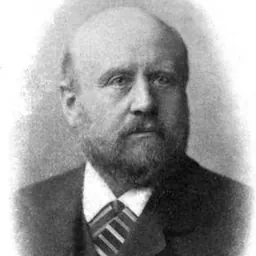
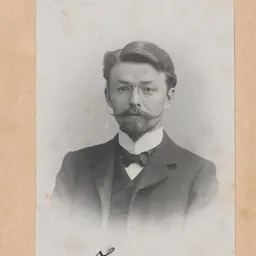
Related people
Same field, nearest in time
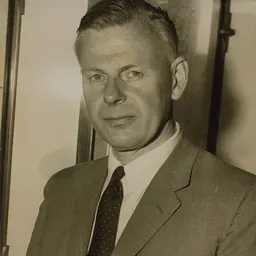

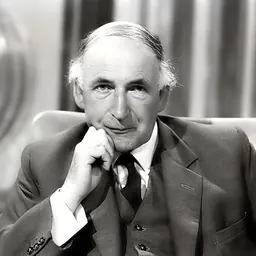


Contemporaries
People whose lives overlapped Paul ten Bruggencate's



Frequently asked questions
Who was Paul ten Bruggencate?
German astronomer (1901–1961)
When was Paul ten Bruggencate born?
Paul ten Bruggencate was born on 24 February 1901 in Arosa.
When did Paul ten Bruggencate die?
Paul ten Bruggencate died on 14 September 1961 in Göttingen.
What was Paul ten Bruggencate's occupation?
Paul ten Bruggencate was an astronomer, university teacher and astrophysicist.
What nationality was Paul ten Bruggencate?
Paul ten Bruggencate was German.
Sources & further reading
· Wikipedia: Paul ten Bruggencate
· DBpedia: Paul ten Bruggencate
Cite this page
APA: Biography.guide. (2026). Paul ten Bruggencate. https://biography.guide/paul-ten-bruggencate/
MLA: "Paul ten Bruggencate." Biography.guide, https://biography.guide/paul-ten-bruggencate/.
Chicago: "Paul ten Bruggencate." Biography.guide. https://biography.guide/paul-ten-bruggencate/.
Data last updated: 2026-09-20 · Spot an error? Report a correction.
Page generated 2026-09-27 05:30 UTC