
About Paul Slovic
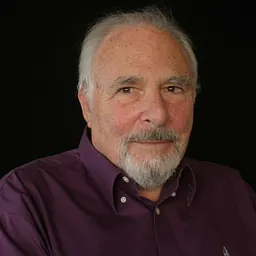
Born 1938. Paul Slovic is an American psychologist and university teacher, known for Behavioural sciences, Communication sciences and Risk analysis.
Paul Slovic (born 1938) is an American Emeritus professor of psychology at the University of Oregon and the president of Decision Research, a collection of scientists from all over the nation and in other countries that study decision-making in times when risks are involved. He was also the president for the Society of Risk Analysis until 1984. He earned his undergraduate degree at Stanford University in 1959 and his PhD in psychology at the University of Michigan in 1964 and has received honorary doctorates from the Stockholm School of Economics and the University of East Anglia. He is past president of the Society for Risk Analysis and in 1991 received its Distinguished Contribution Award. In 1993, he received the Distinguished Scientific Contribution Award from the American Psychological Association, and in 1995 he received the Outstanding Contribution to Science Award from the Oregon Academy of Science. In 2016 he was elected to the National Academy of Sciences.
Slovic studies human judgment, decision making, and risk perception, and has published extensively on these topics. He is considered, with Baruch Fischhoff and Sarah Lichtenstein, a leading theorist and researcher in the risk perception field (the psychometric paradigm, the affect heuristic, and "risk as feeling" ).
His most recent work examines “psychic numbing” and the failure to respond to mass human tragedies.
Major theories
Affect Heuristic - this is the ability to make a quick emotional decision in time of crisis. Slovic says that even if there is a bad situation, if we have positive feelings toward something it lowers people's perception of risks but enhances their perception of benefits.
Slovic contributed towards the psychometric paradigm of risk perception. He found that people usually perceived most activities as having a high risk. He also found that if someone gained pleasure from something they saw the risk level being low. This shows that risk levels can depend on the individual's personal belief and emotions of a specific risk.
Psychophysical Numbing - this is the idea that people are not as affected by the loss of life depending on how it is presented. Slovic says that people cannot connect on an emotional level when being presented with large numbers.
Publications
In "Perception of Risk Posed by Extreme Events", Slovic discusses what research says about people's perceived risk when associated with extreme events. The way people think action should take place is based on their perceptions. These perceptions can vary from people's status, background, education, biology, etc. The different perceptions decide how risky a choice of action is in extreme events over another. Risk perceptions are connected between emotions and reason, which creates rational behavior. Slovic explains what risk actually is. He says it is a hazard, probability, it has consequences, and threat. Since it has so many subjective meanings tied to it, it often causes communication failure. Risk perceptions are studied in three major ways: axiomatic measurement paradigm, socio-cultural paradigm, and psychometric paradigm. The axiomatic measurement looks at how people view consequences of a risky choice and how it might impact their lives. The Socio-cultural looks at the “effect of group and culture level variable on risk perception”. Psychometric paradigm looks at how people react emotionally to a risky situation that “affects judgments of the riskiness of physical, environmental and material risk”. but we have continued to have instances of genocide all over the world. America has reacted poorly to genocide. There are no ramifications to political figures if they choose to stay out of the conflict. He also looks at how the media does not do a great job of reporting the news. They are focused on other issues that are emphasizing the bigger problems. When discussing his psychological research he says how all other factors do not matter without “affect”. Affect is what tells us if something is right or wrong. “If activated feelings are pleasant, they motivate actions to reproduce the feelings. If the feelings are unpleasant, they motivate actions and thoughts anticipated to avoid the feelings” Through his study he looked at how people view as a perceived risk and what determines risk perception. By the end of his research he concluded that “perceived risk is quantifiable and predictable”. Not only is there a difference in perception between experts and public but also the people within the public differ as well. He found that when there is a higher perceived risk it causes higher desired reduction of that risk.
Don’t just read it —
keep it.
Full-length biographies made to live with: read them, listen on the way to work, watch them tonight.
- E-book
- Audio
- Video
Instant download · yours to keep · every purchase keeps this site free
Important facts
People in Paul Slovic's life
Named in this biography and alive at the same time

Related people
Same field, nearest in time





Contemporaries
People whose lives overlapped Paul Slovic's




Frequently asked questions
Who is Paul Slovic?
American psychologist
When was Paul Slovic born?
Paul Slovic was born on 26 January 1938 in Chicago.
What is Paul Slovic's occupation?
Paul Slovic is a psychologist and university teacher.
What is Paul Slovic known for?
Paul Slovic is known for Behavioural sciences, Communication sciences, Risk analysis and Risk perception.
What nationality is Paul Slovic?
Paul Slovic is American.
Sources & further reading
Cite this page
APA: Biography.guide. (2026). Paul Slovic. https://biography.guide/paul-slovic/
MLA: "Paul Slovic." Biography.guide, https://biography.guide/paul-slovic/.
Chicago: "Paul Slovic." Biography.guide. https://biography.guide/paul-slovic/.
Data last updated: 2026-09-20 · Spot an error? Report a correction.
Page generated 2026-09-27 05:31 UTC