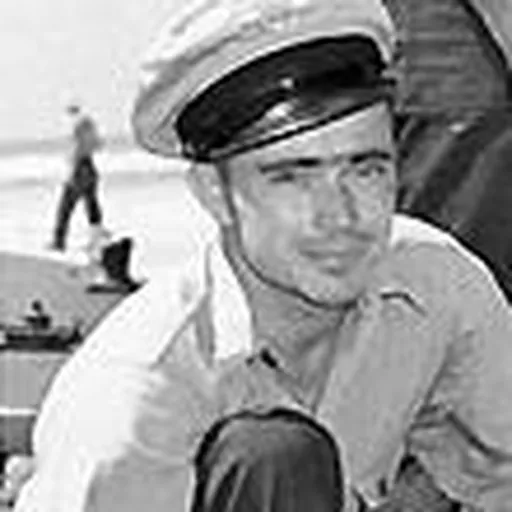
About Paul Saunders
Lived 1918 – 2003 (aged 85). Paul Saunders was an American military personnel.
Paul Golden (Swish) Saunders (January 12, 1918 – August 8, 2003) was a highly decorated United States Navy submarine sailor who was twice awarded the Silver Star medal during World War II.
Naval career Saunders enlisted in the Navy in 1936 and served for 26 years before retiring as GMGC(SS) (Chief Gunners Mate Guns, Submarine Service) in 1962. Prior to submarines, Chief Saunders served on the light cruiser USS Raleigh (CL-7) and on destroyers McCook (DD-252) and (DD-394).
Saunders qualified in submarines aboard R-4 (SS-81) in 1940 and subsequently served in Barb (SS-220), Cusk (SS-348), Carbonero (SS-337), and Theodore Roosevelt (SSBN-600).
The only landing of US military forces on the island of Japan during hostilities included Saunders. The landing party destroyed a 16-car train on the coastal railway with an explosive charge, using a microswitch under the rails to trigger the explosion.
He was one of the most decorated enlisted men in the Submarine Service, distinguishing himself during World War II while serving on board the Barb. Saunders made all twelve of Barb’s war patrols, five in the Atlantic and seven in the Pacific and was chief of the boat (COB) for patrols #9–12. He was also COB for the submarines Cusk, Carbonero and Theodore Roosevelt.
He was featured in the book Thunder Below by his USS Barb skipper, Admiral Eugene B. Fluckey.
Awards
During his career, Saunders was awarded the following:
Submarine Qualification pin Submarine Combat pin Silver Star with gold star in lieu of second award Bronze Star Medal with Combat V Letter of Commendation with Ribbon (later converted to the Navy Commendation Medal) with Combat V Presidential Unit Citation with three bronze stars in lieu of additional awards Navy Unit Commendation Navy Good Conduct Medal with silver service star American Defense Service Medal with "A" Device American Campaign Medal European-African-Middle Eastern Campaign Medal with one bronze service star Asiatic-Pacific Campaign Medal with one silver and two bronze service stars World War II Victory Medal National Defense Service Medal Philippine Liberation Ribbon
Post naval career
Post World War II found Saunders working in the development of the launching systems for KGW-1 Loon, which was an adaptation of the US Army's JB-2 Doodle Bug, Regulus, and Polaris missiles.
Saunders was a member of Submarine Veterans of World War II and also a member of United States Submarine Veterans, Inc., Nautilus Base.
Don’t just read it —
keep it.
Full-length biographies made to live with: read them, listen on the way to work, watch them tonight.
- E-book
- Audio
- Video
Instant download · yours to keep · every purchase keeps this site free
Important facts
People in Paul Saunders's life
Named in this biography and alive at the same time
Related people
Same field, nearest in time
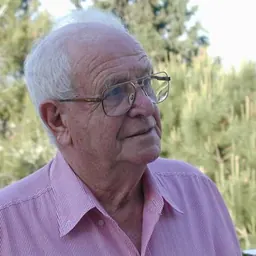



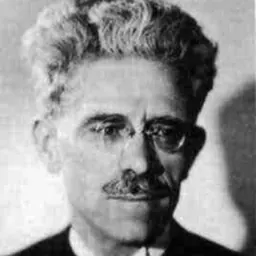
Contemporaries
People whose lives overlapped Paul Saunders's





Frequently asked questions
Who was Paul Saunders?
United States Naval officer (1918-2003)
When was Paul Saunders born?
Paul Saunders was born on 12 January 1918 in Richmond.
When did Paul Saunders die?
Paul Saunders died on 8 August 2003 in Dunnellon.
What was Paul Saunders's occupation?
Paul Saunders was a military personnel.
What nationality was Paul Saunders?
Paul Saunders was American.
Sources & further reading
Cite this page
APA: Biography.guide. (2026). Paul Saunders. https://biography.guide/paul-saunders/
MLA: "Paul Saunders." Biography.guide, https://biography.guide/paul-saunders/.
Chicago: "Paul Saunders." Biography.guide. https://biography.guide/paul-saunders/.
Data last updated: 2026-09-23 · Spot an error? Report a correction.
Portrait: Wikimedia Commons · author & licence
Page generated 2026-09-27 05:07 UTC