
About Paul Paray
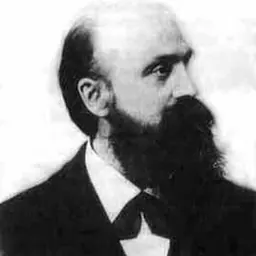
Lived 1886 – 1979 (aged 93). Paul Paray was a French conductor, composer, organist and musician.
Paul Marie-Adolphe Charles Paray (French: [pɔl paʁɛ]; 24 May 1886 – 10 October 1979) was a French conductor, organist and composer. After winning France's top musical award, the Prix de Rome, he fought in the First World War and was a prisoner of war for nearly four years. He held a succession of chief conductorships, including those of the Lamoureux and Colonne Orchestras in Paris and the Monte-Carlo Philharmonic Orchestra in Monaco. For ten years from 1952 he was chief conductor of the Detroit Symphony Orchestra, with which he made a celebrated series of recordings for Mercury Records' "Living Presence" series, many of which have been digitally released in the 21st century.
Life and career Early years Paul Paray was born in Le Tréport, Normandy, on 10 October 1886, the second son and youngest of three children of Auguste Paray and his wife Hortense Picard. Auguste's principal occupation was as an ivory sculptor, but he was also a working musician – organist of the church of Saint-Jacques au Tréport and musical director of the town’s municipal band and theatre. He gave his three children their first music lessons. Both sons sang in the choir of Rouen Cathedral, for which, aged fourteen, Paray composed his first Magnificat, which his biographer David Patmore writes has remained in the choir's repertoire ever since. He played the piano, cello and timpani, After compulsory military service, not far from his home, in an infantry regiment in Dieppe, he accepted in 1909 the position of piano accompanist in the Parisian Cabaret des Quat'z'Arts an establishment directed by Gabriel Montoya. There he met Maurice Yvain, and became friends with several famous chansonniers of the time.
Prix de Rome and First World War In 1911 Paray competed for France's most prestigious musical prize, the Prix de Rome and was awarded first prize for his cantata Yanitza by a jury that included Gabriel Fauré – director of the Conservatoire – and other composers including Camille Saint-Saëns, Charles-Marie Widor and Gabriel Pierné.
The Prix de Rome brought with it two years' residence and study at the Villa Medici, the French Academy in Rome. Shortly after his return to Paris the First World War broke out and Paray was conscripted into the French army.
Conductor After his release, Paray conducted professionally for the first time at the Casino in Cauterets, and shortly afterwards, on Pierné's recommendation, he made his début with the Lamoureux Orchestra in Paris Paray was elected to succeed him. They also performed with several well-known solo players who were making their Paris débuts, including Jascha Heifetz, Nathan Milstein and Yehudi Menuhin. While with the Colonne Orchestra, Paray engaged in a celebrated dispute with the music critic Émile Vuillermoz, who complained in print in 1935 about what he saw as the frequent inadequacy of the performances of new works at symphony concerts. From the Colonne platform Paray denounced Vuillermoz as hypocritical and venal.
1939–1952 The French government sent Paray to America to represent France at the 1939 World’s Fair, conducting the New York Philharmonic Orchestra. He made a sufficiently strong impression to be offered the post of co-conductor of the NBC Symphony Orchestra with Toscanini, but chose to return to France, just as the Second World War was about to start.
Paray married his long-term partner, Yolande Falck in 1942. Returning to Paris after the Liberation he once again directed the Colonne Orchestra between 1945 and 1952. He toured Europe with the Vienna Philharmonic. He conducted the Israel Philharmonic Orchestra in 1949 and was invited back every year, continuing to appear with the orchestra until shortly before his death. Following a successful appearance in America in 1951 with the recently reconstituted Detroit Symphony Orchestra, he was appointed as the orchestra’s chief conductor with effect from 1952. He retired from the chief conductorship at Detroit in 1962 and was given the title of Emeritus Conductor. He returned to the orchestra for four weeks each year, from his home in Monte Carlo. The New York Times said of him, "He was credited with establishing the Detroit Symphony as a thoroughly professional ensemble of national stature, and within two years after taking it over, he brought it to New York for its first concert here". The same paper remarked "Mr Paray limited his conducting of 20th‐century works to those of a conservative stamp".
Honours Paray was elected to the Académie des Beaux-Arts in 1950. His awards included a doctorate of law from Wayne State University, the City Medal from Tel Aviv, and honorary citizenships of Detroit, Diemeringen, Le Tréport and Monaco. He was named a Grand Officer of the Order of Grimaldi in 1967, and awarded the Grand Cross of the National Order of Merit in 1971. In the Legion of Honour, like Saint-Saëns and Fauré before him, he was promoted to the highest rank, Grand Cross.
Selected works
Stage Yanitza, Scène lyrique d'après une légende albanaise (1911); poem by Artémis troublée, ballet by Ida Rubinstein, costumes by Léon Bakst (1911–1912)
Orchestral Symphonie d'archets for string orchestra (1919); orchestration of the string quartet Nocturne for chamber orchestra Symphony No. 1 in C major (1934) Symphony No. 2 in A major (1936)
Concertante Fantaisie for piano and orchestra (1909) Humoresque for violin and chamber orchestra (1910)
Chamber music Piano Trio (1905) Sérénade for violin (or flute) and piano (1908) Sonata in C minor for violin and piano (1908) Humoresque for violin and piano (or chamber orchestra) (1910) Nocturne for violin (or cello) and piano (1910) String Quartet in E minor (1919) Sonata No. 1 in B major for cello and piano (1919) Sonata No. 2 in C major for cello and piano
Piano Tarantelle Scherzetto Impromptu Vertige Incertitude Entêtement Berceuse Valse-caprice (1906) Romance (1909) Portraits d'enfants (1910) Valse sur un thème de Franz Schubert (1911) Impressions (1912) Nostalgie Eclaircie Primesaut Reflets romantiques (1912) Avec esprit et charme Ardemment En rêvant Avec fougue Souple Léger Tender Energique Sept pièces (1913) Presto (1913) Prélude, scherzo et allegro Thème et variations (1913) Prélude in F major (1913) Allegro (1913) Scherzo (1913) D'une âme... (1914) Pieces for piano 4-hands (1914) Éclaircie (1923) Prélude (1930) Allegretto Prélude en mi bémol mineur Prélude en fa mineur Sur la mer Valse en fa dièse mineur Valse en fa mineur Vertige La vraie furlana
Vocal Nuit d'Italie for voice and piano; words by Paul Bourget Laurette for voice and piano; words by Alfred de Vigny Sépulcre for voice and piano; words by Leon Volade Paroles à la lune for voice and piano (1903); words by Anna de Noailles Panis Angelicus for voice and cello (1904) Dans les bois for voice and piano (1904); words by Gérard de Nerval La Promesse for voice and piano or orchestra (1910); words by Gabriel Montoya La Plainte for voice and piano or orchestra (1911); words by Lucien Paté Le Papillon for voice and piano or orchestra (1911); words by Jean Aicard Le Champ de bataille (1912); words by Théophile Gautier Trois Mélodies for voice and piano or orchestra (1912); words by Théophile Gautier Infidélité La Dernière feuille Serment Villanelle for voice and piano or orchestra (1912); words by Théophile Gautier Chanson violette for voice and piano or orchestra (1913); words by Albert Samain Le Chevrier for voice and piano or orchestra (1913); words by José-Maria de Heredia Il est d'étranges soirs for voice and piano or orchestra (1913) words by Albert Samain Viole for voice and piano (1913); words by Albert Samain In manus tuas for voice, oboe and organ (1914) Quatre poèmes de Jean Lahor for voice and piano or orchestra (1921) Après l'orage Adieux Après le bal Dèsir de mort Vocalise-étude for medium voice and piano (1924) Le Poèt et la muse for voice and piano; words by E. Thévenet L'Embarquement pour l'idéal for voice and piano; words by Catulle Mendès Mortes les fleurs for voice and piano; words by P. May Chanson napolitaine for voice and piano; words by P. May
Choral Os Justi, Offertorium for chorus and organ (1903) Acis et Galatée, Cantata (1910) Jeanne d'Arc, Oratorio (1913); words by Gabriel Montoya Salve Regina for chorus a cappella (1929) Messe du cinquième centenaire de la mort de Jeanne d'Arc (Mass for the Fifth Centenary of the Death of Joan of Arc) for soloists, chorus and orchestra (1931) Nuit tombante for chorus and orchestra Pastorale de Noël pour for soloists, chorus and orchestra Soleils de septembre for chorus and orchestra
Source: Cercle Paul Paray.
Don’t just read it —
keep it.
Full-length biographies made to live with: read them, listen on the way to work, watch them tonight.
- E-book
- Audio
- Video
Instant download · yours to keep · every purchase keeps this site free
Important facts
People in Paul Paray's life
Named in this biography and alive at the same time



Related people
Same field, nearest in time


Contemporaries
People whose lives overlapped Paul Paray's


Frequently asked questions
Who was Paul Paray?
French conductor (1886-1979)
When was Paul Paray born?
Paul Paray was born on 24 May 1886 in Le Tréport.
When did Paul Paray die?
Paul Paray died on 10 October 1979 in Monte Carlo.
What was Paul Paray's occupation?
Paul Paray was a conductor, composer, organist and musician.
What nationality was Paul Paray?
Paul Paray was French.
Sources & further reading
Cite this page
APA: Biography.guide. (2026). Paul Paray. https://biography.guide/paul-paray/
MLA: "Paul Paray." Biography.guide, https://biography.guide/paul-paray/.
Chicago: "Paul Paray." Biography.guide. https://biography.guide/paul-paray/.
Data last updated: 2026-09-20 · Spot an error? Report a correction.
Page generated 2026-09-27 05:23 UTC