
Paul Oskar Kristeller
German-American philosopher and art historian
About Paul Oskar Kristeller
Lived 1905 – 1999 (aged 94). Paul Oskar Kristeller was a German and American cultural historian, pedagogue, philosophy historian, philosopher, art historian and university teacher.
Paul Oskar Kristeller (May 22, 1905 in Berlin – June 7, 1999 in New York, United States) was a scholar of Renaissance humanism. He was awarded the Haskins Medal in 1992. He was last active as Professor Emeritus of Philosophy at Columbia University in New York, where he mentored both Irving Louis Horowitz and A. James Gregor.
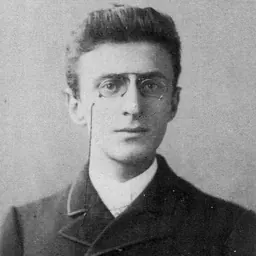
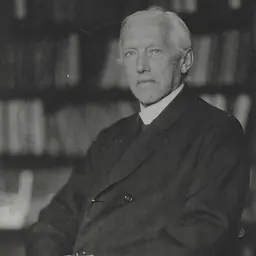
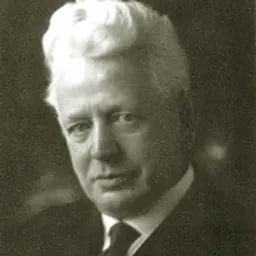
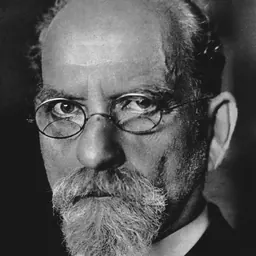
Life and career During his university years he studied with Werner Jaeger, Heinrich Rickert, Richard Kroner, Karl Hampe, Friedrich Baethgen, Eduard Norden, and Ulrich von Wilamowitz-Moellendorff. He also attended lectures by noted philosophers such as Ernst Cassirer, Edmund Husserl, and Karl Jaspers. In 1928, he earned his doctorate from the University of Heidelberg under Ernst Hoffmann with a dissertation on Plotinus. He did postdoctoral work at the universities of Berlin and Freiburg. At Freiburg, Kristeller studied under the philosopher Martin Heidegger from 1931 to 1933.
The Nazi victory in 1933 forced Kristeller to move to Italy. At his arrival, Giovanni Gentile secured for him a position as lecturer in German at the Scuola Normale Superiore in Pisa. It was at the Scuola Normale that Kristeller completed his first great works on the Renaissance: the Supplementum Ficinianum (1937) and The Philosophy of Marsilio Ficino (1943). In 1939, he fled Italy, due to the enactment of Mussolini's August 1938 racial laws, to live in the USA. Thanks to the help of Yale University historian Roland Bainton, he sailed from Genoa in February 1939 and by March was teaching a graduate seminar at Yale on Plotinus. However, Kristeller taught for only a short time at Yale University until moving to Columbia University, where he taught until his retirement in 1973, as Frederick J. E. Woodbridge Professor of Philosophy. He continued to be an active researcher after he retired.
Paul Kristeller received a Guggenheim Fellowship in 1957, the Serena Medal of the British Academy in 1958, the Premio Internazionale Galileo Galilei in 1968, the Commendatore nell'Ordine al Merito della Repubblica Italiana in 1971, and a MacArthur Fellowship in 1984. He was three times (1954–55, 1961–62, 1968–69) a member at the Institute for Advanced Study in Princeton. He was elected to the American Academy of Arts and Sciences in 1955, to the Medieval Academy of America in 1959, and to the American Philosophical Society in 1974.
The emphasis of Kristeller's research was on the philosophy of Renaissance humanism. He is the author of important studies on Marsilio Ficino, Pietro Pomponazzi and Giambattista Vico.
An especially important achievement is his Iter Italicum (the title recalls Iter Alemannicum and other works of Martin Gerbert), a large work describing numerous uncatalogued manuscripts. After decades of neglect, Kristeller's lengthy, erudite essay of the early 1950s, "The Modern System of the Arts", in Journal of the History of Ideas, proved to be an influential, much reprinted classic reading in Philosophy of Art.
Kristeller was the chief inspirer of the Catalogus Translationum et Commentariorum, the ongoing project that aims to chart the fortune of all extant classical works through the Middle Ages and Renaissance, serving as Founder and Editor-in-Chief for the first two volumes and Associate Editor for the next five volumes.
Works Der Begriff der Seele in der Ethik des Plotin. Tübingen: J. C. B. Mohr, 1929. The Renaissance Philosophy of Man. Chicago: The University of Chicago Press, 1950. "The Modern System of the Arts", in Journal of the History of Ideas, 12, 1951, p. 496-527 and 13, 17-46; repr. 1965 and 1980; new. ed. 1990. The Classics and Renaissance Thought. Cambridge: Harvard University Press, 1955. Studies in Renaissance Thought and Letters, vol. I-IV, Rome: Edizioni di Storia e Letteratura, 1956–1996. Iter Italicum. A Finding List of Uncatalogued or Incompletely Catalogued Humanistic Manuscripts of the Renaissance in Italian and Other Libraries, 7 vol., London: The Warburg Institute, 1963–1997. Eight Philosophers of the Italian Renaissance. Stanford: Stanford University Press, 1964. Die Philosophie des Marsilio Ficino. Frankfurt: Klostermann, 1972. Humanismus und Renaissance. 2 vol., Munich: Fink, 1974–1976 Renaissance Thought and Its Sources. New York: Columbia University Press, 1979 Die Ideen als Gedanken der menschlichen und göttlichen Vernunft. Heidelberg: Winter, 1989.
Don’t just read it —
keep it.
Full-length biographies made to live with: read them, listen on the way to work, watch them tonight.
- E-book
- Audio
- Video
Instant download · yours to keep · every purchase keeps this site free
Important facts
People in Paul Oskar Kristeller's life
Named in this biography and alive at the same time




Related people
Same field, nearest in time


Contemporaries
People whose lives overlapped Paul Oskar Kristeller's





Frequently asked questions
Who was Paul Oskar Kristeller?
German-American philosopher and art historian (1905-1999)
When was Paul Oskar Kristeller born?
Paul Oskar Kristeller was born on 22 May 1905 in Berlin.
When did Paul Oskar Kristeller die?
Paul Oskar Kristeller died on 7 June 1999 in New York City.
What was Paul Oskar Kristeller's occupation?
Paul Oskar Kristeller was a cultural historian, pedagogue, philosophy historian, philosopher, art historian and university teacher.
What nationality was Paul Oskar Kristeller?
Paul Oskar Kristeller was German and American.
Sources & further reading
· Wikipedia: Paul Oskar Kristeller
· DBpedia: Paul Oskar Kristeller
Cite this page
APA: Biography.guide. (2026). Paul Oskar Kristeller. https://biography.guide/paul-oskar-kristeller/
MLA: "Paul Oskar Kristeller." Biography.guide, https://biography.guide/paul-oskar-kristeller/.
Chicago: "Paul Oskar Kristeller." Biography.guide. https://biography.guide/paul-oskar-kristeller/.
Data last updated: 2026-09-20 · Spot an error? Report a correction.
Page generated 2026-09-27 05:24 UTC