
Paul Nation
American-New Zealander language acquisition researcher
About Paul Nation
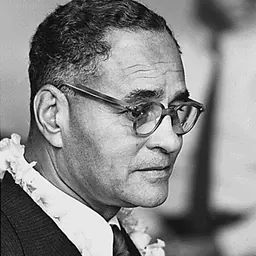
Born 1944. Paul Nation is a New Zealand linguist, philologist and university teacher.
Paul Nation (complete name Ian Stephen Paul Nation, born 28 April 1944) is a scholar in the field of linguistics and teaching methodology. Paul Nation is best known for this framework, which has been labelled The Four Strands. He has also made contributions through his research in the field of language acquisition that focuses on the benefits of extensive reading and repetition as well as intensive reading.
Biography Paul Nation is a member of the School of Linguistics and Applied Language Studies department at Victoria University of Wellington, New Zealand. He has experience with teaching and developing teaching pedagogy around the world in places such as Indonesia, Thailand, the United States, Finland, and Japan. In addition, Paul has presented his research in numerous self-written works, interviews,
Research Key concepts of his works are word frequency lists as guidelines to vocabulary acquisition, the learning burden of a word, the need to teach learning strategies to students in order to increase their autonomy in vocabulary expansion for low-frequency items, support to extensive reading of accessible texts (≥95-98% of known words), the usefulness of L2→L1 tools (dictionaries, word cards) for their clarity. After the communicative approach of the 80's, his works have been instrumental for second language courses design and current teaching methods, relying mainly on fast vocabulary acquisition of frequent words. Together with Batia Laufer, James Coady, Norbert Schmitt, Paul Meara, Rebecca Oxford, and Michael Swan, his position is linked to Stephen Krashen's Natural approach (emphasis on frequent grammatical and lexical items first) and to the proposed Lexical approach (emphasis on vocabulary) of language teaching.
The Four Strands Paul Nation is well known for developing the Four Strands language teaching framework. Paul Nation created the four strands with the intention of establishing a set of guidelines
This strand of meaning-focused input supports the development of receptive language skills in second language learners.
This strand of meaning-focused output supports the development of productive skills in second language learners. Language learning activities that support the meaning-focused output strand involve the development of writing and speaking skills
Unlike meaning-focused input and meaning-focused output, language-focused learning requires language learners to pay close attention to the features of the language they are learning.
The fluency development strand focuses on the practice and mastery of pre-existing language skills in order to develop fluency in the learner's language reception and production skills. It involves the language used by the teacher when describing activities, controlling student behaviour, and directing students in what they should be doing. although explicit vocabulary instruction is necessary for a balanced curriculum, it is not favourable for expanding learners' vocabulary knowledge. Teachers should consider every aspect of a word when teaching new vocabulary, to determine which aspect needs the most focus. Nation characterizes this consideration as a "learning burden". This test aids teachers in deciding which vocabulary groups require the most attention. It provides an alternate view towards vocabulary within any language, consisting of classifications based on word frequency. Through his 1997 literature review, Nation has determined that in order for extensive reading to be valuable, the proper level of book must be selected for the learner. Learners may hypothesize the meaning of new words by attempting to understand the context surrounding the word, or they may search for definitions of new words in a dictionary. oral classroom activities, research surrounding receptive vocabulary capabilities and many more. Measuring the Vocabulary Size of Native Speakers of English in New Zealand Secondary Schools Word Meaning in Academic English: Homography in the Academic Word List Teaching Communicative and Interactive Vocabulary for EFL learners Teaching and Testing Vocabulary Vocabulary Size Research at Victoria University of Wellington Beyond Single Words: The Most Frequent Collocations in Spoken English
Reading
Reading Speed Improvement In a Speed Reading Course and its Effect on Language Memory Span
Methodology Learning to Teach Spanish: Identifying, Inducting, and Supporting Apprentice Teachers in the Ann Arbor Languages Partnership Applying the Four Strands to Language Learning.
Speaking A Vocabulary-Size Test of Controlled Productive Ability Language Testing . Vocabulary Size and Use: Lexical Richness in L2 Written Production Improving Speaking Fluency How Large Can a Receptive Vocabulary Be?
With his most notable and numerous literary and methodological contributions falling under the umbrella of vocabulary, it is to no surprise that vocabulary size and methodology is his specialization. It is on this area of acquisition that he typically lectures both classes and the linguistics community on.
Don’t just read it —
keep it.
Full-length biographies made to live with: read them, listen on the way to work, watch them tonight.
- E-book
- Audio
- Video
Instant download · yours to keep · every purchase keeps this site free
Important facts
People in Paul Nation's life
Named in this biography and alive at the same time




Related people
Same field, nearest in time



Contemporaries
People whose lives overlapped Paul Nation's



Frequently asked questions
Who is Paul Nation?
American-New Zealander language acquisition researcher
When was Paul Nation born?
Paul Nation was born on 28 April 1944.
What is Paul Nation's occupation?
Paul Nation is a linguist, philologist and university teacher.
What nationality is Paul Nation?
Paul Nation is New Zealand.
Sources & further reading
Cite this page
APA: Biography.guide. (2026). Paul Nation. https://biography.guide/paul-nation/
MLA: "Paul Nation." Biography.guide, https://biography.guide/paul-nation/.
Chicago: "Paul Nation." Biography.guide. https://biography.guide/paul-nation/.
Data last updated: 2026-09-20 · Spot an error? Report a correction.
Page generated 2026-09-27 05:02 UTC