
About Paul Mirerekano
Lived 1920 – 1965 (aged 44–45). Paul Mirerekano was a Burundian agronomist.
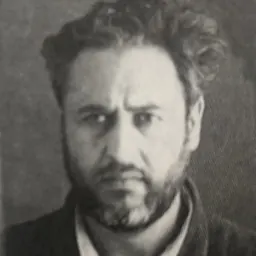
Paul Mirerekano (1921 – October 1965) was a Burundian politician. Ethnically Hutu, he worked as an agronomist for the Belgian colonial administration in Ruanda-Urundi before starting a successful market garden in Bugarama. Politically, he was a nationalist, monarchist, and advocate for Hutu civil rights. He was a leading member of Louis Rwagasore's political party, the Union for National Progress (UPRONA), and in 1961 served as the organisation's interim president. Rwagasore's assassination in 1961 fueled a rivalry between Mirerekano and Prime Minister André Muhirwa, as both men claimed to be the heirs to Rwagasore's legacy and sought to take control of UPRONA. The controversy led to the coalescing of two factions in the party, with Mirerekano leading what became known as the Hutu-dominated "Monrovia group". His criticism of Muhirwa and his successor led him to be arrested on several occasions, but in 1965 he was elected to a seat in the National Assembly representing the Bujumbura constituency. The body subsequently elected Mirerekano its First Vice-President on 20 July. In October Hutu soldiers launched a coup attempt which failed, but led to the outbreak of ethnic violence. The government believed Mirerekano helped plan the coup attempt and executed him. His reputation remains a controversial subject in Burundi.
Early life Paul Mirerekano was born at the hill of Kavuma in Bukeye, Muramvya Province, Ruanda-Urundi, in 1921. He was ethnically Hutu. He studied agriculture for six years at the Groupe Scolaire de Astrida graduating in 1944.
Political career Politically, Mirerekano advocated for the civil rights of Hutus, supported the Urundian monarchy, and was a nationalist. A member of the évolué social class, he was granted a carte de mérite civique by the Belgian administration and made a member of the Conseil Supérieur du Pays, an advisory body to the colonial authorities, serving from 1954 to 1957. During this time he began making public demands for reform, appealing to King Baudouin of Belgium to assist peasants in 1955, denouncing administration manipulations of royal domains in 1958, and criticising colonial paternalism in 1959. On 13 October 1961 Rwagasore was assassinated in a plot conceived by members of an opposition party. His death stoked divisions in UPRONA, and fueled a rivalry between Mirerekano and the new Ganwa prime minister, André Muhirwa. Both claimed to be the heirs to the late prime minister's legacy and both sought to become president of UPRONA in his wake. Muhirwa initially claimed the presidency, arguing that since he had taken over Rwagasore's place in government he was entitled to lead the party. Mirerekano contested this on the grounds that Rwagasore had made him interim party president in mid-1961. A caucus of several UPRONA leaders met on 4 July 1962 to settle the dispute and confirmed Muhirwa's ascension to the party presidency. UPRONA's central committee also dismissed Mirerekano from his post as the organisation's treasurer. That month Urundi became independent as the Kingdom of Burundi.
In an attempt to overturn the outcome of the UPRONA leadership dispute, Mirerekano called a mass meeting of party members at Rwagasore Stadium in Bujumbura on 26 August. Before a crowd of approximately 2,000 people, he angrily denounced the Muhirwa Government for nepotism and displays of ethnic favoritism, and accused it of betraying Rwagasore's wishes. Minister of Interior Jean Ntiruhwama ordered the gendarmerie to arrest Mirerekano for hosting an illegal gathering. Several detachments were dispatched to the stadium, but about 60 gendarmes rallied to his side and acted as his personal guard, while the others took no action. The army was placed on alert, but the crisis resolved without its deployment.
At Mwami Mwambutsa IV's intervention, an UPRONA mass congress was held in September to resolve the leadership dispute, which led to both Mirerekano and Muhirwa being assigned vice presidencies in the party. The controversy led to the coalescing of two factions in the party, with Muhirwa leading the Tutsi-dominated "Casablanca group" and Mirekano leading the Hutu-led "Monrovia group". The former was generally anti-West in its political orientation, while the latter took a more moderate stance on the West. Unsatisfied with the results of the congress, Mirerekano refused to attend any meetings of the newly-constituted central committee and organised his own UPRONA wing, of which he became president. He circulated numerous tracts criticising Muhirwa and the leaders of the Casablanca group. He also called for a renewed investigation into Rwagasore's murder, and accused Muhirwa of opposing this because he was from the same Ganwa clan as the implicated perpetrators.
In February 1963 Mirerekano was accused at an UPRONA meeting of cultivating links with the Party of the Hutu Emancipation Movement, the dominant political party in Rwanda, with the goal of starting a Hutu revolution similar to that which had occurred in Rwanda. The attorney general ordered his arrest on 26 February but he was released several days later due to lack of evidence. He fled to Uvira in the Congo but later returned. In June 1964 he was accused of plotting against the government of Prime Minister of Albin Nyamoya and fled again to Butare, Rwanda. He came back to Burundi in early 1965 after Nyamoya's government collapsed. In preparation for the May 1965 elections, he organised the Jeunesse Mirerekano, a group designed to spread Hutu propaganda and support Hutu candidates. (The organisation was also known as the Jeunesse Ngendandumwe, after assassinated Hutu politician Pierre Ngendandumwe.) and his reputation remains a controversial subject in Burundi.
Don’t just read it —
keep it.
Full-length biographies made to live with: read them, listen on the way to work, watch them tonight.
- E-book
- Audio
- Video
Instant download · yours to keep · every purchase keeps this site free
Important facts
People in Paul Mirerekano's life
Named in this biography and alive at the same time


Related people
Same field, nearest in time





Contemporaries
People whose lives overlapped Paul Mirerekano's





Frequently asked questions
Who was Paul Mirerekano?
Burundian politician
When was Paul Mirerekano born?
Paul Mirerekano was born in 1920 in Muramvya Province, Ruanda-Urundi.
When did Paul Mirerekano die?
Paul Mirerekano died on 19 October 1965 in Burundi.
What was Paul Mirerekano's occupation?
Paul Mirerekano was an agronomist.
What nationality was Paul Mirerekano?
Paul Mirerekano was Burundian.
Sources & further reading
Cite this page
APA: Biography.guide. (2026). Paul Mirerekano. https://biography.guide/paul-mirerekano/
MLA: "Paul Mirerekano." Biography.guide, https://biography.guide/paul-mirerekano/.
Chicago: "Paul Mirerekano." Biography.guide. https://biography.guide/paul-mirerekano/.
Data last updated: 2026-09-20 · Spot an error? Report a correction.
Page generated 2026-09-27 05:09 UTC