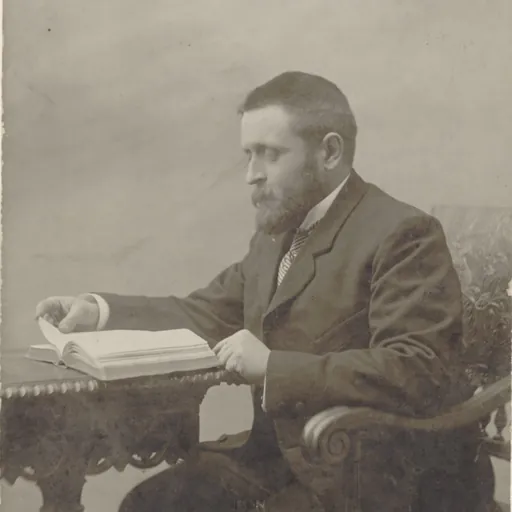
About Paul Ladmirault
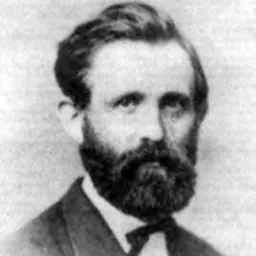
Lived 1877 – 1944 (aged 66). Paul Ladmirault was a French composer, choreographer, conductor, musicologist and music critic.
Paul Émile Ladmirault (8 December 1877 – 30 October 1944) was a French composer and music critic whose music expressed his devotion to Brittany. Claude Debussy wrote that his work possessed a "fine dreamy musicality", commenting on its characteristically hesitant character by suggesting that it sounded as if it was "afraid of expressing itself too much".
He died in Kerbili en Kamoel, St. Nagoire, France. In 1912, Ladmirault was one of the founding members of the short-lived Association des Compositeurs Breton. He composed music on Celtic themes, such as the ballet La Prêtesse de Korydwenn and the symphonic poem he wrote as musical accompaniment for the film La Brière. He worked on translations of ancient Gallic texts.
In 1928, Ladmirault published a manifesto of Breton music in the first issue of the Celticist journal Kornog. He argued that Breton composers should follow the example of the Mighty Handful, the Russian nationalist musical group, by rejecting German and Italian musical models and relying on folk traditions and pentatonic scales. Nevertheless, he took the view that Breton folk music was cruder than its "civilised" Irish and Scottish counterparts. He justified his use of only Irish musical sources in his Celtic ballet La Prêtesse de Korydwenn, writing "several themes, jigs, war dances are Irish. You would find no borrowings from Breton folk music".
In 1929, he helped to found the Nantes Celtic Circle.
Selected works Opera and ballet Gilles de Retz, opera, performed at Nantes, 18 May 1893 Myrdhin, opera, completed 1921 (never performed) La Prêtesse de Korydwenn, ballet performed by l'Opéra-Comique, 17 December 1926 Glycères, operetta (Paris, 1928)
Orchestral music Symphony, four movements (1909) En Forêt, symphonic poem, performed Paris, 31 January 1932 Suite bretonne (1903) Tristan et Iseult, incidental music (Nantes, 1929) Valse triste, for piano and orchestra, performed at Paris, 4 March 1934 Brocéliande au matin, symphonic poem, Concerts Colonne, 28 November 1909 Épousailles, for piano and orchestra La Brière, orchestral suite, 1925 La Jeunesse de Cervantès, for small orchestra
Chamber music Fantaisie, for violin and piano (1899) Chevauchée, fantasia on Scottish reels, for piano trio Romance, for string quartet The River, for piano trio Mémoires d'un âne, after Sophie Rostopchine, Comtesse de Ségur Carillon (1929) Sonata for violin and piano (1931) String Quartet (1933) String Quintet (1933) De l'ombre à la clarté, for violin and piano (1935) Chorale et variations, for wind quintet and piano (1936) Sonata for violoncello and piano (1939) Sonata for clarinet and piano (1942)
Piano music Quatre Pièces (1900). Contains: Impromptu; Regrets; Plaisanterie; Valse fantastique. Rhapsodie gaélique, for piano duet (1903) Variations sur des airs de biniou trécorois (tirés du Recueil de Quellien), for piano duet (1907) Suite bretonne, for piano duet (1908) (arranged from opera Myrdhin) Musiques rustiques, for piano duet (1908) Quatre Esquisses (1909). Contains: Chemin creux; Valse mélancolique; Vers l'église dans le soir; Minuit dans les clairières Mémoires d'un âne (1930) Deux Danses bretonnes (1957)
Songs (voice and piano) J'ai peur de t'aimer (1900) Madrigal (1900) Spleen (1900) Lied (1901) Quelques chansons de Bretagne et de Vendée, 2 vols (1906) Quelques vieux cantiques bretons (1906) Noëlz anciens composés en l'honneur de Notre-Seigneur Jésus-Christ (1908) Mélodieux automne (1912) Gnomes (1912) Six cantiques bretons du XVIIe siècle (1926) Chansons écossaises (1927), also a version for choir Triolets à Catherine (1928) Chansons de marins (1931)
Other vocal music Old Melodies, for tenor, string quartet and piano (1897) Messe brève, for choir and organ Tantum ergo, for voice, organ and orchestra
Don’t just read it —
keep it.
Full-length biographies made to live with: read them, listen on the way to work, watch them tonight.
- E-book
- Audio
- Video
Instant download · yours to keep · every purchase keeps this site free
Important facts
People in Paul Ladmirault's life
Named in this biography and alive at the same time
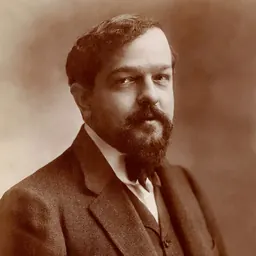
Related people
Same field, nearest in time
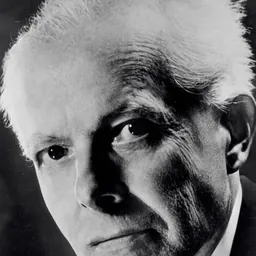



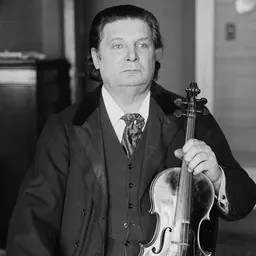

Contemporaries
People whose lives overlapped Paul Ladmirault's


Frequently asked questions
Who was Paul Ladmirault?
French composer (1877–1944)
When was Paul Ladmirault born?
Paul Ladmirault was born on 8 December 1877 in Nantes.
When did Paul Ladmirault die?
Paul Ladmirault died on 30 October 1944 in Camoël.
What was Paul Ladmirault's occupation?
Paul Ladmirault was a composer, choreographer, conductor, musicologist and music critic.
What nationality was Paul Ladmirault?
Paul Ladmirault was French.
Sources & further reading
Cite this page
APA: Biography.guide. (2026). Paul Ladmirault. https://biography.guide/paul-ladmirault/
MLA: "Paul Ladmirault." Biography.guide, https://biography.guide/paul-ladmirault/.
Chicago: "Paul Ladmirault." Biography.guide. https://biography.guide/paul-ladmirault/.
Data last updated: 2026-09-22 · Spot an error? Report a correction.
Portrait: Wikimedia Commons · author & licence
Page generated 2026-09-27 05:02 UTC