
About Paul Kleinschmidt
Lived 1883 – 1949 (aged 66). Paul Kleinschmidt was a German painter, draftsperson, graphic artist and etcher.
Paul Kleinschmidt (1883–1949) was a German painter.
Biography Kleinschmidt was born in Bublitz, Pomerania, German Empire (modern Bobolice, Poland).
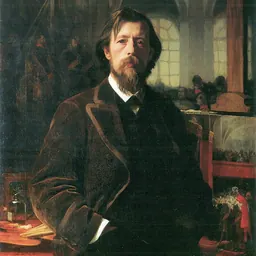
As a student of art at the Berlin Akademie Kleinschmidt's greatest influence was Anton von Werner, who was at the time Kleinschmidt's history art teacher.
During his time as a student Kleinschmidt met Lovis Corinth who became an informative and strongly educational individual for the young student. Kleinschmidt continued his studies in 1904 under Peter Halm's direction, as well as Heirnrich von Zügel at the Akademie in Munich. It was in Munich that he learned the techniques of lithography and engraving.
Eventually finding his way to Berlin to work as a painter and graphic artist, Kleinschmidt exhibited at the modest 'Sezession' shows in 1908 and 1911.
In 1915, Kleinschmidt began teaching drawing while also taking the role of a technical draughtsman, during which time a great majority of his most remarkable lithographs and engravings were created. Offering these pieces in his first solo exhibition, organized by the Euphorion publishing company in 1923, Kleinschmidt's work would next see light in 1925 at Fritz Gurlitt in Berlin, thereafter graduating to a painting oriented focus.
Kleinschmidt was first introduced to a New York City art collector by the name of Erich Cohn in 1927. A man who later became his sponsor. Kleinschmidt made several rapid moves from Berlin throughout Southern Germany in 1932 ending up in Ulm and within a year's time, Ay near Senden. Shortly thereafter, he and his family found a great struggle in the midst of a political repression. Finally finding a path of emigration to the Netherlands in 1936, Kleinschmidt relieved himself and family of such political angst, from there to France in 1938. He was taken prisoner in February 1940 throughout several camps for a short span but released again post-French capitulation.
Kleinschmidt was forced to stop painting in 1943 under direction of the Nazis during his final years in Bensheim. In 1945, the entirety of his possessions were lost to an air raid. Kleinschmidt died on August 2, 1949, as result of a severe angina pectoris diagnosed in 1940.
A number of his works include: Berghang am See; Titelblatt der Ausstellung Grafik E.L. Kirchner, Galerie Schames; Kuh mit Frauen; Rosen and Seehaus.
Don’t just read it —
keep it.
Full-length biographies made to live with: read them, listen on the way to work, watch them tonight.
- E-book
- Audio
- Video
Instant download · yours to keep · every purchase keeps this site free
Important facts
People in Paul Kleinschmidt's life
Named in this biography and alive at the same time


Related people
Same field, nearest in time

Contemporaries
People whose lives overlapped Paul Kleinschmidt's


Frequently asked questions
Who was Paul Kleinschmidt?
German artist (1883-1949)
When was Paul Kleinschmidt born?
Paul Kleinschmidt was born on 31 July 1883 in Bobolice.
When did Paul Kleinschmidt die?
Paul Kleinschmidt died on 2 August 1949 in Bensheim.
What was Paul Kleinschmidt's occupation?
Paul Kleinschmidt was a painter, draftsperson, graphic artist and etcher.
What nationality was Paul Kleinschmidt?
Paul Kleinschmidt was German.
Sources & further reading
· Wikipedia: Paul Kleinschmidt
Cite this page
APA: Biography.guide. (2026). Paul Kleinschmidt. https://biography.guide/paul-kleinschmidt/
MLA: "Paul Kleinschmidt." Biography.guide, https://biography.guide/paul-kleinschmidt/.
Chicago: "Paul Kleinschmidt." Biography.guide. https://biography.guide/paul-kleinschmidt/.
Data last updated: 2026-09-20 · Spot an error? Report a correction.
Page generated 2026-09-27 05:31 UTC