
About Paul Kirchhoff
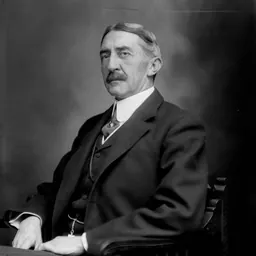
Lived 1900 – 1972 (aged 72). Paul Kirchhoff was a German and Mexican anthropologist, university teacher, philosopher and ethnologist.
Paul Kirchhoff (17 August 1900, Halle, Province of Westphalia – 9 December 1972) was a German-Mexican anthropologist, most noted for his seminal work in defining and elaborating the culture area of Mesoamerica, a term he coined.
Early life and academic career
Paul Kirchhoff was born in the German locality of Hörste, in the region of Westphalia. He commenced his undergraduate studies in Protestant theology and comparative religion at the University of Berlin, moving later to Albert Ludwigs University of Freiburg. In the mid-1920s he undertook further studies at the University of Leipzig in ethnology and psychology, where he first developed his abiding interest in the indigenous cultures of the Americas. completing his studies in 1927.
In 1928, he left for the United States. There, as a student of Edward Sapir, he studied the Navajo language until 1930. By 1931 he had returned to Germany to defend his thesis.
He was the co-founder of Mexico's National School of Anthropology and History in 1938, and held a research position at the National Autonomous University of Mexico.
Kirchhoff was instrumental in defining the concept of Mesoamerica, a cultural region sharing a number of common characteristics throughout most of pre-Columbian history, geographically defined as central and southern Mexico and northern Central America.
Political activity
Kirchhoff's mother was a friend of Sonia Liebknecht, wife of Karl Liebknecht. From an early age Kirchhoff was involved in radical politics. In the early 1920s he distributed Die Aktion and may have been a member of the AAU and KAPD.
From 1938 to at least 1940, Kirchhoff was a militant of a group called the Grupo de Trabajadores Marxistas (GMT) in Mexico. Because the GMT called for revolutionary defeatism in Spain, the Mexican Trotskyists alleged that they were witting or unwitting agents of the Gestapo. Despite the hostile political climate, the GMT managed to publish three issues of their journal Comunismo. Comunismo again defended the positions of the communist left: the identification of the USSR as capitalist, revolutionary defeatism in all warring nations, etc.
Later life
After 1941, Kirchhoff appeared to retire from active political life.
He died in Mexico City in 1972.
Don’t just read it —
keep it.
Full-length biographies made to live with: read them, listen on the way to work, watch them tonight.
- E-book
- Audio
- Video
Instant download · yours to keep · every purchase keeps this site free
Important facts
People in Paul Kirchhoff's life
Named in this biography and alive at the same time
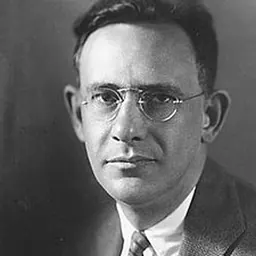
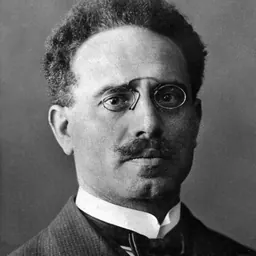
Related people
Same field, nearest in time


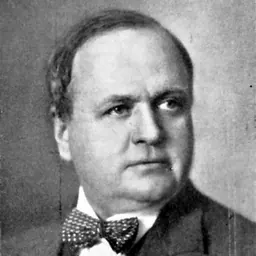
Contemporaries
People whose lives overlapped Paul Kirchhoff's
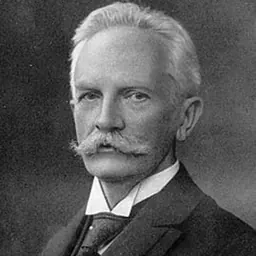



Frequently asked questions
Who was Paul Kirchhoff?
German anthropologist (1900-1972)
When was Paul Kirchhoff born?
Paul Kirchhoff was born on 17 August 1900 in Halle.
When did Paul Kirchhoff die?
Paul Kirchhoff died on 13 September 1972 in Mexico City.
What was Paul Kirchhoff's occupation?
Paul Kirchhoff was an anthropologist, university teacher, philosopher and ethnologist.
What nationality was Paul Kirchhoff?
Paul Kirchhoff was German and Mexican.
Sources & further reading
Cite this page
APA: Biography.guide. (2026). Paul Kirchhoff. https://biography.guide/paul-kirchhoff/
MLA: "Paul Kirchhoff." Biography.guide, https://biography.guide/paul-kirchhoff/.
Chicago: "Paul Kirchhoff." Biography.guide. https://biography.guide/paul-kirchhoff/.
Data last updated: 2026-09-20 · Spot an error? Report a correction.
Page generated 2026-09-27 05:26 UTC