
About Paul Jordan-Smith
Lived 1885 – 1971 (aged 85). Paul Jordan-Smith was an American journalist, bibliophile and opinion journalist.
Paul Jordan-Smith (April 19, 1885 – June 17, 1971) was an American Universalist minister who also worked as a writer, lecturer and editor. Academically, he is regarded as one of the foremost authorities on the 17th-century British author and scholar Robert Burton. However, he is most well known for originating the hoax art movement Disumbrationism.
Life and ministry
Paul Jordan Smith (his name was not hyphenated until later in life; see below) was born in Wytheville, Virginia. His father, John Wesley Smith, was a Southern Methodist minister who dreamed of starting a college and invested in land in Dade County, Georgia, outside Chattanooga, Tennessee. His wife (the former Lucy Jordan) and son joined him there in 1891, but the venture failed and the family returned to Virginia.
While a student at Emory and Henry College, Paul Jordan Smith secretly married Ethel Sloan Park in September 1904. Their daughter Lucille Isabella (Isabel Jordan) Smith was born in August 1905. He graduated from U.S. Grant University in Chattanooga, Tennessee in 1906. A local Unitarian minister recommended that he study for the ministry, and although admitted to Harvard Divinity School he enrolled in the more affordable Ryder Divinity School of the Universalist Lombard College in Galesburg, where he received a bachelor of divinity degree in 1908.
In 1913 his wife Ethel divorced him and his mother died. After a few months in the South, he traveled to Berkeley, California with letters of introduction, filled in for a minister in Eureka in the summer of 1914, and enrolled as a doctoral student and teaching fellow in the English Department at the University of California, Berkeley. The couple then moved with Sarah's children to her former home in Claremont, California, which had been rented to a school for boys. In 1917, the school's lease ended and they began renovating the house back into a private residence, which they named Erewhon after the Samuel Butler novel. Around this time, they met and subsequently became friends with one of Sarah's cousins, the photographer Edward Weston, who made several photographic portraits of Jordan-Smith.
Though Jordan-Smith did not have to work (thanks to Sarah's inherited wealth), he lectured around southern California, at women's clubs such as the Friday Morning Club (of which Sarah was later president), at the Ebell Club, and elsewhere. He also taught courses on English and American literature at the new University of California Extension program in Los Angeles. Encouraged by some of the philanthropists who attended his talks, he took on leadership of the recently formed People's Council of America for Peace and Democracy, an antiwar organization.
Jordan-Smith had three children. His son Wilbur Jordan Smith was head of UCLA Library's Department of Special Collections from 1951 to 1971, and Wilbur's son Paul Jordan-Smith helped D.M. Dooling found Parabola magazine and served as its Epicycle editor.
Literary career Exlibris of American Unitarian Minister, writer and collector Paul Jordan-Smith (1885–1971), in Hickey, Memoirs, publ. 1913–1925. Jordan-Smith was a great admirer of the 17th-century British author and scholar Robert Burton. He co-edited the first all-English translation (having himself translated all of the Latin quotes) of Burton's magnum opus, The Anatomy of Melancholy, following it up with Bibliographica Burtoniana, which included both a study of Burton and a scholarly key to the sources Burton used in The Anatomy of Melancholy. He collected books relating to Burton, and after Sarah died, he gave the core of his collection to the Claremont Colleges Library in her memory. The Robert Burton Collection, as it is called, includes copies of the first six editions of Burton's Anatomy of Melancholy, a copy of the 1927 edition edited by Smith and Floyd Dell, and editions of various Renaissance Latin authors and others cited by Burton.
Jordan-Smith also wrote one of the first books on James Joyce, A Key to the Ulysses of James Joyce. He dedicated this book to Powys, who had persuaded him in 1922 to buy a then-rare and expensive first edition of Ulysses during one of Powys's stays at Erewhon, which they then read together.
Inspired by Sarah's ideas, Jordan-Smith collaborated with her on a feminist manifesto entitled The Soul of Woman: An Interpretation of the Philosophy of Feminism. It was published under his name in 1916.
He also served for a time in the 1940s and 1950s as the literary critic for the Los Angeles Times.
Books
(as editor, with Floyd Dell) The Anatomy of Melancholy by Robert Burton. New York: Farrar & Rinehart, 1927. (English translation of the original Latin text.) Burton's Anatomy of Melancholy and Burtoniana. Oxford University Press, 1959. (A catalogue.) A Key to the Ulysses of James Joyce. 1927. Republished in 1968 by Haskell House, New York. Bibliographia Burtoniana: A Study of Robert Burton's "The Anatomy of Melancholy" with a Bibliography of Burton's Writings. Oxford University Press and Stanford University Press, 1931. Cables of Cobweb. New York: Lieber & Lewis, 1923 (novel). For the Love of Books: The Adventures of an Impecunious Collector. Oxford University Press, 1934. Nomad. Minton, Balch, 1925 (novel, dedicated to James Branch Cabell). On Strange Altars: A Book of Enthusiasms. 1923. Republished by Gordon Press Publishers, 1972. The Road I Came: Some Recollections and Reflections Concerning Changes in American Life and Manners Since 1890. Caldwell, Idaho: Caxton Printers, 1960. The Soul of Woman: An Interpretation of the Philosophy of Feminism. San Francisco: Paul Elder Company, 1916.
Don’t just read it —
keep it.
Full-length biographies made to live with: read them, listen on the way to work, watch them tonight.
- E-book
- Audio
- Video
Instant download · yours to keep · every purchase keeps this site free
Important facts
People in Paul Jordan-Smith's life
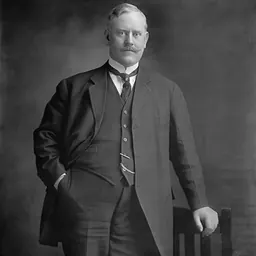
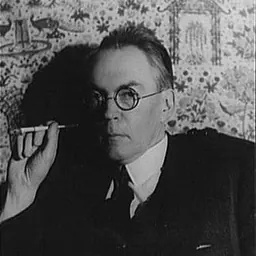
Named in this biography and alive at the same time






Related people
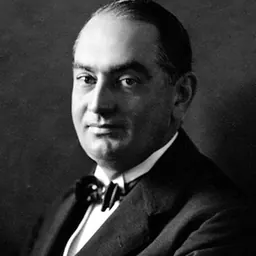
Same field, nearest in time




Contemporaries
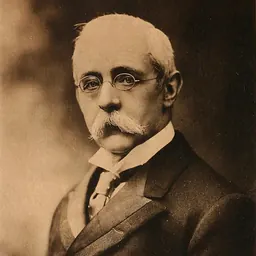
People whose lives overlapped Paul Jordan-Smith's


Frequently asked questions
Who was Paul Jordan-Smith?
American journalist (1885-1971)
When was Paul Jordan-Smith born?
Paul Jordan-Smith was born on 14 October 1885 in Wytheville.
When did Paul Jordan-Smith die?
Paul Jordan-Smith died on 17 June 1971 in Santa Monica.
What was Paul Jordan-Smith's occupation?
Paul Jordan-Smith was a journalist, bibliophile and opinion journalist.
What nationality was Paul Jordan-Smith?
Paul Jordan-Smith was American.
Sources & further reading
· Wikipedia: Paul Jordan-Smith
Cite this page
APA: Biography.guide. (2026). Paul Jordan-Smith. https://biography.guide/paul-jordan-smith/
MLA: "Paul Jordan-Smith." Biography.guide, https://biography.guide/paul-jordan-smith/.
Chicago: "Paul Jordan-Smith." Biography.guide. https://biography.guide/paul-jordan-smith/.
Data last updated: 2026-09-20 · Spot an error? Report a correction.
Page generated 2026-09-27 05:17 UTC