
About Paul Elvstrøm
Lived 1928 – 2016 (aged 88). Paul Elvstrøm was a Danish engineer, non-fiction writer, sailor and businessperson.
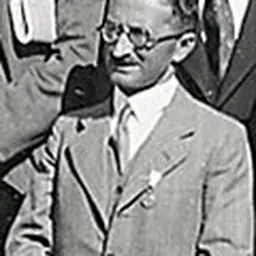
Paul Bert Elvstrøm (25 February 1928 – 7 December 2016) was a Danish yachtsman and the founder of Elvstrøm Sails. He won four Olympic gold medals and thirteen world titles in a range of classes including Snipe, Soling, Star, Flying Dutchman, Finn, 505, and 5.5 Metre. For his achievements, Elvstrøm was chosen as "Danish Sportsman of the Century."
Growing up along the Øresund, Elvstrøm quickly became consumed by sailing, which began with crewing in a club fleet of small clinker keelboats. He was soon given an Oslo dinghy by a neighbour who realised Elvstrøm's mother was too poor to be able to buy one. It is clear that Elvstrøm considered schooling a distraction from sailing: "I was very bad in school," he said, "The only interest I had was in sailing fast…The teacher knew that if I was not at school, I was sailing."
Innovation Elvstrøm was noted as a developer of sails and sailing equipment, and later founded Elvstrøm sails. One of his most successful innovations was a new type of self-bailer. The new features were a wedge shaped venturi that closes automatically if the boat grounds or hits an obstruction, and a flap that acts as a non return valve to minimise water coming in if the boat is stationary or moving too slowly for the device to work. Previous automatic bailers would be damaged or destroyed if they met an obstruction, and would let considerable amounts of water in if the boat was moving too slowly.
The Elvstrøm self-bailer is still in production under the Andersen brand and has been widely copied; it is still found on Olympic boats, and other grand prix boats at the leading edge of the sport. In 2016, Dan Ibsen, the executive director of the Royal Danish Yacht Club said, “Today the Elvstrøm Bailer is still the only functional bailer on Olympic dinghies and boats around the world.”
Other innovations include the Elvstrøm Lifejacket, which was the first specifically designed and produced for active sailors. This may take the form of a block and tackle linking a low point on the mast (or an equivalent point on the hull) and the boom close to the mast, which allows the boom to be let out when reaching or running without lifting. This controls the twist of the mainsail from its foot to its head, increasing the sail's power and the boat's speed and controlability. Elvstrøm did not advertise his new invention, leaving his competitors mystified at his superior boat-speed. Investigation of his dinghy revealed nothing as he used to remove the kicking strap before coming ashore.
Among the innovative concepts he brought to sailboat racing was the concept of gates instead of a single windward or leeward mark in large regattas. The leeward gate on a windward-leeward course is commonly used. The windward gate is less often used due to the difficulties in managing right-of-way around the right gate, the subtleties of which are understood mostly by match racers. He has also been instrumental in developing several international yacht racing rules.
Training Elvstrøm was a very early innovator in training techniques. For example, he used the technique of 'sitting out' or hiking using toe-straps to a greater degree than previously, getting all his body weight from the knees upwards outside the boat, thus providing extra leverage to enable the boat to remain level in stronger winds and hence go faster than his competitors. This technique required great strength and fitness, and so after the 1948 Olympics, in order to improve his physical conditioning in readiness for the 1952 games, Elvstrøm built a training bench with toe-straps in his garage to replicate the sitting-out position in his dinghy. He then proceeded to spend many training hours on dry land sitting out on the bench at home.
“He did take sailing to a level that you had to call it a sport,” said Jesper Bank, a principal at Elvstrøm Sails and a two-time Olympic gold medalist for Denmark. “Before Paul, you would see competitors with pipes in their mouths and wearing skippers’ caps. At that time, they certainly thought he was superhuman.” Elvstrøm founded his business in the family villa just north of Copenhagen. It grew out of its premises multiple times, and today, Elvstrøm Sails is based in Aabenraa in the south of Denmark.
Personal life
Elvstrøm was married to Anne, who pre-deceased him by three years; together they had four daughters: Pia, Stine, Gitte and Trine.
He died on 7 December 2016 at the age of 88, after battling Alzheimers for a few years.
Legacy In addition to being widely regarded as one of the most successful competitive sailors in history, Elvstrøm was recognized as a model of sportsmanship. He is frequently cited for his philosophy: "If you, by winning, are losing your friends, you are not winning." In his last two Olympic games he sailed the Tornado Catamaran class, which, in those days, was normally sailed by two young men, with his daughter Trine Elvstrøm as forward hand.
He is one of only five athletes who have competed in the Olympics over a span of 40 years, along with fencer Ivan Joseph Martin Osiier, sailors Magnus Konow and Durward Knowles and showjumper Ian Millar.
Elvstrøm won medals at the world championships: Finn, 505, Snipe, Flying Dutchman, 5.5 Metre, Star, Soling, Tornado, and Half Ton.
In 1996, Elvstrøm was chosen as "Danish Sportsman of the Century."
In 2007, Elvstrøm was among the first six inductees into the ISAF Sailing Hall of Fame.
Year Competition Venue Position Event Notes 1956 Finn Gold Cup Burnham-on-Crouch 2nd Finn 1957 505 World Championship La Baule-Escoublac 1st 505 1958 505 World Championship La Baule-Escoublac 1st 505 1974 Soling World Championship Sydney 1st Soling
Don’t just read it —
keep it.
Full-length biographies made to live with: read them, listen on the way to work, watch them tonight.
- E-book
- Audio
- Video
Instant download · yours to keep · every purchase keeps this site free
Important facts
People in Paul Elvstrøm's life
Named in this biography and alive at the same time





Related people
Same field, nearest in time


Contemporaries
People whose lives overlapped Paul Elvstrøm's



Frequently asked questions
Who was Paul Elvstrøm?
Danish yachtsman (1928–2016)
When was Paul Elvstrøm born?
Paul Elvstrøm was born on 25 February 1928 in Hellerup.
When did Paul Elvstrøm die?
Paul Elvstrøm died on 7 December 2016 in Hellerup.
What was Paul Elvstrøm's occupation?
Paul Elvstrøm was an engineer, non-fiction writer, sailor and businessperson.
What nationality was Paul Elvstrøm?
Paul Elvstrøm was Danish.
Sources & further reading
Cite this page
APA: Biography.guide. (2026). Paul Elvstrøm. https://biography.guide/paul-elvstrom/
MLA: "Paul Elvstrøm." Biography.guide, https://biography.guide/paul-elvstrom/.
Chicago: "Paul Elvstrøm." Biography.guide. https://biography.guide/paul-elvstrom/.
Data last updated: 2026-09-20 · Spot an error? Report a correction.
Page generated 2026-09-27 05:17 UTC