
About Paul Dyer Merica
Lived 1889 – 1957 (aged 68). Paul Dyer Merica was an American metallurgist and physicist.
Paul Dyer Merica (March 17, 1889 – October 20, 1957) was an American metallurgist, president of the International Nickel Company of Canada Ltd., inventor, and recipient of the 1938 John Fritz Medal.
Biography Youth and education Merica was born in Warsaw, Indiana, to Charles Oliver Merica and Alice White Merica. After attending the Warsaw Community High School and three years at DePauw University, he obtained his AB from the University of Wisconsin in 1907.
In 1919 he moved into the industry to the International Nickel Company, where he developed the first of the Inconel alloys (Inconel 600) to protect the nickel cookware market against competition by stainless steel.
Among his seminal contributions to the science of nickel were his 1924 study with Waltenberg on the non malleability of the metal. He was able to ascertain that the presence of sulfur is responsible for the property, and thus he was able to explain the 1879 work of Theodor Fleitmann.
He started as Director research, and worked his way up to Technical assistant to president in 1929, and furthermore to executive vice president, president and director and in 1951 the gold medal of the American Society for Metals.
Publications Paul Dyer Merica. Ueber Beziehungen zwischen den mechanischen und den magnetischen Eigenschaften einiger Metalle bei elastischen und plastischen Formänderungen, 1914. George Kimball Burgess, Paul Dyer Merica. An investigation of fusible tin boiler plugs, 1915. Paul Dyer Merica. A simplification of the inverse-rate method for thermal analysis, 1919. Paul Dyer Merica. Nickel and its Alloys, National Bureau of Standards Circular 100, 1921. Paul Dyer Merica, Romaine George Waltenberg. Malleability and metallography of nickel, 1925. Paul Dyer Merica. "Personalities in Industry," Scientific American. July 1, 1938. Paul Dyer Merica. Charles Holmes Herty, Jr., 1896-1953, 1958.
Patents, a selection "Patent US1811696 - Carbon-free metal," 1931 "Patent US2048163 - Iron-nickel-titanium alloy," 1936. "Patent US2048164 - Method of treating alloys," 1936.
Don’t just read it —
keep it.
Full-length biographies made to live with: read them, listen on the way to work, watch them tonight.
- E-book
- Audio
- Video
Instant download · yours to keep · every purchase keeps this site free
Important facts
People in Paul Dyer Merica's life
Named in this biography and alive at the same time

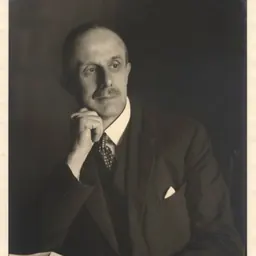


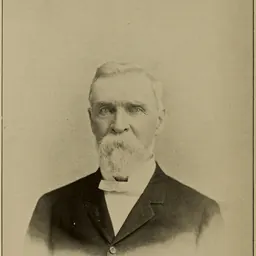


Related people
Same field, nearest in time
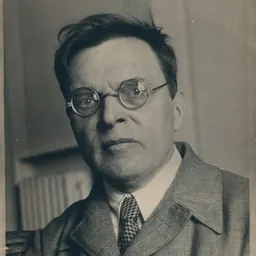
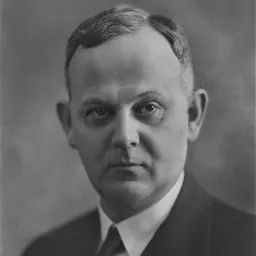



Contemporaries
People whose lives overlapped Paul Dyer Merica's





Frequently asked questions
Who was Paul Dyer Merica?
American metallurgist
When was Paul Dyer Merica born?
Paul Dyer Merica was born on 17 March 1889 in Warsaw.
When did Paul Dyer Merica die?
Paul Dyer Merica died on 20 October 1957.
What was Paul Dyer Merica's occupation?
Paul Dyer Merica was a metallurgist and physicist.
What nationality was Paul Dyer Merica?
Paul Dyer Merica was American.
Sources & further reading
Cite this page
APA: Biography.guide. (2026). Paul Dyer Merica. https://biography.guide/paul-dyer-merica/
MLA: "Paul Dyer Merica." Biography.guide, https://biography.guide/paul-dyer-merica/.
Chicago: "Paul Dyer Merica." Biography.guide. https://biography.guide/paul-dyer-merica/.
Data last updated: 2026-09-20 · Spot an error? Report a correction.
Page generated 2026-09-27 05:26 UTC