
About Paul Drude
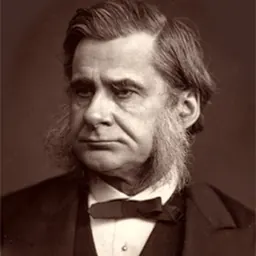
Lived 1863 – 1906 (aged 42). Paul Drude was a physicist and university teacher, known for Drude model and Ellipsometry.
Paul Karl Ludwig Drude ( ; ; 12 July 1863 – 5 July 1906) was a German physicist specializing in optics. He is known for the Drude model.
Biography Education Paul Karl Ludwig Drude was born on 12 July 1863 in Braunschweig. He began his studies in mathematics at the University of Göttingen, but later changed his major to physics. In 1887, he received his Ph.D. under Woldemar Voigt with a thesis on the reflection and diffraction of light in crystals.
Drude graduated the year Heinrich Hertz began publishing his findings from his experiments on the electromagnetic theories of James Clerk Maxwell, thus Drude began his career at the time Maxwell's theories were being introduced into Germany.
Career and research In 1894, Drude became professor extraordinarius at the University of Leipzig. The same year, he married Emilie Regelsberger, with whom he had 4 children.
His first experiments were the determination of the optical constants of various solids, measured to unprecedented levels of accuracy. He then worked to derive relationships between the optical and electrical constants and the physical structure of substances. In 1894, he was responsible for introducing the symbol c for the speed of light in a perfect vacuum. published in 1900, brought together the formerly distinct subjects of electricity and optics, which was cited by Drude as an "epoch-making advance in natural science".
In 1900, Drude became the editor of Annalen der Physik, the most respected physics journal at that time. The same year, he developed a powerful model to explain the thermal, electrical, and optical properties of matter; this is known as the Drude model. In 1901, he was appointed Professor Ordinarius of Physics at the University of Giessen.
In 1905, Drude became Director of the Physics Institute at the University of Berlin. In 1906, at the height of his career, he became a Member of the Prussian Academy of Sciences. A few days after his inauguration lecture, for inexplicable reasons, he committed suicide. He was survived by his wife and children.
Honors Drude crater on the Moon is named after him. The Paul Drude Institute, in Berlin, was established in his honor.
Books Lehrbuch der Optik, Leipzig, 1906.
Don’t just read it —
keep it.
Full-length biographies made to live with: read them, listen on the way to work, watch them tonight.
- E-book
- Audio
- Video
Instant download · yours to keep · every purchase keeps this site free
Important facts
People in Paul Drude's life
Named in this biography and alive at the same time

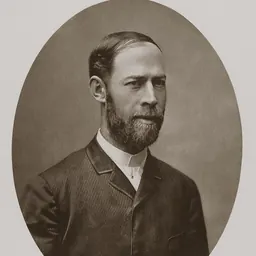

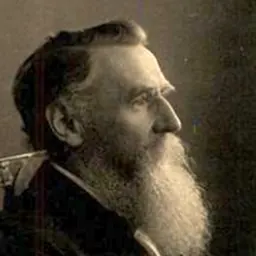
Related people
Same field, nearest in time


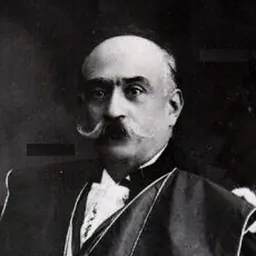

Contemporaries
People whose lives overlapped Paul Drude's
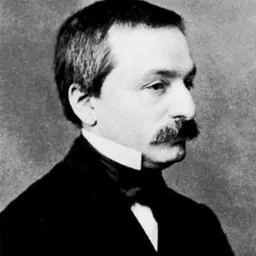



Frequently asked questions
Who was Paul Drude?
German physicist specializing in optics
When was Paul Drude born?
Paul Drude was born on 12 July 1863 in Brunswick.
When did Paul Drude die?
Paul Drude died on 5 July 1906 in Berlin.
What was Paul Drude's occupation?
Paul Drude was a physicist and university teacher.
What was Paul Drude known for?
Paul Drude was known for Drude model and Ellipsometry.
What nationality was Paul Drude?
Paul Drude's recorded nationality: Duchy of Brunswick.
Sources & further reading
Cite this page
APA: Biography.guide. (2026). Paul Drude. https://biography.guide/paul-drude/
MLA: "Paul Drude." Biography.guide, https://biography.guide/paul-drude/.
Chicago: "Paul Drude." Biography.guide. https://biography.guide/paul-drude/.
Data last updated: 2026-09-20 · Spot an error? Report a correction.
Page generated 2026-09-27 05:22 UTC