
About Paul de Groot
Lived 1899 – 1986 (aged 87). Paul de Groot was a Dutch journalist, politician, trade unionist, resistance fighter, diamond cutting and editor-in-chief.
Saul "Paul" de Groot (19 July 1899 – 3 August 1986) was a Dutch politician of the Communist Party of the Netherlands (CPN). He was also a member of the House of Representatives for the CPN and chief editor of the party newspaper De Waarheid.
Early life De Groot was the son of Jacob de Groot, a Jewish diamond cutter in the Jodenbuurt in Amsterdam. His father had previously participated in a successful general strike in 1894 and became a member of the General Diamond Workers' Union of the Netherlands (ANDB). Shortly after his birth in 1899, the family left for Antwerp in search of work.
After primary school, De Groot was unable to continue studying and at the age of 13 he got work in a diamond factory, joining the General Diamond Workers' Union of Belgium (ADB). When Antwerp was threatened by German troops after the outbreak of the First World War, the De Groot family fled to the neutral Netherlands and temporarily settled in Amsterdam in the Transvaalbuurt, Amsterdam's new Jewish quarter.
Unable to find a job in the diamond cutting business due to mass unemployment in the sector and the ANDB's refusal to let returning emigres into the organisation, Paul de Groot got a job with a cigar maker who taught him the principles of socialism. In December 1915 he returned to Antwerp with his parents. De Groot jr. became a diamond worker for a short period, but work soon dried up and the family became dependent on food packages from the Dutch consulate. Unemployed, De Groot followed lessons at the Socialist People's College, learning English and French, and joined the Socialist Young Watch.
Training Impressed by the October Revolution (1917), he participated in the factional struggle within Belgian social democracy and its communist splinter groups under the pseudonym Paul van der Schilde. He opposed both left-communism as well as radical Flemish nationalism, while being sympathetic to resistance against the oppression of Flanders. On 3-4 September 1921 he attended the founding conference where under severe pressure from the Comintern the United Communist Party of Belgium was formed. De Groot became a member of the party board and wrote for the party newspaper De Roode Vaan.
In 1920, De Groot married Szajndla (Sally) Borzykowska, the daughter of a Jewish juweler from Lodz, who had moved from Russian-occupied Poland in 1912 to escape ongoing pogroms. They would have one child together , Rosa, named after Rosa Luxemburg.
Because of his participation in the agitation against the (temporary) occupation of the Ruhr, in which Belgian troops also participated, and a strike of 50,000 miners in the Borinage region, he was arrested along with 53 other communist leaders on 8 March 1923. He was let out of jail after a day, but at the beginning of April De Groot was ordered to leave the country, because as a foreigner he was not supposed to interfere with internal Belgian affairs.
It did not prevent the CPN and its organs from being banned by the Germans. In November 1940, the first issue of a new, illegal party newspaper, De Waarheid, was published. De Groot aimed his arrows at the German aggressor, but also continued to fight "Anglo-American imperialism", the government in London and the Social Democratic Workers' Party (SDAP). Only with the German attack on the Soviet Union in June 1941 did he change course. Incidentally, it was not De Groot, as the party legend later proposed, but fellow board member Jansen who wrote the famous manifesto Staakt, staakt, staakt on the eve of the February strike of 1941. The CPN has always considered this strike to be the culmination of the communist resistance against the Nazis in the Netherlands.
In October 1942, the Germans raided the house where De Groot and his family were hiding. De Groot managed to escape through the back door, but his wife and daughter were taken to Auschwitz and gassed there, which made him feel guilty and troubled for the rest of his life. In February 1943 he again narrowly escaped arrest by the Germans. He then turned the party leadership over to others (including Jaap Brandenburg) and cut off all contact with the illegal party.
Recovery after 1945 After the war, De Groot succeeded in quickly and easily regaining power within the CPN. For a short time he promoted the dissolution of the party in favour of an "Association of Friends of De Waarheid", because in that first post-war period the communist newspaper De Waarheid enjoyed wide popularity because of its resistance origins. Fierce criticism from his own ranks and an ok from Moscow made De Groot decide in July 1945 to re-establish the CPN.
De Groot also entered the House of Representatives. There and in De Waarheid, of which he had become editor-in-chief, he sometimes defended contradictory views. For example, with regard to the young Indonesian republic: on the one hand he was against sending Dutch troops to violently crush the nationalist resistance in Java and elsewhere, but on the other hand he thought that young communists should be sent out and then propaganda within the army for Indonesian independence. In their own communist circle this led to confusion and dissatisfaction.
Ideological struggle In the years that followed, De Groot left a strong personal mark on the party. He remained a staunch Marxist-Leninist and assured the public that, in the event of a Third World War, the CPN would welcome the Soviet armies as liberators. This cost the party the sympathy and electoral support of some segments of the population. Its social isolation was further exacerbated by the CPN leadership’s stance on the Soviet suppression of the Hungarian uprising in 1956.
De Groot had serious reservations about the revisionist course of de-Stalinization that the new Russian party leader Nikita Khrushchev had embarked upon in 1956. He therefore took a stance on the ideological struggle within the CPN in early 1958, expelling former resistance members such as Gerben Wagenaar, Henk Gortzak, Frits Reuter, Bertus Brandsen and Rie Lips from the party. On the order of De Groot, Marcus Bakker wrote a report, "the little red book", titled "The CPN during the war", in which the expelled were criticised and labeled as traitors and Gestapo spies. In 1963, De Groot abruptly severed all ties with Moscow.
End of board work In 1962 De Groot stepped down as political secretary and was appointed party chairman. In 1966 he left the House of Representatives and a year later, at the 22nd party congress, he also resigned the presidency of the CPN. As an honorary member of the party board and director of the party's scientific office (IPSO), however, he continued to exercise decisive influence behind the scenes, such as in 1975 when the CPN decided to reconcile with Moscow.
When the party suffered a dramatic election defeat in 1977 - the CPN dropped from seven to two parliamentary seats - De Groot attributed this to the party hierarchy having been fooled by "government machinations" surrounding the recent train hijacking at De Punt. He accused the party leadership of being too soft, young academics and social workers had increasingly taken the place of workers as members and administrators in the 1970s, and wanted to have them replaced by steeled cadres from the working class. With that, however, he overplayed his hand. The party board opposed and stripped him of honorary membership in 1978. De Groot's career had ended.
Retirement For the last ten years of his life, he lived a secluded life. Journalists and others who tried to approach were rebuffed. De Groot moved with his (second) wife to a care flat in Zeist and after her death, in September 1985, to a Jewish nursing home in Bussum. The disappearance of the CPN from the House of Representatives in 1986 did not elicit any public comment from him. After his own death, that same year, Paul de Groot was commemorated with a single column in De Waarheid.
Don’t just read it —
keep it.
Full-length biographies made to live with: read them, listen on the way to work, watch them tonight.
- E-book
- Audio
- Video
Instant download · yours to keep · every purchase keeps this site free
Important facts
People in Paul de Groot's life
Named in this biography and alive at the same time

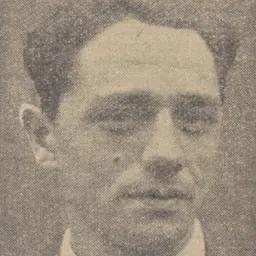

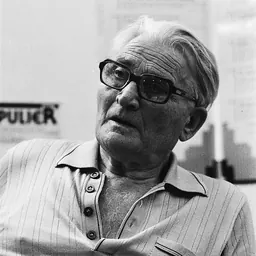

Related people
Same field, nearest in time
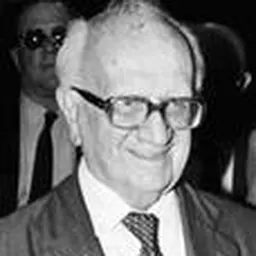
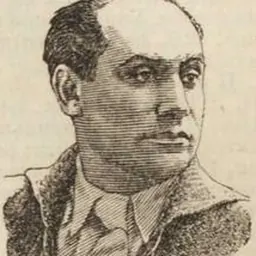




Contemporaries
People whose lives overlapped Paul de Groot's


Frequently asked questions
Who was Paul de Groot?
Dutch politician (1899–1986)
When was Paul de Groot born?
Paul de Groot was born on 19 July 1899 in Amsterdam.
When did Paul de Groot die?
Paul de Groot died on 3 August 1986 in Bussum.
What was Paul de Groot's occupation?
Paul de Groot was a journalist, politician, trade unionist, resistance fighter, diamond cutting and editor-in-chief.
What nationality was Paul de Groot?
Paul de Groot was Dutch.
Sources & further reading
Cite this page
APA: Biography.guide. (2026). Paul de Groot. https://biography.guide/paul-de-groot-journalist/
MLA: "Paul de Groot." Biography.guide, https://biography.guide/paul-de-groot-journalist/.
Chicago: "Paul de Groot." Biography.guide. https://biography.guide/paul-de-groot-journalist/.
Data last updated: 2026-09-20 · Spot an error? Report a correction.
Page generated 2026-09-27 05:26 UTC