
About Paul Black
Lived 1930 – 2026 (aged 95–96). Paul Black was a physicist, known for Assessment for learning and Physics.
Paul Joseph Black (10 September 1930 – 16 March 2026) was a British educational researcher, physicist and a Professor Emeritus at King's College London. He was Professor of Science Education and Director of the Centre for Science and Mathematics Education at the Chelsea College of Science and Technology and Head for Educational Studies at King's College London. Black was the Chair for the Task Group on Assessment and Testing and Deputy Chair of the National Curriculum Council, and is recognised as an architect of the national curriculum testing regime
Early life and career Paul Joseph Black was born in La Cumbre, Valle del Cauca, Colombia on 10 September 1930, where his British parents William and Susie were living, before moving to Wales. He completed his first degree at the University of Manchester, going on to complete his PhD in Crystallography at the Cavendish Laboratory at the University of Cambridge in 1954. During the early 1970s, Black again worked with Ogborn who was the Project co-ordinator, for The Higher Education Learning Project in Physics which was funded by the Nuffield Foundation.
Educational research In 1976, Black left the University of Birmingham and joined the Chelsea College of Science and Technology as Professor of Science Education and Director of the Centre for Science and Mathematics Education. Between 1978 and 1988, Black was Director for the UK government's national survey of school science performance, and also served on the Research Grants Board of the Economic and Social Research Council. becoming Professor Emeritus. From 1985 to 1991, Black was President of the Groupe Internationale de Recherche sur l’Enseignement de la Physique, and became chair of the International Commission on Physics Education between 1993 and 1999. and produced the original design for national curriculum testing and assessment. Between 1989 and 1991, Black was the deputy chair of the National Curriculum Council. In 1998, Black co-wrote Inside the Black Box: Raising Standards Through Classroom Assessment with Dylan Wiliam. Black, along with Wiliam were educational advisors to Tony Blair, giving evidence to the Select Committee on Education and Employment Fourth Report. In 2013, Black and Wiliam wrote a report that criticised the current assessment, stating
Black was a member of three committees of the USA National Research Council, including the National Academy of Sciences Committee on the Cognitive Foundations of Assessment, and was later a member of the Technical Advisory Group of OFQUAL. In 1983, his innovative work was recognised with an OBE for services to education. The International Commission on Physics Education honoured Black with their annual medal award in 2000. In 2005, he received a Lifetime Achievement Award for Outstanding Contribution to Science Education, from the Association for Science Education, and a Lifetime Achievement Award from the US National Association for Research in Science Teaching.
Selected writings The Voigt profile of Mossbauer transmission spectra with M.J. Evans, March 2001, Journal of Physics, C Solid State Physics 3(10):2167, Interference between nuclear resonant and Rayleigh-Thomson scattering from magnetized crystals of iron with D.E. Evans, March 2001, Journal of Physics, F Metal Physics 2(2):219, Feedback is the best nourishment with Dylan Wiliam, TES, 4 October 2002 Testing, motivation and learning with Patricia Broafoot, Richard Daugherty and John Gardner, University of Cambridge School of Education, , January 2002 Standards in Public Examinations with Dylan Wiliam, King's College London Department of Education and Professional Studies, January 2002 Assessment for Learning: Putting It Into Practice with Christine Harrison, Claire Lee, Bethan Marshall and Dylan Wiliam, Open University Press, , September 2003 Assessment in science: A guide to professional development and classroom practice, July 2003, Science Education, 87(4):613-615, Redefining Assessment? The First Ten Years of Assessment in Education with Patricia Broadfoot, March 2004, Assessment in Education Principles Policy and Practice, 11(1):7-26, The reliability of assessments with Dylan Wiliam, Sage, January 2005, The Formative Purpose: Assessment Must First Promote Learning with Dylan Wiliam, April 2005, Yearbook of the National Society for the Study of Education, 103(2):20 - 50, Learning how to Learn and Assessment for Learning with Robert Mccormick, Mary James and David Pedder, June 2006, Research Papers in Education, 21(2), School pupils’ beliefs about learning with Joanna Swann and Dylan Wiliam, June 2006, Research Papers in Education, 21(2):151-170, Large-scale assessment systems: Design principles drawn from international comparisons 1 with Dylan Wiliam, April 2007, Measurement Interdisciplinary Research and Perspectives, 5(1):1-53, Formative Assessment Issues Across the Curriculum: The Theory and the Practice, January 2009, TESOL Quarterly 43(3), Reflections and new directions with Robert McCormick, August 2010, Assessment & Evaluation in Higher Education, 35(5):493-499, Road Maps for Learning: A Guide to the Navigation of Learning Progressions with Mark Wilson and Shih-Ying Yao, April 2011, Measurement Interdisciplinary Research and Perspectives, 9(2):71-123, EPMA Professionals—Servants or Masters?, January 2012, Measurement Interdisciplinary Research and Perspectives, 10(1-2):33-37, Pedagogy in Theory and in Practice: Formative and Summative Assessments in Classrooms and in Systems, November 2013, Formative assessment – an optimistic but incomplete vision, January 2015, Assessment in Education Principles Policy and Practice, 22(1), Celebration of the past—challenge for the future, May 2016, Physics Education, 51(3):030103, Assessment in Science Education, January 2017, In book: Science Education (pp. 295–309), Helping students to become capable learners, March 2018, European Journal of Education, 53(2),
Don’t just read it —
keep it.
Full-length biographies made to live with: read them, listen on the way to work, watch them tonight.
- E-book
- Audio
- Video
Instant download · yours to keep · every purchase keeps this site free
Important facts
People in Paul Black's life
Named in this biography and alive at the same time

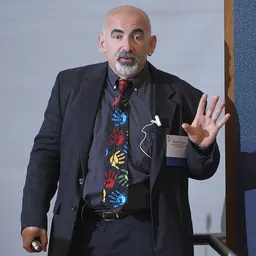



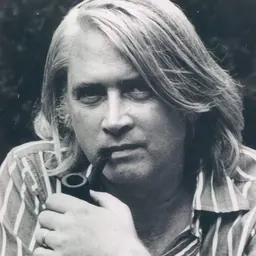


Related people
Same field, nearest in time
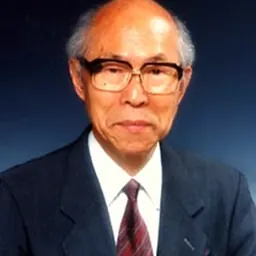

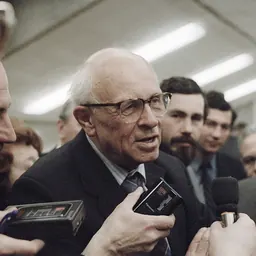
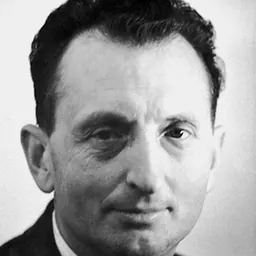
Contemporaries
People whose lives overlapped Paul Black's


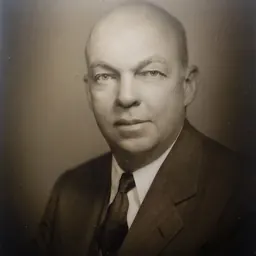
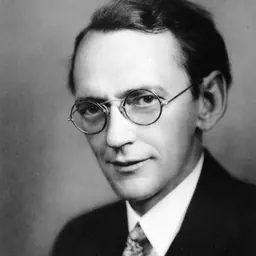
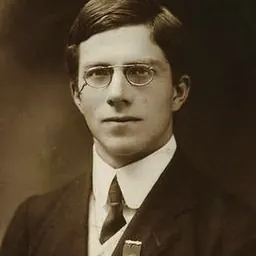
Frequently asked questions
Who was Paul Black?
British physicist and educational researcher
When was Paul Black born?
Paul Black was born in 1930.
When did Paul Black die?
Paul Black died on 16 March 2026.
What was Paul Black's occupation?
Paul Black was a physicist.
What was Paul Black known for?
Paul Black was known for Assessment for learning and Physics.
Sources & further reading
· DBpedia: Paul Black (educational researcher)
Cite this page
APA: Biography.guide. (2026). Paul Black. https://biography.guide/paul-black-physicist/
MLA: "Paul Black." Biography.guide, https://biography.guide/paul-black-physicist/.
Chicago: "Paul Black." Biography.guide. https://biography.guide/paul-black-physicist/.
Data last updated: 2026-09-20 · Spot an error? Report a correction.
Page generated 2026-09-27 05:18 UTC