
About Patrick Higginbotham
Born 1938. Patrick Higginbotham is an American lawyer and judge.
Patrick Errol Higginbotham (born December 16, 1938) is an American judge and lawyer who serves as a senior United States circuit judge of the United States Court of Appeals for the Fifth Circuit.
Background and education Higginbotham was born in McCalla, Alabama, to George and Ann Higginbotham (née Tumlin). The youngest of three, Higginbotham showed academic promise early in life.
Higginbotham grew up in a poor family in rural Alabama. After his father and mother separated, he followed his mother to Bessemer, Alabama. With money scarce, the family had to find alternative methods to finance college. Higginbotham's brother did this by joining the United States Navy to get a GI Bill. Patrick Higginbotham himself, however, soon became interested in tennis from the ages of 11 or 12, a result of his mother bringing him along to Montevallo, Alabama while attending its university for women. Trading a knife for a racket, he would play through high school, becoming the top player in the 18 and under rankings in the state, earning him a scholarship.
Higginbotham received a Bachelor of Arts degree from the University of Alabama in 1960, attending on a tennis scholarship offered to him by then-Athletic-Director Paul "Bear" Bryant and serving as the team captain. He finished college and law school in just five years and received in 1961 a Bachelor of Laws from the University of Alabama School of Law at Tuscaloosa, where he also met Elizabeth, his eventual wife of 52 years.
Career
He was in the United States Air Force, JAG Corps from 1961 to 1964, an experience that Higginbotham would consider to be a turning point in his life. It was also during this time, where he would marry his wife.
Federal judicial service
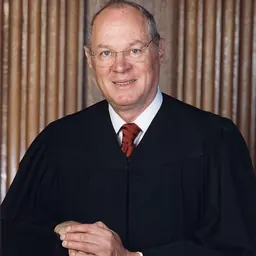
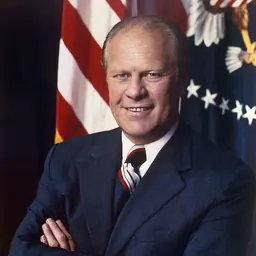
District court Higginbotham was nominated by President Gerald Ford on December 2, 1975, to a seat on the United States District Court for the Northern District of Texas vacated by Judge Sarah T. Hughes. He was confirmed by the United States Senate on December 12, 1975, and received commission the same day. At the time he was appointed to the District Court, he was the youngest sitting judge in the country. His service was terminated on August 3, 1982, due to elevation to the Fifth Circuit. The nomination eventually went to Ninth Circuit Judge Anthony Kennedy.
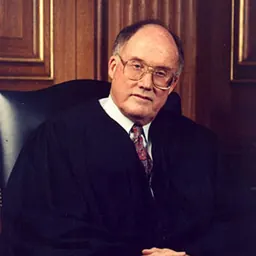
Other service For many years, Higginbotham was a faculty member at the Federal Judicial Center and, as an appointee of Chief Justice William Rehnquist, the chairman of the Advisory Committee on Civil Rules. He served as president of the American Inns of Court Foundation, and in 1996 the Dallas chapter of that organization renamed itself after him. He has been a leading proponent and former chairman of The Center for American and International Law, a Dallas-based organization which aims to train foreign and domestic lawyers and police officers, a Fellow of the American Bar Association, chairman of its Appellate Judges Conference, member of the Board of Editors of the ABA Journal, and advisor to the National Center for State Courts on its study of habeas corpus. He is also a lifetime member of the American Law Institute and a member of the Board of Overseers, Institute of Civil Justice, RAND Corporation.
As a professor of constitutional law, Higginbotham taught at the Southern Methodist University School of Law. He also taught at the University of Alabama School of Law during the fall semesters of 1995, 1997, and 1999, as well as the University of Texas School of Law in 1998, Texas Tech University School of Law during the spring of 1999, and the St. Marie's School of Law.
Speeches and writings Higginbotham has published a number of articles in law reviews and newspapers. He is also a frequent speaker on various legal topics, particularly the death penalty and the decline of jury trials, having lectured at places including the Universities of Alabama, Chicago, St. Mary's, Texas, Texas Tech, Columbia, Duke, and Penn, as well as Case Western, Northwestern, Utah, Loyola, Hofstra, the National Science Foundation, The American College of Trial Lawyers and the National Institute of Trial Advocacy.
Personal life Higginbotham married Elizabeth O'Neal in August 1961. They had two daughters.
Notable opinions In In re LTV Securities Litigation, 88 F.R.D. 134 (N.D. Tex. 1980), Higginbotham formulated one of the earliest versions of the "fraud on the market" theory of loss causation, using language later quoted by the Supreme Court when it adopted the theory, see Basic, Inc. v. Levinson, 485 U.S. 224, 244 (1988). In Schultea v. Wood, 47 F.3d 1427 (5th Cir. 1995) (en banc), Higginbotham allowed under Rule 7 notice pleading in potential qualified immunity cases but required, in reply to an allegation of qualified immunity, more detailed pleading, a tack later approved by the Supreme Court. In Flores v. City of Boerne, 73 F.3d 1352 (5th Cir. 1996), Higginbotham upheld the Religious Freedom Restoration Act against the claim that the Act exceeded Congress's powers under the Fourteenth Amendment. The Supreme Court later reversed the decision. In Doe v. Beaumont Independent School District, 240 F.3d 462 (5th Cir. 2001) (en banc), Higginbotham found that public school students and their parents had standing to challenge district's "Clergy in Schools" volunteer counseling program and that facts issues required reversal of summary judgment to defendants. In Van Orden v. Perry, 351 F.3d 173 (5th Cir. 2003), Higginbotham upheld against an Establishment Clause challenge a Ten Commandments display on the Texas State Capitol, concluding that its secular history and purpose rendered it constitutional. The Supreme Court later affirmed. Between 2000 and 2006, Higginbotham, sitting as the Circuit Judge along with two district judges in a Voting Rights Act three-judge panel, twice changed Texas's Congressional districts. His later effort, which struck a balance between competing interests while hewing closely to the Texas legislature's intent, was widely hailed. In June Medical Services v. Russo, 30 F.3d 397 (5th Cir. 2018), Higginbotham dissented in a case upholding Louisiana's Act 620, which requires physicians performing abortions to have active admitting privileges at a hospital within thirty miles of a clinic. Higginbotham criticized the majority for reviewing the statute de novo, as a district court would, saying, "Appellate judges are not the triers of fact. It is apparent that when abortion comes on stage it shadows the role of settled judicial rules." In Barnes v. Felix, 91 F.4th 393 (5th Cir. 2024), Higginbotham wrote the (majority and) concurring opinion later cited by the Supreme Court in its reversal (US 91 F.4th 393) stating that the "moment of threat" rule formerly used by the Fifth Circuit in its excessive-force inquiry (whether officers or other persons were in danger at moment of threat that resulted in officers' use of deadly force) should be vacated, and that the Court should adopt the "totality of the circumstances" rule. Higginbotham's concurring opinion pointed out judicial shortcomings: "A routine traffic stop has again ended in the death of an unarmed black man, and again we cloak a police officer with qualified immunity, shielding his liability." The Supreme Court adopted the "totality of the circumstances" rule, as recommended by Higginbotham.
Awards and recognition
The 100 Most Powerful People For the 80's (Next Magazine) - 1981 Daniel J. Meador Outstanding Alumnus Award (University of Alabama) - 1986 Samuel E. Gates Litigation Award (American College of Trial Lawyers) - 1997 A. Sherman Christensen Award (American Inns of Court) - 2002 Jurist of the Year Award (Texas Chapters of the American Board of Trial Advocates) - 2006 Lewis F. Powell, Jr. Award for Professionalism and Ethics at a Celebration of Excellence (presented by Justice Alito in the United States Supreme Court) - 2008 Chief Justice John Marshall Award for Lifetime achievement from the JAG Association - 2010 St. Thomas More Award (St. Mary's School of Law, San Antonio, Texas) - 2011 Chief Justice Jack Pope Professionalism and Integrity Award (Texas Center for Legal Ethics) - 2013
Don’t just read it —
keep it.
Full-length biographies made to live with: read them, listen on the way to work, watch them tonight.
- E-book
- Audio
- Video
Instant download · yours to keep · every purchase keeps this site free
Important facts
People in Patrick Higginbotham's life
Named in this biography and alive at the same time




Related people
Same field, nearest in time


Contemporaries
People whose lives overlapped Patrick Higginbotham's




Frequently asked questions
Who is Patrick Higginbotham?
American judge
When was Patrick Higginbotham born?
Patrick Higginbotham was born on 16 December 1938 in McCalla.
What is Patrick Higginbotham's occupation?
Patrick Higginbotham is a lawyer and judge.
What nationality is Patrick Higginbotham?
Patrick Higginbotham is American.
Sources & further reading
· Wikipedia: Patrick Higginbotham
· DBpedia: Patrick Higginbotham
Cite this page
APA: Biography.guide. (2026). Patrick Higginbotham. https://biography.guide/patrick-higginbotham/
MLA: "Patrick Higginbotham." Biography.guide, https://biography.guide/patrick-higginbotham/.
Chicago: "Patrick Higginbotham." Biography.guide. https://biography.guide/patrick-higginbotham/.
Data last updated: 2026-09-20 · Spot an error? Report a correction.
Page generated 2026-09-27 05:08 UTC