
About Patrick Henry Cronin
Lived 1846 – 1889 (aged 42–43). Patrick Henry Cronin was a physician.
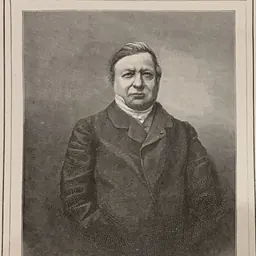
Philip Patrick Henry Cronin (August 7, 1846 – May 4, 1889) was an Irish immigrant to the United States, a physician, and a member of Clan na Gael in Chicago. In 1889, Cronin was murdered by affiliates of Clan na Gael. Following an extensive investigation into his death, the murder trial was, at the time, the longest-running trial in U.S. history. Cronin's murder caused a public backlash against secret societies, including protests and written condemnations by the leadership of the Catholic Church.
Cronin grew up in the U.S. and Canada, and moved to the Midwestern United States after the American Civil War. He became a physician and a prominent member of high society, and represented St. Louis at the Exposition Universelle (1878). While in St. Louis, Cronin joined multiple clubs, among them, the Irish nationalist organization, Clan na Gael. When he moved to Chicago, Cronin continued his involvement with Clan na Gael. After criticizing the leadership of the Chicago camp of Clan na Gael, he was expelled from the group and accused of being a British spy. In May 1889, Cronin disappeared. Later that month, public works employees discovered his body in a sewer in a northern suburb of Chicago. The press coverage of the investigation and trial caught international attention. Cronin's funeral drew the largest crowds for a funeral since the arrival of Abraham Lincoln's body in Chicago. Patrick O'Sullivan, Daniel Coughlin, Martin Burke, and John Kunzel were found guilty of the murder of Patrick Cronin.
Early life Born on August 7, 1846, in Buttevant, County Cork, Ireland, Cronin was an infant when his family relocated to New York City. Thereafter, they moved to Baltimore, and later to Ontario. At the age of 10, he was enrolled at the Academy of St. Catherine's, graduating with honors in 1863. For the next few years, he worked in Pennsylvania as a school teacher. In 1867, he moved west to Missouri, eventually settling in St. Louis.
Career Cronin was known for his tenor singing voice. He sang at Irish events, at his local Catholic church, and at the Second Baptist Church in St. Louis, which was unusual because Cronin was Catholic. His singing gained the attention of affluent businessmen in St. Louis. After working for the St. Louis and Southeastern Railroad as a city ticket agent, Cronin secured sponsorship from the Bagnal Timber Company to study at Missouri Medical College. He graduated in the late 1870s and continued his education at Saint Louis University, where he earned a Master's degree and a Doctor of Philosophy. Cronin was involved with the revival of the St. Louis College of Physicians and Surgeons, and he served as its professor of eye and ear diseases by the early 1880s. Cronin was also well known in St. Louis society and attended the Exposition Universelle (1878) in Paris as one of Missouri's state commissioners.
Through his involvement with Clan na Gael, Cronin secured a position with Cook County Hospital. Cronin did not remain with Cook County Hospital, instead opting to open a private medical practice. He had two offices, one downtown and the other at his residence on North Clark Street, where he lived with Theo and Cordelia Conklin. In Chicago, Cronin sang at Holy Name Cathedral and at Irish events in the city. as well as multiple Irish societies, including the Ancient Order of Hibernians and, starting in late 1876, Clan na Gael.
Rivalry with Alexander Sullivan
Cronin sought to rise through the ranks of the Chicago camp of Clan na Gael, which brought him in contact with the Triangle. Clan na Gael was administered by chapters called "camps," and Camp 20 (in Chicago) was Clan na Gael's headquarters. Sullivan and his followers favored guerrilla warfare on British soil. This policy became referred to as the "dynamite policy". The dynamite campaign consisted largely of terrorist attacks on public spaces in Great Britain, Due to Henri le Caron, a British Intelligence mole inside Clan na Gael, the dynamite campaign was unsuccessful, resulting in the deaths and arrests of the men attempting to bomb British targets. Meanwhile, Cronin emerged as the leader of the opposition, making him Sullivan's rival. Cronin accused Sullivan of embezzlement, and demanded that Sullivan account for the missing funds. In retaliation, Sullivan accused Cronin of "treason," and ordered an internal trial with a panel of five men to try Cronin. Among the panel members were Detective Daniel Coughlin of the Chicago Police Department, and Henri le Caron. In 1885, the panel found Cronin guilty and expelled him from Clan na Gael. Instead, the decision to expel Cronin split Clan na Gael, with many Chicago members supporting Cronin. rented a cottage in suburban Lake View, now the Uptown neighborhood of Chicago, one block from the offices of O'Sullivan Ice Company. Burke told his landlord that his brother and invalid sister would be moving in with him and furniture, including a large trunk, was delivered to the cottage. On May 4, Chicago Police detective Daniel Coughlin came to a Chicago stable, and told the liveryman that later, a friend of his would need a horse and buggy. Coughlin instructed the liveryman to "say nothing to anyone about it." Later that day, Coughlin's friend came to fetch a two-seat buggy and a white horse.
On the night of May 4, 1889, a man called on Cronin at his home, seeking medical care for an injured worker at O'Sullivan's ice house in Lake View. Cronin was observed leaving in a buggy with a white horse. He never returned home. The Conklins also found that Cronin did not take his revolver with him, as he would have for a long trip, and that he only carried a small amount of money. On May 10, Charles T. Long, the son of a prominent newspaper publisher in Toronto who belonged to a secret society with Cronin, sent dispatches to Chicago's morning papers that Cronin was alive and well in Canada. Long described Cronin as seeming to be "slightly deranged." The accounts of Cronin in Canada were definitive enough evidence for Cronin's enemies that he was guilty of some crime and had fled Chicago to escape justice. Some reports said Cronin admitted to being a British spy, and was making his way to England. The following morning, police were called to a ditch on Evanston Avenue, where passersby found a large trunk, filled with blood spatter and blood soaked cotton. There was also a dark brown lock of hair found inside. Lake View Police Captain Villiers examined the trunk and concluded that an adult person had been murdered and stuffed inside. The trunk itself was unremarkable, and was likely purchased for the purpose of holding a body. Villiers determined that a murder took place sometime after midnight.
The body Police searched the brush, grass, and vacant houses for a mile surrounding where the trunk was found, but discovered no trace of any body. The search continued. On May 22, employees of the Board of Public Works were called to investigate a jammed sewer near Broadway and Foster Avenue,
Funeral
Cronin's funeral was the most attended since Abraham Lincoln's body arrived in Chicago. On Saturday, May 25, 1889, nearly 12,000 people visited Cavalry Armory on Michigan Avenue to see Cronin's coffin. The body was too decomposed and damaged to permit an open casket. On Sunday morning, May 26, the funeral procession made its way through the streets of Chicago. Cronin's casket was placed in a hearse and joined a procession of 8,000 people. Thousands of people gathered in the streets during the mass, waiting for the ceremony to end. Cronin's casket travelled to the funeral by train to Calvary Cemetery. Five thousand people gathered at the cemetery for the entombment. Cronin was celebrated as an Irish American hero and a martyr.
Arrests On May 25, the Chicago Times reported that Daniel Coughlin had hired the horse and buggy used to abduct Cronin. Coughlin was interrogated by a panel that included Police Chief Hubbard and Chicago Mayor DeWitt Clinton Cregier. After giving "evasive and vague" answers, Coughlin was arrested as an accomplice to the abduction and murder of Cronin. On the morning of May 27, Patrick O'Sullivan, the ice man, was called to the Lake View Police Station and was arrested upon arrival. After much questioning, O'Sullivan confessed that he had known Coughlin for years, he had contrived his introduction to Cronin as a physician, he was a member of Clan na Gael, and he had talked with "Frank Williams," who rented the cottage where Cronin was murdered. O'Sullivan and Coughlin were held at Cook County Jail. In June, Martin Burke (Frank Williams), was found travelling under another alias in Winnipeg, on his way to Liverpool. On June 11, Chicago police arrested Alexander Sullivan, but only held him for one night on account of the lack of evidence of his involvement. The press were involved in the case from the earliest days. The newspaper offices in Chicago were notified of Cronin's disappearance promptly on May 5, and "sleuth reporters" were investigating by sundown. The Chicago Times reporting that Daniel Coughlin was involved led to long-awaited arrests. Journalists scrutinized the police, and shed light on irregular practices, holding the police accountable.
Newspapers in Ireland paid much less attention to Cronin's murder, and reported that it was the actions of individuals, not a larger conspiracy. American journalists, however, treated the case as a sensational murder mystery, sometimes embellishing reports to attract higher readership. The press was quick to condemn the alleged murders, Alexander Sullivan among them.
Newspapers continued to run stories about Cronin's murder until the 1950s. In 1929, for the fortieth anniversary of Cronin's death, the Chicago Tribune ran a contest in which readers asked to "solve the mystery of the case" for a $500 prize.
Trial The public was so steeped in press coverage of the Cronin case, it was very difficult to find jurors who had not already formed an opinion of the case. The trial began on October 23, 1889, and 5,000 people came to the courthouse (of which only 200 could fit in the courtroom). At the time, it was the longest-running trial in American history. Many witnesses, as well as the defendants, admitted to their involvement with Clan na Gael. Some witnesses called testified that Cronin believed his life was in danger, others testified that they had been asked to harm or kill Cronin. There was an attempt to bribe the jury but the juror Charles C. Dix turned over the evidence to State's Attorney Joel Longnecker.
Closing arguments took place from November 29 to December 12, 1889. The jurors deliberated for 70 hours before issuing verdicts.
The public organized against secret societies as well. Thousands of Chicagoans attended protest meetings and concerts to push for the suppression of secret societies. According to Gillian O'Brien, by the time "the Cronin murder case had concluded, there was little that remained secret about the secret society [Clan na Gael]."
Don’t just read it —
keep it.
Full-length biographies made to live with: read them, listen on the way to work, watch them tonight.
- E-book
- Audio
- Video
Instant download · yours to keep · every purchase keeps this site free
Important facts
People in Patrick Henry Cronin's life
Named in this biography and alive at the same time



Related people
Same field, nearest in time




Contemporaries
People whose lives overlapped Patrick Henry Cronin's


Frequently asked questions
Who was Patrick Henry Cronin?
Irish immigrant to the U.S., physician, and murder victim (1846-1889)
When was Patrick Henry Cronin born?
Patrick Henry Cronin was born on 7 August 1846 in Buttevant.
When did Patrick Henry Cronin die?
Patrick Henry Cronin died in 1889 in Chicago.
What was Patrick Henry Cronin's occupation?
Patrick Henry Cronin was a physician.
What nationality was Patrick Henry Cronin?
Patrick Henry Cronin's recorded nationality: Irish people.
Sources & further reading
· Wikipedia: Patrick Henry Cronin
· DBpedia: Patrick Henry Cronin
Cite this page
APA: Biography.guide. (2026). Patrick Henry Cronin. https://biography.guide/patrick-henry-cronin/
MLA: "Patrick Henry Cronin." Biography.guide, https://biography.guide/patrick-henry-cronin/.
Chicago: "Patrick Henry Cronin." Biography.guide. https://biography.guide/patrick-henry-cronin/.
Data last updated: 2026-09-25 · Spot an error? Report a correction.
Page generated 2026-09-27 05:11 UTC