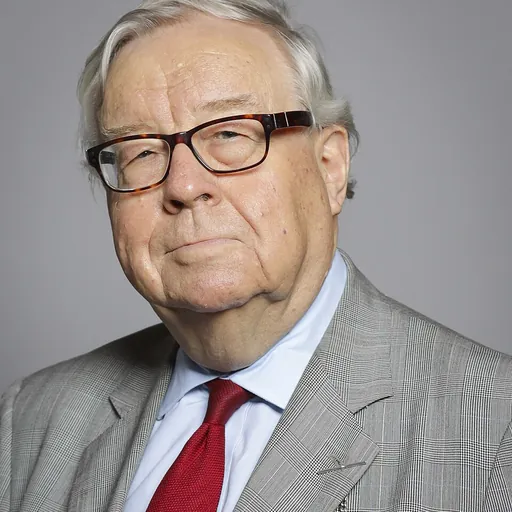
About Patrick Cormack, Baron Cormack
Lived 1939 – 2024 (aged 84). Patrick Cormack, Baron Cormack was a British politician.
Patrick Thomas Cormack, Baron Cormack, (18 May 1939 – 25 February 2024) was a British politician, historian, journalist and author. He served as a member of Parliament (MP) for 40 years, from 1970 to 2010. Cormack was a member of the Conservative Party and was seen as a one-nation conservative.
Before entering Parliament, Cormack was a teacher. He was elected for Cannock at the 1970 general election. Following boundary changes he was elected for South West Staffordshire in 1974, renamed South Staffordshire in 1983. He was elected chair of the Northern Ireland Affairs Select Committee in 2005. He was also twice a candidate for the speakership of the House of Commons. After standing down from the House of Commons in 2010, he served as an active life peer in the House of Lords.
Early life and career Cormack was born to Thomas Charles Cormack, a local government officer and master mariner, and his wife Kathleen Mary Cormack in Grimsby just before the outbreak of the Second World War. He was educated locally at the St James's Choir School and the Havelock School, before attending the University of Hull, where he received a Bachelor of Arts degree in 1961.
Cormack was a teacher at his former school, St James's Choir School, in 1961. Cormack contested the safe Labour parliamentary seat of Bolsover at the 1964 general election, where he lost to the sitting MP Harold Neal, who won with a majority of 23,103 votes. At the 1966 general election, Cormack contested his hometown seat of Grimsby, but again was defeated, this time by the Secretary of State for Education and Science, Anthony Crosland, who had a majority of 8,126. Cormack became a training and education officer with Ross Ltd in 1966. In 1967, he was appointed an assistant house master at the Wrekin College in Wellington, Shropshire, for two years, after which he became the head of history at Brewood Grammar School in 1969.
Parliamentary career At the 1970 general election, Cormack stood for the seat of Cannock, and this time was elected, narrowly defeating the incumbent Labour MP Jennie Lee. Cormack won with a majority of 1,529.
From 1970 to 1973, Cormack served as a Parliamentary Private Secretary at the Department of Health and Social Security. He moved constituencies at the February 1974 general election, leaving the marginal seat of Cannock and instead contesting the adjacent newly drawn seat of South West Staffordshire, which he won comfortably with a majority of 9,758.
Cormack became chairman of the editorial board of The House magazine in 1976, and editor of the magazine in 1979.
Cormack was a member of the Education Select Committee for the duration of the 1979–83 Parliament.
An opponent to Prime Minister Margaret Thatcher's monetarist economic policies, in November 1981, with national unemployment approaching 3,000,000 (compared to 1,500,000 two years previously), Cormack urged Thatcher to change her government's policies if Britain was to avoid economic disaster.
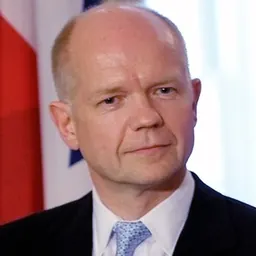
In the 1983 general election, Cormack was elected to the renamed seat of South Staffordshire, covering a similar area to the former South West Staffordshire seat. In 1997, after 27 years as an MP on the backbenches, he was promoted by the then Leader of the Opposition, William Hague, to become the Shadow Deputy Leader of the House of Commons.
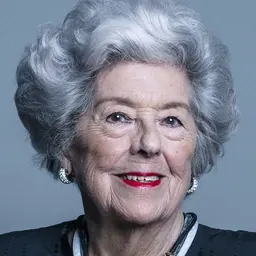
Cormack resigned from this position in early 2000, standing later that year for the position of Speaker of the House of Commons (following the retirement of Betty Boothroyd). However, he was unsuccessful in his bid for the speakership, with the House instead choosing Labour MP Michael Martin for the role. Cormack became life president of The House magazine in 2005. In July 2007, the South Staffordshire Conservatives' executive council voted on the matter, but it resulted in a tie. Consequently, a vote of all local party members was held to decide whether Cormack should remain the party's candidate at the following general election. In the vote, held on 14 September, Cormack was readopted as the Conservative candidate, receiving the backing of over 75% of participating party members. Cormack expressed his gratitude and called the victory a "great relief". Subsequently, on 1 December 2009, Cormack announced his intention to stand down at the 2010 general election.
Although having a reputation as a serious parliamentarian, on occasions he was known for asking light hearted questions in the House of Commons, once simply asking Prime Minister Gordon Brown at Prime Minister's Questions what he wanted for Christmas.
Cormack was created a life peer on 18 December 2010, as Baron Cormack, of Enville in the County of Staffordshire. He sat on the Conservative benches in the House of Lords. Cormack opposed the Coalition's plans to reform the House of Lords, speaking out against them numerous times in the chamber.
Cormack was seen as a One Nation Tory. He was a Heathite, and was a frequent rebel under Margaret Thatcher – one of the so-called "wets".
Other interests Cormack took an active interest in historical issues, particularly those related to English Heritage. He was also a knowledgeable Parliamentary historian. He wrote many books on subjects ranging from the history of Parliament, British castles, English cathedrals, and a book on William Wilberforce. as well as President of the Prayer Book Society for many years. Cormack also served as president of the British Association of Friends of Museums from 2023 until his death in 2024.
Personal life and death Cormack married Kathleen Mary MacDonald in 1967. They had two sons. He listed his recreations in Who's Who as "fighting philistines, walking, visiting old churches, avoiding sitting on fences". He was a member of the Athenaeum and Lincolnshire clubs. Among those who paid tribute to him were Prime Minister Rishi Sunak and the Leader of the Opposition (and future Prime Minister), Sir Keir Starmer.
Honours
He was elected as a Fellow of the Society of Antiquaries of London (FSA) on 5 May 1978. He was made a Knight Bachelor in the 1995 New Years Honours List, for his service to Parliament. He became a Freeman of the City of London in 1980. He was elected as a Fellow of the Royal Historical Society (FRHistS) in 2010. He was elected as an Honorary Fellow of the Historical Association (FHA) in 2010. He was awarded the Honorary degree of Doctor of Letters (D.Litt.) by the University of Hull in 2010. He was appointed a deputy lieutenant (DL) for the County of Staffordshire on 11 April 2011. He was awarded the Honorary degree of Doctor of Laws (LL.D) by the Catholic University of America on 21 June 2013. He was awarded the Freedom of the City of Lincoln on 18 March 2022.
Arms
Don’t just read it —
keep it.
Full-length biographies made to live with: read them, listen on the way to work, watch them tonight.
- E-book
- Audio
- Video
Instant download · yours to keep · every purchase keeps this site free
Important facts
People in Patrick Cormack, Baron Cormack's life
Named in this biography and alive at the same time





Related people
Same field, nearest in time






Contemporaries
People whose lives overlapped Patrick Cormack, Baron Cormack's



Frequently asked questions
Who was Patrick Cormack, Baron Cormack?
British politician (1939–2024)
When was Patrick Cormack, Baron Cormack born?
Patrick Cormack, Baron Cormack was born on 18 May 1939 in Grimsby.
When did Patrick Cormack, Baron Cormack die?
Patrick Cormack, Baron Cormack died on 25 February 2024 in Lincoln.
What was Patrick Cormack, Baron Cormack's occupation?
Patrick Cormack, Baron Cormack was a politician.
What nationality was Patrick Cormack, Baron Cormack?
Patrick Cormack, Baron Cormack was British.
Sources & further reading
· Wikipedia: Patrick Cormack, Baron Cormack
Cite this page
APA: Biography.guide. (2026). Patrick Cormack, Baron Cormack. https://biography.guide/patrick-cormack-baron-cormack/
MLA: "Patrick Cormack, Baron Cormack." Biography.guide, https://biography.guide/patrick-cormack-baron-cormack/.
Chicago: "Patrick Cormack, Baron Cormack." Biography.guide. https://biography.guide/patrick-cormack-baron-cormack/.
Data last updated: 2026-09-22 · Spot an error? Report a correction.
Portrait: Wikimedia Commons · author & licence
Page generated 2026-09-27 05:03 UTC