
Patrick Burns
Canadian politician and businessperson
About Patrick Burns
Lived 1856 – 1937 (aged 80). Patrick Burns was a Canadian politician, businessperson, cattle rancher, meat packer and rancher.
Patrick Burns (July 6, 1856 – February 24, 1937) was a Canadian politician, rancher, meat packer, businessman, and philanthropist. A self-made man of wealth, he built one of the world's largest integrated meat-packing empires, P. Burns & Co., becoming one of the wealthiest Canadians of his time. He is honoured as one of the Big Four western cattle kings who started the Calgary Stampede in Alberta in 1912.
He worked in the meat industry and owned cattle ranches. Burns's 700,000 acres (2,800 km2) of land in Southern Alberta extended from Cochrane to the US border. His parents had immigrated from County Mayo, Ireland in 1848 due to the Great Famine, and as part of the naturalization process, the family name was shortened to Byrne and then later to Burns. The family moved from the Oshawa area northward in the spring of 1864 to the small community of Kirkfield, Ontario, where Burns spent a majority of his childhood. Patrick had very little formal schooling but learned a great deal about hard work and thriftiness from his parents.
Burns continued to homestead in Manitoba until after the Louis Riel rebellion but gradually became involved in buying cattle and selling meat. He began his meat packing career with a cow bought on credit and sold for $4. He began freighting goods from Winnipeg and driving his neighbours' cattle to the Winnipeg market. By 1885, he was buying and selling his own cattle.
Alberta
Burns moved to Calgary in 1890 and established his first substantial slaughterhouse. In 1898, he built a packing house in Calgary followed by others in Vancouver, Edmonton, Prince Albert, and Regina. He then turned to ranching on a large scale and acquired large tracts of land. His company, P. Burns & Co. (later Burns Foods) became western Canada's largest meatpacking company.
In 1901 he married Eileen Ellis of Penticton in a small ceremony in London, England. Back in Calgary, Burns was building a house for himself and his new bride. Burns Manor, on the corner of 4th Street and 13th Avenue SW, designed by Pat's friend, the famed architect Francis Rattenbury, was a grand, 18-room sandstone mansion, visited by the likes of Prime Ministers and Royalty. Construction took two years, and the couple meanwhile lived at the Alberta Hotel, on Stephen Avenue. The Burnses had one son, Patrick Michael Burns, born in Calgary in 1906.
In 1912, he was one of the Big Four, who started the Calgary Stampede. With A. E. Cross, A. J. McLean, and George Lane, they arranged $100,000 worth of financing and billed the event as "The Greatest Outdoor Show on Earth." Burns then personally owned six ranches with 38,000 head of cattle, 1,500 horses and 20,000 sheep. His company, Burns Foods, had abattoirs in Calgary, Edmonton, Vancouver, Prince Albert, and Regina with an overall daily capacity of 1,070 cattle, 6,000 pigs, and 3,000 sheep. Burns's facilities were of the utmost sanitation and technically advanced to a level previously unseen in Western Canada. Facilities were eventually opened in Winnipeg, Seattle, Australia, and Great Britain.
Burns was able to revolutionize the slaughterhouse industry by emphasizing efficiency in the use of byproducts. Traditionally, much of the animals had been lost to waste, but with his advanced abattoirs, Burns could expand the list of recoverable products, which included leather, fats for soap, bone for bone meal and manufactured articles, fertilizers, glycerine, hair for brushes, and even an array of pharmaceuticals. Burns joked that the only product not recovered were the pigs' squeals, which could have been sold to politicians.
Burns played a crucial role in World War I by supplying meat to troops overseas. For example, he shipped over 2,000 tons of pork shipped to troops in France during the first half of 1917. After the war, Belgium was looking to secure a meat supply from a North American company. With no American distributors able to meet the call, Burns stepped in to help the devastated nation.
British Columbia
From the early 1900s to 1914, he was the principal meat supplier for the workers during the construction of the Grand Trunk Pacific Railway. One of the Foley, Welch and Stewart, sternwheelers, the Skeena was used for the express purpose of delivering Burns's beef to the railway construction camps in British Columbia. The property included a significant amount of wetland that was not ideal terrain for cattle grazing and so failed. The land was renamed the Burns Bog and maintained its original state until around the 1940s, when peat harvesting began and parts of the bog were dug up.
In 1907, Dominic Burns, a brother, oversaw the construction of Burns Foods' first slaughterhouse in Vancouver. When it was torn down in 1969 the man in charge of the demolition said it was the toughest building to destroy he had ever seen with brick walls that were thick.
In 1910, Dominic had the Vancouver Block built on Granville Street, Vancouver. Dominic moved into the penthouse upon completion of the building in 1912 and lived there until his death in 1933. The building is recognized by its large clock tower and has incredible historic value with its prominent location, the highest point of land in Downtown Vancouver, and being an early example of Edwardian commercial buildings that typified the building boom at the turn of the 20th century.
The Blakeburn coalmine, near Princeton and Coalmont, was another of Burns's ventures.
Bow Valley Ranch
The Bow Valley Farm became the functional headquarters of his cattle empire. Burns also acquired adjacent sections of land, as they became available. Eventually, the Burns Ranch at Bow Valley included some bounded on the north by what is now Stampede Park, on the east by the Bow River, on the south by 146th Avenue, and on the west by MacLeod Trail, a large property by any standards but only a small segment of his ranching empire.
In 1928, he sold his interests in Burns Foods for $15 million ($ million in ) to Dominion Securities and the company was renamed Burns & Co. Ltd. Some of the other ranches in his possession were Willow Creek, Glengarry (44), Bradfield, Two Dot, Rio Alto, Linehum, Flying E, and C.K. He donated three 750 lb bells to St. Mary's Cathedral in 1904 that were cast by the Fonderie Paccard in Annecy, France. The bells were the only parts from the old building used in the construction of the existing cathedral. He paid for the construction of Albert Lacombe's "Hermitage" in Pincher Creek, and donated the land for the Lacombe Nursing Home at Midnapore, which he kept provisioned at his expense.
Burns placed a high value on education. He contributed to the creation of Western Canada College, now Western Canada High School, in Calgary, provided the funding for the erection of St. Joseph's College at the University of Alberta, and financed construction on a new school building, new residence, and donated land for expansion at Vancouver College in Vancouver.
On August 11, 1914, he offered £10,000 to equip a complete "Legion" (Mounted Rifles Regiment) of Canadian Legion of Frontiersmen, for the Canadian Government's war effort.
In 1914, Pope Benedict XV created him a Knight Commander of the Order of St. Gregory the Great, the first Canadian to receive such an honour. He was also a Knight of St. John of Jerusalem, and an honorary colonel in Calgary's 31st Regiment. He is interred in St. Mary's Cemetery.
Estate After his death, Burns's estate was assessed at $3.8 million ($ million in )—having fallen significantly due to the Great Depression. Some Maple Leaf products retain the Burns name but many have been rebranded.
Alberta's Greatest Citizen As part of its 125th anniversary, the Calgary Herald organized the search for Our Greatest Albertan. In what is considered the largest citizen journalism project in the province, readers originally nominated 125 people for consideration. A Top 10 list was culminated from months of thought, debate, and votes from the public. Along with Burns, the list included former Premier Peter Lougheed, former Mayor and Lieutenant-Governor Grant MacEwan and Famous Five member Nellie McClung. On October 16, 2008, at a gala at Heritage Park, Burns was named the province's greatest citizen. The Herald commented that "His story is the story of Alberta. His struggles, his dreams, his success and philanthropy define the very core of our western character."
Influence on ranching Burns was a major force behind the growth of ranching in Alberta. He purchased large herds of purebred Hereford stock, which he used to help fellow ranchers improve the blood lines of their own cattle. A pioneer of cold-weather ranching, Burns put up 250,000 tons of hay for winter feed and convinced other ranchers to utilize winter feeding methods themselves. He renovated the corrals and feeding pens on his ranches and introduced modern feed-lot techniques to finish cattle for market.
Namesakes
Burns Block, 8th Avenue and Centre Street, Calgary, Alberta, ca. 1906
Buildings Burns Manor, Calgary Burns Block, Calgary Burns Block, Nelson Burns Block, Vancouver Burns Building, Calgary Burns Stadium (former home of the Calgary Cannons), Calgary, Senator Patrick Burns Building at SAIT Polytechnic, Calgary Senator Patrick Burns School, Calgary
Land Burns Bog, Delta, British Columbia (Named after Burns's brother, Dominic) Mount Burns, Alberta
Parks Senator Patrick Burns Memorial Rock Garden, Calgary Blakeburn Park, Port Coquitlam
Roads Burnsland Road, Calgary Burns Ranch Road, Olds Burns Road, Winnipeg Patrick Street, Winnipeg
Ranches The following is a list of ranches owned wholly or in part by Patrick Burns or his companies:
OH/Rio Alto Ranch Bar U Ranch Bow Valley Ranch CK Ranch Ricardo Ranch Circle Ranch Walrond Ranch Bradfield Ranch Lineham Ranch Glengarry Ranch Flying E Ranch 76 Ranch Two Dot Ranch
Don’t just read it —
keep it.
Full-length biographies made to live with: read them, listen on the way to work, watch them tonight.
- E-book
- Audio
- Video
Instant download · yours to keep · every purchase keeps this site free
Important facts
People in Patrick Burns's life
Named in this biography and alive at the same time




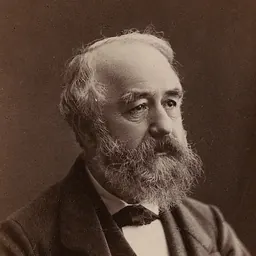
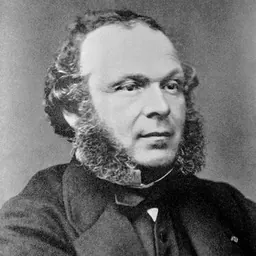
Related people
Same field, nearest in time




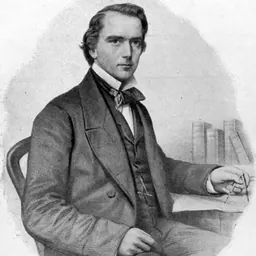
Contemporaries
People whose lives overlapped Patrick Burns's




Frequently asked questions
Who was Patrick Burns?
Canadian politician and businessperson
When was Patrick Burns born?
Patrick Burns was born on 5 July 1856 in Oshawa.
When did Patrick Burns die?
Patrick Burns died on 24 February 1937 in Calgary.
What was Patrick Burns's occupation?
Patrick Burns was a politician, businessperson, cattle rancher, meat packer and rancher.
What nationality was Patrick Burns?
Patrick Burns was Canadian.
Sources & further reading
· DBpedia: Patrick Burns (businessman)
Cite this page
APA: Biography.guide. (2026). Patrick Burns. https://biography.guide/patrick-burns/
MLA: "Patrick Burns." Biography.guide, https://biography.guide/patrick-burns/.
Chicago: "Patrick Burns." Biography.guide. https://biography.guide/patrick-burns/.
Data last updated: 2026-09-20 · Spot an error? Report a correction.
Page generated 2026-09-27 05:26 UTC