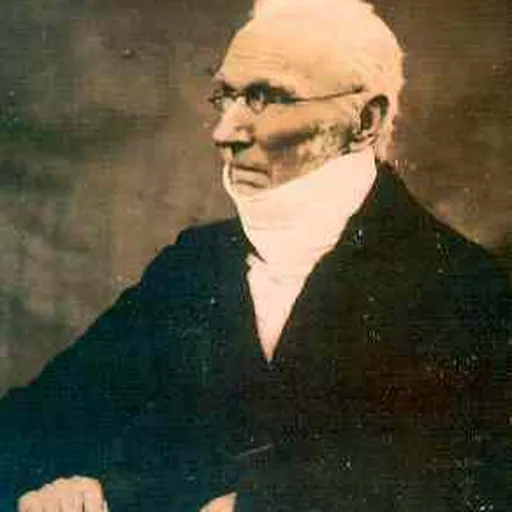
About Patrick Brontë
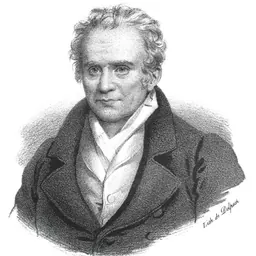
Lived 1777 – 1861 (aged 84). Patrick Brontë was a British writer, poet, biographer, anglican priest, parson and clergyman.
Patrick Brontë (, commonly ; born Patrick Brunty; 17 March 1777 – 7 June 1861) was an Irish Anglican clergyman and author who spent most of his adult life in England. One of ten children from a very poor family, he managed to secure a scholarship to study theology at St John's College, Cambridge, and went on to take holy orders. In 1811 he published a collection of poetry, Cottage Poems. He continued to write and publish throughout his life. In 1812 he married Maria Branwell, and they had six children, including the writers Charlotte, Emily and Anne Brontë, and Branwell Brontë, their only son.
In 1820, the family moved to Haworth, where Patrick had been offered the role of perpetual curate. In 1821, Maria Branwell died, leaving Patrick to care for six children under eight. After the deaths of his two eldest daughters, Maria and Elizabeth, who had fallen ill at boarding school, Patrick looked after his children at home, with the help of his late wife's sister, Elizabeth Branwell, and the house servants.
Patrick was an abolitionist and a keen advocate for social reform. He died in 1861, aged eighty-four, having outlived all of his children.
Early life
Patrick Brontë was born on St Patrick's Day, 17 March 1777 at Imdel (or Emdale) in the parish of Drumballyroney, County Down. He was the eldest of ten children. His parents were Hugh Brunty (or Prunty), an Anglican, and Elinor Alice , an Irish Catholic. His father was described as a "farmhand, fence-fixer and road-builder". The family was very poor, owning four books (including two copies of the Bible) and subsisting on a restricted diet of porridge, buttermilk, bread, and potatoes, to which Patrick attributed his lifelong digestive issues. to study theology as a sizar at St John's College, Cambridge. He first registered his name as "Branty" or "Brunty", then later as Brontë, receiving his BA degree in 1806. While the reason for this change of spelling remains unclear, there are a number of prominent theories to explain it, including that it may have been in tribute to his hero, Lord Nelson, who had received the title of Duke of Bronte.
Career
Ordination
in 1806 Patrick Brontë was ordained deacon in the Church of England, and became a priest in 1807. His first post on ordination as deacon was as curate at St Mary Magdalene Church, Wethersfield, Essex where the vicar was Joseph Jowett, Regius Professor of Law at Cambridge. Here in 1807 he met and fell in love with Mary Burder, the 18-year-old niece of his landlady. Mary's family were members of the dissenting or non-conformist Congregational Church, and objected to the connection. Poetry In 1809, Patrick became assistant curate of Wellington, Shropshire, and in 1810 his first published poem, the 256-line Winter Evening Thoughts, appeared in a local newspaper. In 1811 he published a collection of moral verses, Cottage Poems, intended for ordinary people. In her biography of Charlotte Brontë, Claire Harman recounts that one of the Cottage Poems had been written to Mary Burder, and praised her sparkling blue eyes. Patrick later gave a copy of the book, with an annotated version of the poem, to another young lady, changing the line to "sparkling hazle eye".
Buckworth appointed Patrick as perpetual curate of the Church of St Peter, Hartshead, a daughter church of Dewsbury, in 1811.
The couple were married on 29 December 1812 in the Church of St Oswald. They moved into a house on Halifax Road, Liversedge, where their first two children, Maria (1814–1825) and Elizabeth (1815–1825), were born.
Thornton In May 1815 they moved to Thornton, where their four other children, Charlotte (1816–1855), Patrick Branwell (1817–1848), Emily (1818–1848), and Anne (1820–1849), were born.
Haworth
in June 1819, Patrick Brontë was offered the perpetual curacy of St Michael and All Angels' Church, Haworth, and in April 1820 he moved with his young family into the eight-roomed Haworth Parsonage. At this time, Haworth was notorious for its high death rate and poor sanitation; in 1850 Benjamin Babbage released a damning report, with accounts of appalling conditions, including open sewers, refuse in the streets and a water supply that was contaminated by run-off from the overcrowded cemetery. Throughout his years in Haworth, Patrick campaigned – against some opposition – for reform, calling for better sanitation, education and working conditions.
Death of Maria Branwell Brontë In 1821 Patrick's sister-in-law Elizabeth Branwell (1776–1842), who had lived with the family at Thornton in 1815, joined the household to help to look after the children and to care for their mother, who had fallen seriously ill soon after their arrival. In September, after a long illness, Maria Branwell Brontë died from what may have been uterine cancer or ovarian cancer, leaving Patrick a widower with six children, all under eight years old, and with significant debts incurred from the doctors' fees and nursing expenses during Maria's illness. Maria's annuity of £50 a year had ceased with her death, and Patrick's salary amounted to only £170 a year. Friends and benefactors raised money to enable Patrick to pay his debts, but Elizabeth Branwell did not intend to remain in Haworth, which would leave only the house servants, Nancy and Sarah Garrs, to care for his children. You may think and write as you please, but I have not the least doubt that if you had been mine you would have been happier than you now are, or can be as one in single life.Other attempts to find a new wife were equally unsuccessful, and Patrick finally came to terms with widowhood at the age of forty-seven. He spent his time visiting the sick and the poor, giving sermons and communion, leaving the six children in the care of their aunt Elizabeth Branwell, who had agreed to stay on to help, and a maid, Tabitha "Tabby" Ackroyd, who recounted local legends in her Yorkshire dialect while preparing the meals.
Deaths of Maria and Elizabeth With only his curate's salary, Patrick was keenly aware of the need to avoid unnecessary expense. In 1824, he sent his daughters Maria, Elizabeth, Emily and Charlotte to board at the newly opened Clergy Daughters' School at Cowan Bridge. Conditions at the school were poor, with insufficient, badly-prepared food and frequent outbreaks of disease. In 1825, the two eldest daughters, Maria and Elizabeth, were sent home ill after an outbreak of typhus, and both died shortly afterwards of tuberculosis. Following this, Patrick removed Charlotte and Emily from the school, and the siblings were subsequently educated at home.
Family As an Irish immigrant, Patrick attracted prejudice and hostility in Haworth. At the time, Irish people were often seen as feckless and lazy, and Patrick faced hostility and rumours that he was an alcoholic. He had retained a strong Irish accent, which his children shared, adding to their sense of isolation from the community.
He was an affectionate father, going on walks with his children, supplying them with toys and books, and encouraging them to read and to take an interest in literature and politics. He educated his son Branwell at home, teaching him in Latin, Greek and mathematics, and providing him with tutors in music and painting. He provided the toy soldiers which gave birth to the siblings' creation of the fictional lands of Angria and Gondal, which in turn formed their development as writers.
In a letter to Gaskell, he recounts a game he played with the children when they were young, during which he gave each child a mask to wear, and asked them to answer questions from behind it. He asked Anne (who was four years old): ...what a child like her most wanted; she answered, 'Age and experience.' I asked the next (Emily) what I had best do with her brother Branwell, who was sometimes a naughty boy; she answered, 'Reason with him, and when he won’t listen to reason, whip him.' I asked Branwell what was the best way of knowing the difference between the intellect of men and women, he answered, 'By considering the difference between them as to their bodies.' I then asked Charlotte what was the best book in the world; she answered, 'The Bible.' And what was the next best; she answered, 'The Book of Nature.'Although he expected his daughters to seek employment as teachers or governesses, Patrick encouraged Branwell to look for a career in the arts. An enthusiastic poet himself, Patrick had high hopes for Branwell, which were disappointed by Branwell's decline into alcoholism and opium addiction.
Legacy After Charlotte's death, Patrick Brontë co-operated with Elizabeth Gaskell on her biography of his daughter. He was also in part responsible for the posthumous publication of Charlotte's first novel, The Professor, in 1857. Charlotte's husband, Arthur Bell Nicholls (1819–1906), Patrick's curate, stayed in the household until after Patrick's death in 1861, at the age of eighty-four. Patrick Brontë outlived not only his wife (by forty years) but all six of his children.
Character Elizabeth Gaskell's biography The Life of Charlotte Brontë was for many years the primary source of information about Patrick Brontë, although it contains many inconsistencies, exaggerations, and omissions. In her book, Gaskell portrays Patrick as a remote, tyrannical, eccentric character, with a volatile temper, describing him as a 'domestic hyena.' She also states that Patrick had no Irish accent when she met him,
Patrick was a passionate advocate for social reform, and was responsible for the building of a Sunday school in Haworth, which he opened in 1832. He was a fervent abolitionist, and remained active in local causes into his old age. Between 1849 and 1850, he organised action to procure a clean water supply for the village, which was eventually achieved in 1856.
Publications Winter Evening Thoughts (1810) Cottage Poems (1810) The Rural Minstrel: A Miscellany of Descriptive Poems (1813) The Cottage In the Wood (1816) The Maid of Killarney (1818) The Signs of the Times (1835)
Portrayals
Montagu Love portrayed Patrick Brontë in Devotion (1946) Alfred Burke portrayed Patrick Brontë in The Brontës of Haworth (1973) Patrick Magee portrayed Patrick Brontë in The Brontë Sisters (1979) Jonathan Pryce portrayed Patrick Brontë in To Walk Invisible (2016) Adrian Dunbar portrayed Patrick Brontë in Emily (2022)
Don’t just read it —
keep it.
Full-length biographies made to live with: read them, listen on the way to work, watch them tonight.
- E-book
- Audio
- Video
Instant download · yours to keep · every purchase keeps this site free
Important facts
Family & relationships
People in Patrick Brontë's life
Named in this biography and alive at the same time


Related people
Same field, nearest in time



Contemporaries
People whose lives overlapped Patrick Brontë's

Frequently asked questions
Who was Patrick Brontë?
Irish Anglican clergyman and writer (1777–1861)
When was Patrick Brontë born?
Patrick Brontë was born on 17 March 1777 in County Down.
When did Patrick Brontë die?
Patrick Brontë died on 7 June 1861 in Haworth.
What was Patrick Brontë's occupation?
Patrick Brontë was a writer, poet, biographer, anglican priest, parson and clergyman.
What nationality was Patrick Brontë?
Patrick Brontë was British.
Sources & further reading
Cite this page
APA: Biography.guide. (2026). Patrick Brontë. https://biography.guide/patrick-bronte/
MLA: "Patrick Brontë." Biography.guide, https://biography.guide/patrick-bronte/.
Chicago: "Patrick Brontë." Biography.guide. https://biography.guide/patrick-bronte/.
Data last updated: 2026-09-20 · Spot an error? Report a correction.
Page generated 2026-09-27 05:10 UTC