
Patricia Fernandez-Kelly
American social anthropologist and academic
About Patricia Fernandez-Kelly
Born 1948. Patricia Fernandez-Kelly is a sociologist, university teacher and scientist.
Patricia Fernández-Kelly (born in Mexico City on December 7, 1946) is a social anthropologist, academic and researcher. She is Professor of Sociology and Research Associate at the Office of Population Research at Princeton University. She is also the director of the Princeton Center for Migration and Development, associate director of the Program in American Studies, and Chair of the Board at the Latin American Legal Defense and Education Fund (LALDEF).
Fernández-Kelly has published over 100 research papers. She has conducted research on international development, the global economy, urban ethnography, race, gender, class, and women in the labor force. She is the author of For We are Sold, I and My People: Women and Industry in Mexico's Frontier and The Hero's Fight: African Americans in West Baltimore and the Shadow of the State. Her monograph on Mexico's maquiladora program, For We Are Sold, I and My People: Women and Industry in Mexico's Frontier (1983) was featured by Contemporary Sociology as one of twenty-five favorite books in the last decade of the 20th century.
With filmmaker Lorraine Gray, Fernández-Kelly co-produced the documentary The Global Assembly Line. In 2010, along with Paul DiMaggio she co-edited Art in the Lives of Immigrant Communities in the United States. Since 2005, she has been a recurrent Chair of the Board of Trustees at the Latin American Legal Defense and Education Fund (LALDEF). With Alejandro Portes, she is the co-editor of The End of Compassion: Immigrant Children in the Age of Deportations (2020).
Education and career She earned a Ph.D. (equivalency) in Art History in 1974 from Universidad Iberoamericana. Subsequently, she joined Rutgers University where she received an M.Phil. Degree in Social Anthropology in 1978, and a Ph.D. Degree in Social Anthropology in 1981. she co-edited Art in the Lives of Immigrant Communities in the United States, the first publication to investigate art as part of immigrant integration processes. Fernández-Kelly coined the term expressive entrepreneurship to designate tendencies among the children of immigrants to use art as a means to circumvent the stringencies of markets in the age of neo-liberalism. She has also done work related to transnationalism, validating the topic as an emerging research field, and providing examples of immigrant political and economic transnationalism.
With Alejandro Portes and William Haller, she published a paper in 2009 regarding segmented assimilation and alternative theoretical models in the adaptation of the second generation. The paper provides a summary of theoretical frameworks developed as part of the Children of Immigrants Longitudinal Survey. She also conducted studies of the new immigrant second generation initiated in the early 1990s and completed in 2006.
With Douglas S. Massey, Fernández-Kelly investigated the role of NAFTA in the context of Mexico-U.S. Migration during roughly the same period that the bilateral treaty has been in effect. Results of that analysis revealed the slanted function of borders that were permeable for capital but restrictive for immigrants.
International development As part of her dissertation research at Rutgers University, Fernández-Kelly designed an ethnographic study that included participant observation, the administration of a survey, and the collection of oral histories about young women employed in "maquiladoras"—i.e. directly owned subsidiaries or subcontracted operations connected to American corporations—in Ciudad Juárez, across the border from El Paso Texas. Her book, For We Are Sold, I and My People: Women and Industry in Mexico's Frontier (1983) was the result of that project. The book connects international economic development with gender inequality.
Fernández-Kelly described the relationship among changing gender definitions and economic development in the United States and Mexico. She focused on the role that the national state in both countries plays in defining the proper ambit and behavior of men and women. She also highlighted gender as a central vector regarding the organization of class hierarchies.
Women in the labor force Fernández-Kelly has an interest in gender and international economic development; her research on the subject shows that the application of neo-liberal economic policies, starting in the 1980s resulted in the atomization of the labor force in terms of gender, with an increasing number of women employed in the formal and informal labor forces, and more and more men performing jobs with characteristics akin to those associated with women's employment. She also studied strategic sectors in context of gender, race, and national background, and discussed the impacts of global economic integration on gender definitions.
Awards and honors 1986 – Emmy Award for The Global Assembly Line, American Academy of Television Arts 2016 – C. Wright Mills Finalist Award, Society for the Study of Social Problems 2020 – Distinguished Career Award, American Sociological Association
Don’t just read it —
keep it.
Full-length biographies made to live with: read them, listen on the way to work, watch them tonight.
- E-book
- Audio
- Video
Instant download · yours to keep · every purchase keeps this site free
Important facts
People in Patricia Fernandez-Kelly's life
Named in this biography and alive at the same time




Related people
Same field, nearest in time
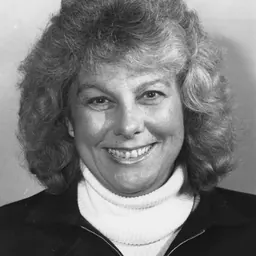
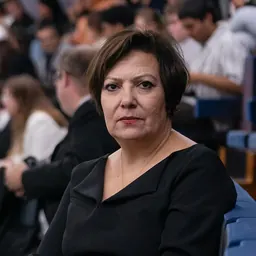
Contemporaries
People whose lives overlapped Patricia Fernandez-Kelly's
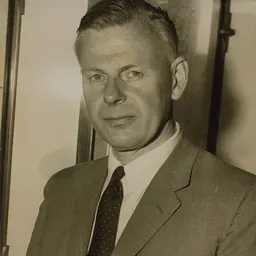

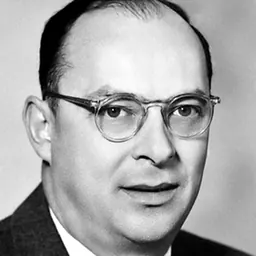

Frequently asked questions
Who is Patricia Fernandez-Kelly?
American social anthropologist and academic
When was Patricia Fernandez-Kelly born?
Patricia Fernandez-Kelly was born in 1948.
What is Patricia Fernandez-Kelly's occupation?
Patricia Fernandez-Kelly is a sociologist, university teacher and scientist.
Sources & further reading
· Wikipedia: Patricia Fernandez-Kelly
· DBpedia: Patricia Fernández-Kelly
Cite this page
APA: Biography.guide. (2026). Patricia Fernandez-Kelly. https://biography.guide/patricia-fernandez-kelly/
MLA: "Patricia Fernandez-Kelly." Biography.guide, https://biography.guide/patricia-fernandez-kelly/.
Chicago: "Patricia Fernandez-Kelly." Biography.guide. https://biography.guide/patricia-fernandez-kelly/.
Data last updated: 2026-09-25 · Spot an error? Report a correction.
Page generated 2026-09-27 05:07 UTC