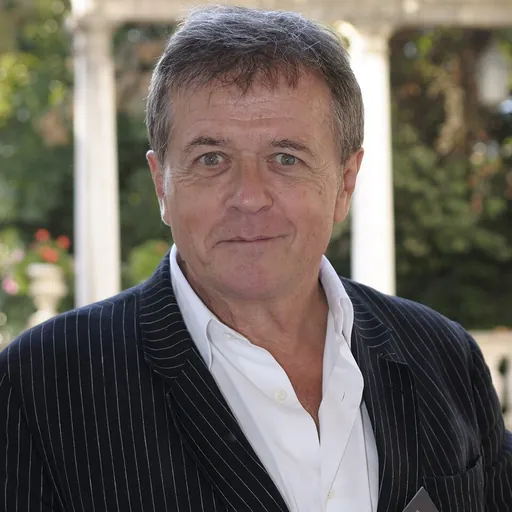
Patrice Chéreau
French opera and theatre director, filmmaker, actor and producer
About Patrice Chéreau
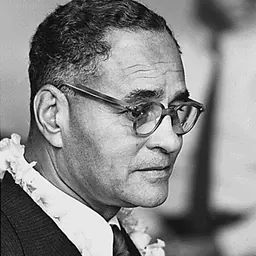
Lived 1944 – 2013 (aged 68). Patrice Chéreau was a French actor, film director, theatre director, screenwriter, writer and film producer.
Patrice Chéreau (; ; 2 November 1944 – 7 October 2013) was a French opera and theatre director, filmmaker, actor and producer. In France he is best known for his work for the theatre, internationally for his films La Reine Margot and Intimacy, and for his staging of the Jahrhundertring, the centenary Ring Cycle at the Bayreuth Festival in 1976. Winner of almost twenty movie awards, including the Cannes Jury Prize and the Golden Berlin Bear, Chéreau served as president of the jury at the 2003 Cannes festival.
From 1966, he was artistic director of the Public-Theatre in the Parisian suburb of Sartrouville, where in his team were stage designer Richard Peduzzi, costume designer Jacques Schmidt and lighting designer André Diot, with whom he collaborated in many later productions. From 1982, he was director of "his own stage" at the Théâtre Nanterre-Amandiers at Nanterre where he staged plays by Jean Racine, Marivaux and Shakespeare as well as works by Jean Genet, Heiner Müller and Bernard-Marie Koltès.
He accepted selected opera productions, such as: the first performance of the three-act version of Alban Berg's Lulu, completed by Friedrich Cerha, at the Paris Opera in 1979; Berg's Wozzeck at the Staatsoper Berlin in 1994; Wagner's Tristan und Isolde at La Scala in 2007; Janáček's From the House of the Dead, shown at several festivals and the Metropolitan Opera; and, as his last staging, Elektra by Richard Strauss, first performed at the Aix-en-Provence Festival in July 2013. He was awarded the Europe Theatre Prize in 2008.
Life and career Early life Chéreau was born in Lézigné, Maine-et-Loire, on 2 November 1944. His father, Jean-Baptiste Chéreau, was a painter, and his mother, Marguerite Pelicier, was a graphic designer. He attended school in Paris. Early on he was taken to the Louvre and became interested in the arts, cinema, theatre and music. At age 12, he designed stage sets for plays. He became well known to Parisian critics as director, actor, and stage manager of his high-school theatre (lycée Louis-le-Grand). At 15, he was enthusiastically celebrated as a theatre prodigy. In 1964, at the age of 19, he began directing for the professional theatre. While studying at the Sorbonne, he professionally staged Victor Hugo's L'Intervention, and subsequently dropped out of the university.
1966: Sartrouville
In 1966, Chéreau was appointed artistic director of the Public-Theatre in the Parisian suburb of Sartrouville. With "idealism and inventiveness", he made the theatre a "municipal commodity", presenting not only theatre but also "cinema, concerts, poetry productions, lectures and debates about everything from politics to pot". He showed Hoffmann, sung by Nicolai Gedda, as a "sensitive poet for whom love is beyond reach... a drunken loser". to celebrate the festival's centenary, termed the Jahrhundertring. Chéreau set the scene in the time of the composition, with a critical view of the time's capitalism, industrialism and spiritual background. As Büning and others pointed out, the staging left a standard for productions of the Ring Cycle to follow. Gerhard R. Koch mentioned in his obituary that the unity of direction, scene and light was new for Bayreuth and suggested a critical view on capitalism heading towards fascism. initially provoked controversy, but was celebrated after its final performance in 1980 with a 45-minute standing ovation. Chéreau disliked grand opera, but said: "After Bayreuth, I felt the need to work on a theatrical project of some breadth ... I have never put on little things. I am interested only in spectacles that rise above themselves". He first considered Goethe's Faust but then directed in 1981 Henrik Ibsen's Peer Gynt for Villeurbane and Paris, aiming at "an incandescence of theatrical experience, a global spectacle". The scene is set in the time of the composition, around 1930. Koch observes frequent topics of hunt, and love colder than death (Verfolger und Verfolgte, und Liebe ... kälter als der Tod). and scheduled for the MET's 2015–16 season.
Personal life Chéreau was in a long-term relationship with his lover and favorite actor Pascal Greggory. He was not interested in gay topics, saying: "I never wanted to specialise in gay stories, and gay newspapers have criticised me for that. Everywhere love stories are exactly the same. The game of desire, and how you live with desire, are the same."
Chéreau was portrayed by Louis Garrel in the 2022 French-Italian film Forever Young.
Europe Theatre Prize
Chéreau was awarded the Europe Theatre Prize in 2008, in the Edition XII of the prize. The "Reason for award" noted: A natural-born artist with a clear calling, Patrice Chéreau is one of those rare examples of a person who manages to succeed in all the expressive arts. ... Patrice Chéreau is an actor himself with the indispensable support of a team of creative collaborators, including the great set designer Richard Peduzzi, costume designer Jacques Schmidt and lighting designer André Diot. Drawn through his analysis of Brecht towards a correct naturalism, Chéreau has discovered and revived a number of little known texts, not least thanks to the many languages he has mastered. His extraordinary critical interpretation of Marivaux broke through the playwright's sunny surface to reveal him as a forward-looking, harsh social critic. ...
Meanwhile, Chéreau shifted from theatre to opera... a scandalous reinterpretation of Wagner's Ring at Bayreuth ... He reached the height of his career during his many years at the Théâtre des Amandiers in Nanterre, where he developed a new model of expression, discovered and launched one of the great dramatists of our time, Bernard Marie Koltès, whose major works he directed, including Combat de nègre et de chiens and Solitude des champs de coton, as well as Shakespeare, Peer Gynt, Heiner Müller, and the historic revival of Les paravents by Genet. Chéreau eventually turned to cinema, which he found more expressive of the truth of life that he so values.
Filmography
Director
La Chair de l'orchidée (1975) Judith Therpauve (1978) L'Homme blessé (1983) Hôtel de France (1986) Contre l'oubli (1991) Queen Margot (1994) Dans la solitude des champs de coton (1996, TV version) Those Who Love Me Can Take the Train (1998) Intimacy (2001) His Brother (2003) Gabrielle (2005) Persécution (2009)
Producer (for his company "Azor Films")
L'Homme blessé (1983) Chéreau – L'envers du théâtre (1986, TV documentary) Patrice Chéreau, Pascal Greggory, une autre solitude (1995, TV documentary) Intimacy (2001) Son frère (2003) Gabrielle (2005) Così fan tutte (2005, TV)
Actor
Trotsky (1967, by Jacques Kébadian) Danton (1982, by Andrzej Wajda) as Camille Desmoulins Adieu Bonaparte (1985, by Youssef Chahine) as Napoléon Bonaparte The Last of the Mohicans (1992, by Michael Mann) as General Montcalm Bête de scène (1994, Short, by Bernard Nissille) as Le metteur en scène Dans la solitude des champs de coton (1996, TV version) as Le dealer Lucie Aubrac (1997, by Claude Berri) as Max Time Regained (1999, by Raoul Ruiz) as Marcel Proust (voice) Nearest to Heaven (2002, by Tonie Marshall) as Pierre Time of the Wolf (2003, by Michael Haneke) as Thomas Brandt (final film role)
Himself Chéreau – L'envers du théâtre (1986) Il était une fois dix neuf acteurs (1987, TV) Patrice Chéreau, Pascal Greggory, une autre solitude (1995, TV) Freedom to speak (2004)
TV guest appearances Bleu, blanc, rose (2002, TV) Claude Berri, le dernier nabab (2003, TV) Thé ou café 14 September 2003
Film awards and nominations Main sources Patrice Chéreau. Awards at the Internet Movie Database. Patrice Chéreau. Awards at Allmovie.
Don’t just read it —
keep it.
Full-length biographies made to live with: read them, listen on the way to work, watch them tonight.
- E-book
- Audio
- Video
Instant download · yours to keep · every purchase keeps this site free
Important facts
People in Patrice Chéreau's life
Named in this biography and alive at the same time




Related people
Same field, nearest in time

Contemporaries
People whose lives overlapped Patrice Chéreau's



Frequently asked questions
Who was Patrice Chéreau?
French opera and theatre director, filmmaker, actor and producer (1944-2013)
When was Patrice Chéreau born?
Patrice Chéreau was born on 2 November 1944 in Lézigné.
When did Patrice Chéreau die?
Patrice Chéreau died on 7 October 2013 in Paris, Clichy.
What was Patrice Chéreau's occupation?
Patrice Chéreau was an actor, film director, theatre director, screenwriter, writer and film producer.
What nationality was Patrice Chéreau?
Patrice Chéreau was French.
Sources & further reading
Cite this page
APA: Biography.guide. (2026). Patrice Chéreau. https://biography.guide/patrice-chereau/
MLA: "Patrice Chéreau." Biography.guide, https://biography.guide/patrice-chereau/.
Chicago: "Patrice Chéreau." Biography.guide. https://biography.guide/patrice-chereau/.
Data last updated: 2026-09-20 · Spot an error? Report a correction.
Portrait: Wikimedia Commons · author & licence
Page generated 2026-09-27 04:57 UTC