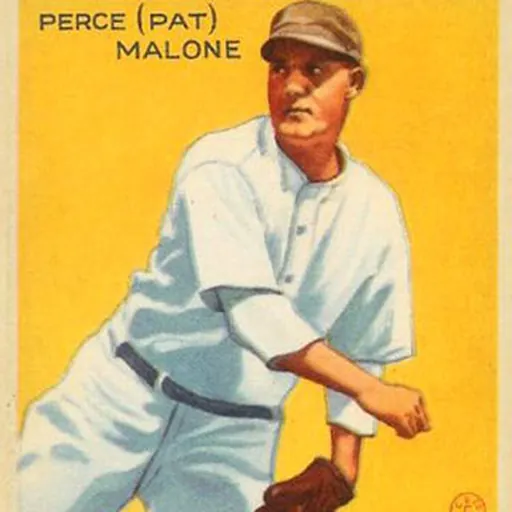
About Pat Malone
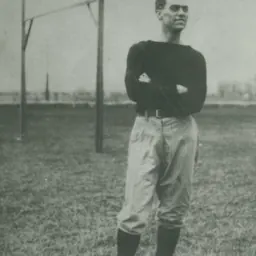
Lived 1902 – 1943 (aged 40). Pat Malone was an American baseball player.
Perce Leigh "Pat" Malone (September 25, 1902 – May 13, 1943) was an American pitcher in Major League Baseball who played from for the Chicago Cubs (1928–1934) and New York Yankees (1935–1937). Listed at and , Malone batted left-handed and threw right-handed. He played for four pennant winners and two World Series champions.
Born in Altoona, Pennsylvania, Malone started playing semipro baseball when a teenager. Initially signed by the New York Giants in 1922, his hard-drinking lifestyle brought him in conflict with manager John McGraw, who sold his contract to the minor league Minneapolis Millers after 1924 spring training. Malone would spend six years in the minor leagues, but after successful seasons in 1926 and 1927, was signed by the Cubs before the 1928 season.
As a rookie with the Cubs, Malone won 18 games and finished second to Dazzy Vance in the National League (NL) with 155 strikeouts. In 1929, a year in which the Cubs won the pennant, he led the NL in wins (22), shutouts (5), and strikeouts (166), becoming the league's first strikeout champion besides Vance in seven years. He made two starts in the World Series against the Philadelphia Athletics but lost both, and the Cubs were defeated in five games. In 1930, he led the NL with 20 wins. The 1931 season saw him clash with new Cubs manager Rogers Hornsby; Malone became involved in further trouble in September when he beat up two reporters and was fined $500. He nonetheless posted a 16–9 record. In 1932, Malone had a 15–17 record and 3.38 earned run average (ERA), but was relegated to the bullpen for the World Series against the Yankees when the Cubs selected three other starters. Relieving Charlie Root after the starter gave up Babe Ruth's called shot, Malone pitched scoreless innings in his only appearance of the series; the Cubs were defeated in four straight games.
Struggles in late 1933 caused Malone to lose his rotation spot in September. He enjoyed a 14–7 record and a 3.53 ERA in 1934 but again lost his rotation spot in September, which he claimed was due to the Cubs not wanting him to gain bonuses for winning 15 or more games. Acquired by the Yankees before the 1935 season, Malone was used mainly as a reliever for the next three years. He led the American League (AL) in saves in 1936 and was on the Yankee roster when they beat the Giants in the World Series. He did less well in 1937, however, and was left off the roster when the Yankees again beat the Giants in the World Series. After one more season in the minor leagues, Malone retired. He returned to Altoona, where he operated a tavern before dying at the age of 40 in 1943 due to acute pancreatitis brought on by his life of heavy drinking.
Early life Perce Leigh Malone was the second child of Christian and Anna Malone, born on September 25, 1902, in Altoona, Pennsylvania. His father was an assistant yard master for the Pennsylvania Railroad, and his mother and sister, Evelyn, also supported the family through odd jobs. Loathing the name "Perce," Malone insisted on being called "Pat" instead.
A rather wild youth, Malone enjoying participating in fights. He led a gang of local boys who would steal food and carry it to their hideout in a ravine out of town, where they would plan their next move. Malone attended school only until the age of 14, dropping out to take a job with Adam's Express, a package-delivery service. He started working for the Pennsylvania Railroad as a fireman at age 16, lying about his age to get the job. Then, he served a year in the United States Army, which assigned him to Fort Douglas in Utah. While in the Army, Malone participated in sports such as baseball, football, and boxing. Dick Kinsella, a scout for the New York Giants, recommended him to the major league team, who purchased Malone's rights before the 1922 season. He joined the Giants in spring training for a final time in 1924, but he repeatedly violated his curfew, partying at the Watrous Hotel. These violations were the last straw for McGraw, and the Giants sold his contract to the American Association's Minneapolis Millers. Malone was selected to the league's first All-Star team, and his strong pitching helped Des Moines win the league pennant. Most notably, he led the American Association with 214 strikeouts. Things turned around for him on May 6, when he struck out eight Philadelphia Phillies over five innings of relief and earned his first win in a 5–4 victory. Five days later, he pitched his first major league shutout, holding the Boston Braves to two hits in a 2–0 victory that was Chicago's 11th straight win.
As the season progressed, Malone was used more and more as a starter. He completed his last five starts of the season, winning four of them. He finished the year with a 22–10 record and a 3.57 ERA, leading the NL in wins, shutouts, and strikeouts (166). By winning the strikeout title, he became the first pitcher besides Vance to do so in the NL since 1921. With the Cubs one loss away from elimination, Malone started Game 5. Staked to a 2–0 lead in the fourth inning, he had allowed only two hits and two runs going to the ninth. After striking out Walter French to start the inning, however, he gave up a single to Max Bishop, followed by a two-run home run by Mule Haas which tied the game. He then allowed two more baserunners and took the loss when Miller recorded an RBI double, giving the Athletics the championship in five games.
1930 On April 25, 1930, Malone pitched 12 innings against the Cincinnati Reds; he lost the lead in the top of the inning when he allowed an unearned run, but won after the Cubs scored two runs in the bottom of the inning to secure a 6–5 victory. In early May, he was arrested for disorderly conduct in a café on Chicago's South Side, though he paid the bill for the damages upon his release from jail. He won four straight starts from June 14 through June 28, then won eight straight decisions from July 16 through August 29. The last of these, a two-inning relief stint in a game the Cubs won in walk-off fashion over the Cardinals in the bottom of the 13th inning, gave Chicago a game lead over St. Louis for first place. The Cubs slumped in September, however, starting the month 9–13. Malone's record was 20–9, and his ERA was 3.94.
1931 With four games remaining in 1930, the Cubs fired McCarthy, replacing him as their manager with Rogers Hornsby. Blaming the poor conditioning of the pitchers for the team's struggles that September, Hornsby tried to get the pitchers in better shape in 1931 spring training. Malone, however, was unable to pitch much because of shoulder problems. By the end of May, he had only three wins, though he also had only two losses. On June 26, after he lasted only of an inning against Boston and allowed four runs, Hornsby suggested that the pitcher was overrated, calling his performance "distasteful".
During his time with the Cubs, Malone had become best friends with star hitter Hack Wilson, who shared the pitcher's love of heavy drinking. They got into trouble together on September 5 when the team was on a road trip. Aboard a passenger coach in Cincinnati, the two ran across Wayne K. Otto of the Herald Examiner and Harold Johnson of the Chicago American. According to the players, the writers were criticizing them for their poor performance and out-of-control alcohol consumption. The reporters maintained that Wilson was in a bad mood, as Hornsby had recently benched him. Whatever the case, a fight broke out, resulting in Malone thoroughly pounding both reporters. The Cubs fined Malone $500 for his behavior and suspended Wilson.
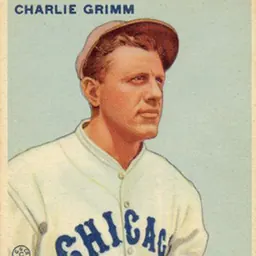
1932 Before the 1932 season, the Cubs traded Wilson, hoping that this would help Malone stop partying so much. His record was just 10–10 through July, and the rest of the ballclub was playing mediocrely. At that point, the Cubs replaced Hornsby as manager with Charlie Grimm, who was far more easygoing with the players. The ballclub won 23 of its next 28 games and took over first place in the NL. The first of these wins was a complete game thrown by Malone against the Phillies on August 4; though he struck out only one batter, he allowed only one run.
In the World Series against the Yankees, Malone saw little action, as Grimm went with a three-man starting rotation of Bush, Lon Warneke, and Root. His only appearance in that series came after Root surrendered back-to-back home runs to Babe Ruth and Lou Gehrig in Game 3, the former of which was Babe Ruth's called shot. After Gehrig's home run, the Cubs brought in Malone, who threw innings of scoreless relief, including a called third strike against Gehrig. The Cubs nonetheless lost the game 7–5 and were swept by the Yankees in four games. He lost three decisions in a row from April 25 through May 16, however, six decisions in a row from June 9 through July 16, and five decisions in a row from August 12 through September 1. During the last stretch, his ERA was 8.49. He made no starts after September 1, serving the rest of the year out of the bullpen and appearing in just three more games, though two of these were wins. He was moved to the bullpen after four starts, but rejoined the rotation in June when Bush was sidelined with a rib injury. From July 19 through August 18, Malone won six decisions in a row; the Cubs won all seven of his starts during the streak. In 34 games (21 starts) and 191 innings pitched, he had a 14–7 record and a 3.53 ERA.
On October 26, 1934, Malone was traded with cash to the St. Louis Cardinals for Ken O'Dea. The Cardinals wanted him to take a 50 percent pay cut, but he refused, even after no team claimed him on waivers. He eventually reached an agreement with the Cardinals, but he would never pitch for them, as his contract was sold to the Yankees on March 26, 1935. In 29 games (two starts) and innings pitched, he had a 3–5 record, a 5.43 ERA, and 25 strikeouts. Though his weight had ballooned from 200 to 230 pounds, Malone fixed one source of bad health, replacing his rotten teeth, which had been giving him headaches. McCarthy gave him a start against the St. Louis Browns on May 5, and "the burly right-hander came through with a sparkling eight-hit performance", according to sportswriter Louis Effrat. In 35 games (nine starts) for the pennant winners, he had a 12–4 record, a 3.81 ERA, and 72 strikeouts in innings pitched.
The Yankees faced the Giants in the 1936 World Series, the first time since 1923 the series involved exclusively New York teams. In Game 5, he was the hard-luck loser. He worked four innings of one-hit relief, but the hit, an RBI double by Bill Terry, came in the top of the 10th inning and resulted in the Giants staving off elimination. The Yankees then won Game 6 and the series, giving Malone his first World Series championship. In his first outing, on April 25, Malone relieved Hadley with two outs in the fifth inning with two outs and the bases loaded after the starter had issued three straight walks, the latter two forcing in runs to trim a 5–0 lead over the Red Sox to 5–2. Malone struck out Fabian Gaffke to end the inning, then issued one run in the remaining four innings, earning the victory in a 9–3 triumph. The April 25 outing would be a rare bright spot, as according to Wolf, he was "unable to duplicate the magic from the previous season". In 28 games (nine starts), he had a 4–4 record, six saves, a 5.48 ERA, and 49 strikeouts in a mere 92 innings pitched.
Pitching style Malone was not afraid to intimidate hitters, standing out among other pitchers with the amount of brushback pitches he threw. "Malone never had problems busting one inside, especially if he thought the batter was getting too comfortable up there. He'd throw one high and tight, and if you didn't move, he'd throw another one", recalled Cubs teammate and manager Charlie Grimm.
Personal Malone quickly gained a reputation as a prankster upon reaching the major leagues. He enjoyed doling out hot feet, and towel-whipping unsuspecting teammates while they showered. During his rookie season, he caught some pigeons on a hotel ledge and put them in roommate Jones's bed while he slept. An irritated Jones promptly requested a new roommate.
In 1926, Malone married Marion Seeley. He credited her influence on his personal life with his improvement in 1926. The couple would have one daughter, Patricia. When Malone's teams were in the offseason, they lived in Marion's hometown of Milan, Ohio; Altoona, or Los Angeles. After Malone's career, he and his family returned to Altoona, where the pitcher opened up a tavern. Malone enjoyed golf, hunting, and fishing as hobbies.
On May 13, 1943, at his father's home in Hollidaysburg, Pennsylvania, Malone was attacked by severe abdominal pain. After consulting a local physician, he checked into Mercy Hospital in Altoona. At 11:45 that evening, he died from acute pancreatitis that had resulted from his hard-drinking lifestyle. He was 40 years old. His body was cremated in Pittsburgh, then delivered to Milan, where it was buried in the Milan Cemetery at Section HO, Lot 28, Grave 3.
Don’t just read it —
keep it.
Full-length biographies made to live with: read them, listen on the way to work, watch them tonight.
- E-book
- Audio
- Video
Instant download · yours to keep · every purchase keeps this site free
Important facts
People in Pat Malone's life
Named in this biography and alive at the same time







Related people
Same field, nearest in time

Contemporaries
People whose lives overlapped Pat Malone's


Frequently asked questions
Who was Pat Malone?
American baseball player
When was Pat Malone born?
Pat Malone was born on 25 September 1902 in Altoona.
When did Pat Malone die?
Pat Malone died on 13 May 1943 in Altoona.
What was Pat Malone's occupation?
Pat Malone was a baseball player.
What nationality was Pat Malone?
Pat Malone was American.
Sources & further reading
Cite this page
APA: Biography.guide. (2026). Pat Malone. https://biography.guide/pat-malone-baseball-player/
MLA: "Pat Malone." Biography.guide, https://biography.guide/pat-malone-baseball-player/.
Chicago: "Pat Malone." Biography.guide. https://biography.guide/pat-malone-baseball-player/.
Data last updated: 2026-09-23 · Spot an error? Report a correction.
Portrait: Wikimedia Commons · author & licence
Page generated 2026-09-27 05:05 UTC