
About Pat Kelly
Lived 1944 – 2005 (aged 61). Pat Kelly was an American baseball player.
Harold Patrick Kelly (July 30, 1944 – October 2, 2005) was an American professional baseball outfielder. He played in Major League Baseball (MLB) from 1967 to 1981 with the Minnesota Twins, Kansas City Royals, Chicago White Sox, Baltimore Orioles and the Cleveland Indians. He batted and threw left-handed. His brother, Leroy, was a Pro Football Hall of Fame running back.
Born and raised in Philadelphia, Pennsylvania, Kelly was an "All Public" baseball player at Simon Gratz High School, honored with the Cliveden Award as Philadelphia's finest prep school athlete in 1962. Signed by the Twins that year, he spent the next several seasons in the minor leagues, debuting with the Twins in 1967. He played a handful of games for them in 1968, then was selected in the 1968 Major League Baseball expansion draft by the Royals, becoming an everyday player over the next two years with the fledgling franchise. Traded to the White Sox before the 1971 season, he spent part of 1971 in the minor leagues but got more playing time as a right fielder and designated hitter in the following years, reaching the All-Star Game for the only time in his career in 1973. Traded to the Orioles after the 1976 season, he received significant playing time in left field in 1977 and 1978, then served as a bench player the next two years. With a career-high .536 slugging percentage in 1979, Kelly helped the Orioles reach the MLB playoffs, appearing in the World Series, which Baltimore lost to the Pittsburgh Pirates in seven games. After one last season with the Indians in 1981, Kelly retired.
After becoming a born-again Christian in 1975, Kelly became very involved in Christian ministry. Under his influence, several of his Oriole teammates became Christians. Following his career, he became an ordained minister, serving at ministries in Baltimore and Cleveland until his death of a heart attack in 2005.
Early life Harold Patrick Kelly was born on July 30, 1944, in Philadelphia, Pennsylvania, to parents Orvin and Argie Kelly. His parents had originally lived in South Carolina, but they had moved to the Nicetown neighborhood of northern Philadelphia in the 1920s, when Orvin was hired by a steel company. Pat was one of nine children, though he never met two of his siblings who died in 1940 because of rheumatic fever. He recalled, "My father worked for $12 a week to serve nine kids and put food on the table. He would wake up at four in the morning and it would be freezing cold outside. He would go in a pickup truck with no heat some 30 miles and work all day, but he went with God in his heart."
A faithful Baptist family, the Kellys attended Sunday school each week. They were also an athletic family; Leroy, Pat's older brother by two years and the closest in age to him, succeeded Jim Brown as the Cleveland Browns primary running back and was eventually inducted into the Pro Football Hall of Fame. Pat and Leroy competed all the time, which Pat credited for helping instill in him a competitive nature. He went to baseball games at Connie Mack Stadium growing up, and his favorite ballplayer was Jackie Robinson.
Minor leagues (1963–66) On September 11, 1962, Kelly signed his first professional baseball contract with the Minnesota Twins, who decided to use him as an outfielder. Having grown up in Philadelphia, Kelly, who was black, was unused to dealing with segregation. At Orlando, though, he and his black teammates had to stay at a different hotel from the white players on the team. "I know those times were hard, but what always kept me going was what Jackie Robinson went through," he later recalled. He also played 18 games with the Wilson Tobs of the Class A Carolina League, batting .245 with eight runs scored, 12 hits, no home runs, and eight RBI.
Kelly expected a promotion to the Class AA Charlotte Hornets of the Southern League in 1966; thus, he was very disappointed when he found out the Twins planned to send him back to Wilson. "When I found out I didn’t make the Charlotte team, I packed up my Pontiac LeMans and told them I was leaving camp if they did not put me on the Charlotte roster by noon,” Kelly recalled. “And they agreed." In 113 games, Kelly scored 74 runs, recorded 126 hits, had three home runs, and batted in 55 runs. Seven of the eight games he played were as a pinch runner; he pinch hit in one other game, striking out against Bob Humphreys in his only at bat of the season. That September, he was again called up by Minnesota. Though he only appeared in 12 games this year, he received more playing time, as he started in the outfield for nine of them. On September 23, he hit his first major league home run, coming against Clyde Wright in a 3–0 victory over the California Angels. With the Twins in 1968, he had four hits in 35 at bats. In 112 games (417 at bats), Kelly batted .264 with 61 runs scored, 110 hits, eight home runs, and 32 RBI. He stole a career-high 40 bases in 53 attempts. On September 11, against the Oakland Athletics, his single with two outs in the eighth inning spoiled a no hitter by Vida Blue, who went on to complete one 10 days later. Before he played a game for the White Sox, Kelly spent the 1970–71 offseason in Venezuela with the Tiburones de La Guaira. He batted .365 with six home runs in 27 games, then batted .405 in the postseason as the Tiburones won the league championship. Adept at base-stealing, Kelly's "small ball" contributions helped the White Sox finished second place in the American League (AL) West Division, behind Oakland. He topped his batting average from the previous year by one point, accruing 60 runs scored, 119 hits, four home runs, and 21 RBI in 122 games (424 at bats). Kelly stole 18 bases in 29 attempts. In 133 games (471 at bats), he batted .274 with 73 runs scored, 129 hits, nine home runs, 45 RBI, and 18 stolen bases in 28 chances. The transaction was based on a perceived surplus of left-handed hitters and the lack of quality catchers, the latter of which was not solved as Duncan was released the following March without ever having played a game for the White Sox. "A most glaring mistake" is how owner Bill Veeck described the transaction.
On June 3, Kelly was part of what sportswriter Fred Rothenberg called "one of the strangest triple plays in baseball history." With the bases loaded for the Royals in the ninth inning, and Kansas City down 7–5, John Wathan hit a fly ball to right field that Kelly caught for the first out. All the runners tagged to advance a base, but Kelly threw to shortstop Mark Belanger, who caught Freddie Patek in a rundown between first and second base and ultimately tagged him out. While this was going on, Dave Nelson, who had successfully advanced to third base, decided to try to score. Upon tagging out Patek, Belanger ran towards the third base line and caught up with Nelson 10 feet from home plate, tagging him out to complete the triple play and end the game.
In 120 games (360 at bats) for the Orioles in 1977, Kelly batted .256 with 50 runs scored, 92 hits, 10 home runs, 49 RBI, and 25 stolen bases in 32 attempts. He hit a three-run home run against John Montague in Game 4, putting the Orioles up 8–0 in a win that sent them to the World Series against the Pittsburgh Pirates. Kelly also played five games in this series but was used only as a pinch-hitter, racking up a hit and a walk in five plate appearances. Rozema was the pitcher whom Kelly had the most success against during his career; he had six hits in eight at bats against the Tiger, including four home runs.
Personal life Kelly's friend Andre Thornton introduced the player to his sister-in-law Phyllis Jones, part of The Jones Sisters Trio, who married Kelly on February 10, 1979. Oriole teammate Lee May was one of the ushers at the wedding. Pat and Phyllis had one child, daughter April Marie. During his career, Kelly took college classes at Morgan State University, earning his degree sometime during the 1970s. Fishing and basketball were hobbies of his.
"Some of the fellows call me 'Reverend'," Kelly said in a 1977 interview. "Other people say I missed my calling." He travelled back and forth between Cleveland and his home of Timonium, Maryland, also journeying to international destinations to share his faith. "I go and I proclaim the Gospel. I see people saved," Kelly described his ministry. Following his death, Joe Ehrmann, ex-linebacker for the Baltimore Colts and pastor of Grace Fellowship Church in Baltimore, had this to say about Kelly. "Pat was such an asset to the community. He was the embodiment of his religious beliefs. . . He transcended race, class, sports, and was just a fabulous lover of people, a good husband, and father. He was a charismatic preacher whose message came from his own life, and he wanted people to know that he walked with God."
Don’t just read it —
keep it.
Full-length biographies made to live with: read them, listen on the way to work, watch them tonight.
- E-book
- Audio
- Video
Instant download · yours to keep · every purchase keeps this site free
Important facts
People in Pat Kelly's life
Named in this biography and alive at the same time


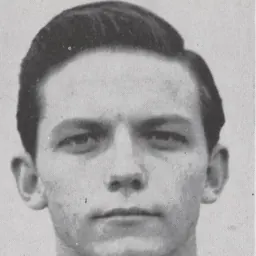



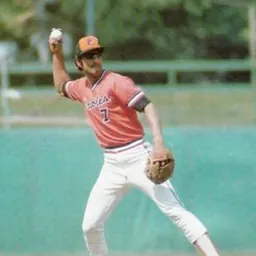

Related people
Same field, nearest in time
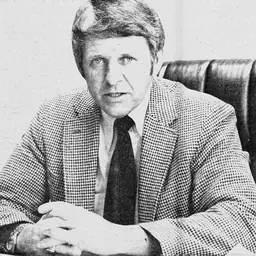

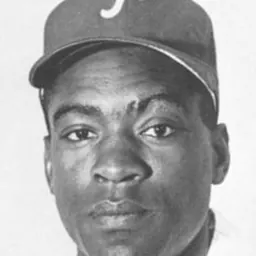


Contemporaries
People whose lives overlapped Pat Kelly's



Frequently asked questions
Who was Pat Kelly?
outfielder, born 1944 (1944–2005)
When was Pat Kelly born?
Pat Kelly was born on 30 July 1944 in Philadelphia.
When did Pat Kelly die?
Pat Kelly died on 2 October 2005 in Chambersburg.
What was Pat Kelly's occupation?
Pat Kelly was a baseball player.
What nationality was Pat Kelly?
Pat Kelly was American.
Sources & further reading
· DBpedia: Pat Kelly (outfielder)
Cite this page
APA: Biography.guide. (2026). Pat Kelly. https://biography.guide/pat-kelly-baseball-player/
MLA: "Pat Kelly." Biography.guide, https://biography.guide/pat-kelly-baseball-player/.
Chicago: "Pat Kelly." Biography.guide. https://biography.guide/pat-kelly-baseball-player/.
Data last updated: 2026-09-20 · Spot an error? Report a correction.
Page generated 2026-09-27 05:26 UTC