
About Pascal Sebah
Lived 1823 – 1886 (aged 62–63). Pascal Sebah was a Turkish photographer.
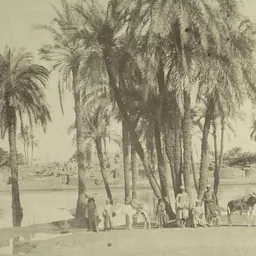
Pascal Sébah (; 1823 – June 25, 1886) was an Ottoman photographer in Istanbul and Cairo. Best known for his prolific photography of Anatolia, Egypt, and Greece, Sébah established the studio that would later become Sébah & Joaillier.
Life and work
Pascal Sébah was born in Istanbul, then the capital of the Ottoman Empire, to a Syrian father and an Armenian mother.
He initially worked in collaboration with the French photographer, Henri Bechard. Sébah's studio was known as ''El Chark (meaning "The Orient"), situated at 439 Grande Rue de Pera in the center of the city and close to the embassies and hotels where tourists met.
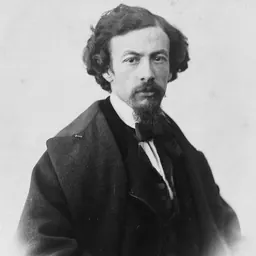
Sébah primarily produced photographs for the tourist trade. By the second half of the 19th century, tourist travel to Egypt had created a strong demand for photographs as souvenirs. Sébah was among a group of early photographers in Constantinople and Cairo to capitalise on this demand. These pioneering photographers included Félix Bonfils (1831-1885); Gustave Le Gray (1820-1884), brothers Henri and Emile Bechard; the British-Italian brothers Antonio Beato (c. 1832–1906) and Felice Beato and the Greek Zangaki brothers. By 1873 Sébah was successful enough to open a second studio in Cairo. The same year, he exhibited at the Ottoman pavilion of the Universal Exhibition in Vienna, Austria.
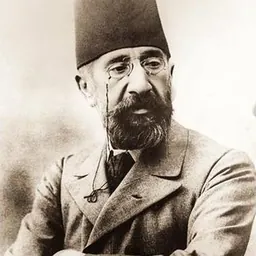
He established a valuable working relationship with Turkish painter and archeologist Osman Hamdi Bey, taking photographs as part of the artist's preparation, and in which he experimented with light and shade.
Following his death on 25 June 1886, the studio continued in business. It was managed by his brother, Cosmi, and in 1888 Polycarpe Joiallier became a partner. At this time, the company was renamed Sebah & Joaillier Pascal's son, Jean Pascal Sébah, also joined in 1888 and went on to run the studio with other photographers. The firm developed a reputation as the leading representative of Orientalist photography and in 1889 was appointed the Photographers by Appointment to the Prussian Court. Sébah's studio continued operations, in one form or another, until 1952 at the same address and then moved until its closure in 1973.
Sébah, a Syrian Catholic, was buried in the Feriköy Latin Catholic Cemetery in Istanbul. His son, Jean Pascal Sébah, is also buried there.
Gallery of photographs by Sébah
Don’t just read it —
keep it.
Full-length biographies made to live with: read them, listen on the way to work, watch them tonight.
- E-book
- Audio
- Video
Instant download · yours to keep · every purchase keeps this site free
Important facts
People in Pascal Sebah's life
Named in this biography and alive at the same time



Related people
Same field, nearest in time


Contemporaries
People whose lives overlapped Pascal Sebah's




Frequently asked questions
Who was Pascal Sebah?
Ottoman (Syrian-Armenian) photographer (1823-1886)
When was Pascal Sebah born?
Pascal Sebah was born in 1823 in Istanbul.
When did Pascal Sebah die?
Pascal Sebah died on 25 June 1886 in Istanbul.
What was Pascal Sebah's occupation?
Pascal Sebah was a photographer.
What nationality was Pascal Sebah?
Pascal Sebah was Turkish.
Sources & further reading
Cite this page
APA: Biography.guide. (2026). Pascal Sebah. https://biography.guide/pascal-sebah/
MLA: "Pascal Sebah." Biography.guide, https://biography.guide/pascal-sebah/.
Chicago: "Pascal Sebah." Biography.guide. https://biography.guide/pascal-sebah/.
Data last updated: 2026-09-20 · Spot an error? Report a correction.
Page generated 2026-09-27 05:28 UTC