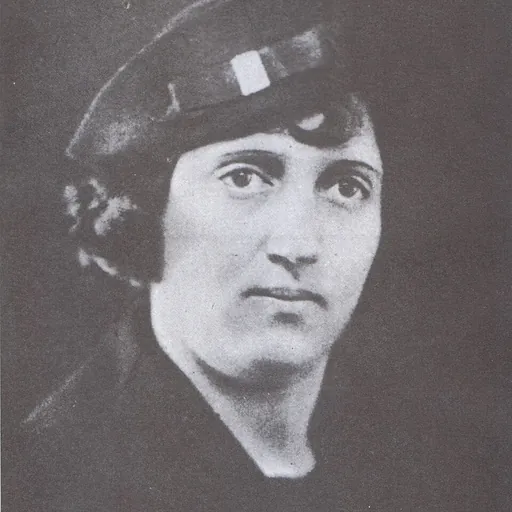
About Parvin E'tesami
Lived 1907 – 1941 (aged 34). Parvin E'tesami was an Iranian poet, literary scholar, librarian and writer.
Rakhshandeh E'tesami (17 March 1907 – 4 April 1941), better known as Parvin E'tesami, was a 20th-century Iranian Persian-language poet.
Biography
Parvin E'tesami was born on 17 March 1907 in Tabriz to Mirza Yussef E'tesami Ashtiani (E'tesam-al-Molk). Her paternal grandfather was Mirza Ebrahim Khan Mostawfi Etesam-al-Molk. Her grandfather Mirza Ebrahim Khan Mostawfi Etesam-al-Molk was originally from Ashtiyan, but moved to Tabriz and was appointed financial controller of the province of Azerbaijan by the Qajar administration.
E'tesami had four brothers, her mother died in 1973. Her family moved to Tehran early in her life, and in addition to formal schooling, she obtained a solid understanding of Arabic and classical Persian literature from her father. At the age of 8 she started writing poems. Afterwards, she taught for a while at that school.
In 1926, she received an invitation to become the tutor of the Queen of the new Pahlavi court, but she refused. The marriage lasted for only ten weeks and they separated due to differences of interests and personality and she returned to Tehran.
In 1936, E'tesami was awarded by Reza Shah Pahlavi the third-degree Iran Medal of Art and Culture, but she declined. She was buried near her father in Qom, near the Fatima Masumeh Shrine.
Parvin E'tesami's house became an Iranian national heritage site on 19 October 2006.
Marriage Parvin E'tesami married her father's cousin, Fazlollah E'tesami Ashtiani, on 10 July 1934, and four months after their engagement and marriage, they moved to Kermanshah. At the time of their marriage her husband was the head of the gendarmerie in Kermanshah. After living with her husband for nearly two months, Parvin returned to her father's house, and nine months later, on 5 August 1935, they separated. Abolfath E'tesami, Parvin's brother, cited the reason for the separation as mentality and ethical differences between the two, stating that her husband's military mindset was incompatible with Parvin's gentle and free-spirited nature.
The poems "Gem and Stone", "Oh Bird", "Orphan's Tears", "Desired Child", "Our Lightning is the Oppression of Richness", "Effort and Action", and "Sorrow of Poverty" are among the most well-known poems she penned at a young age.
In her short life, she achieved great fame amongst Iranians. E'tesami's poetry follows the classical Persian tradition in its form and substance. She remained unaffected by or perhaps ignored the modernistic trends in Persian poetry. In the arrangement of her poetry book, there are approximately 42 untitled Qasidas and Qet'as. These works follow the didactic and philosophical styles of Sanai and Naser Khusraw. Several other Qasidas, particularly in the description of nature, show influences from the poet Manuchehri. There are also some Ghazals in her Divan.
According to Professor Heshmat Moayyad, her Safar-e ashk (Journey of a tear) counts among the finest lyrics ever written in Persian.
Another form of poetry, the monazara (debate), claims the largest portions of E'tesami's Divan. She composed approximately sixty-five poems in the style of monazara and seventy-five anecdotes, fables, and allegories. According to Moayyad: "Parvin wrote about men and women of different social backgrounds, a wide-ranging array of animals, birds, flowers, trees, cosmic and natural elements, objects of daily life, abstract concepts, all personified and symbolizing her wealth of ideas. Through these figures, she holds up a mirror to others showing them the abuses of society and their failure in moral commitment. Likewise, in these debates she eloquently expresses her basic thoughts about life and death, social justice, ethics, education, and the supreme importance of knowledge".
Throughout her life, E`tesami's work was a marriage of the traditional and modern; while her poetic style eschewed the new modernist styles and adhered closely to the forms and structures of classical Persian poetry.
Parvin Etisami Literary Award Parvin E'tesami's handwriting, the poem she composed for her tombstoneParvin Etisami Literary Award was started in 2003 by the cultural assistant of the Ministry of Culture and Islamic Guidance, in the Office of Cultural Assemblies and Activities. It is held in different categories of poetry, fiction, dramatic literature, research literature, children's and adolescent poetry, and children's and adults' stories. Death On 4 April 1941, Parvin Etesami died. On 19 October 2006, her home was designated as a national historic site in Iran.
Parvin E'tesami contracted typhoid in March 1941. Her brother, Abolfath E'tesami, was preparing her collected works for a second printing. However, Parvin’s deteriorating condition led to her being bedridden at home on 24 March 1941. It is said that negligence by her doctor in treating her illness led to her death. As her condition worsened significantly on the night of 3 April 1941,
Don’t just read it —
keep it.
Full-length biographies made to live with: read them, listen on the way to work, watch them tonight.
- E-book
- Audio
- Video
Instant download · yours to keep · every purchase keeps this site free
Important facts
People in Parvin E'tesami's life
Named in this biography and alive at the same time
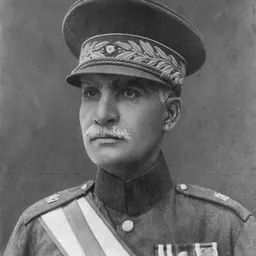
Related people
Same field, nearest in time

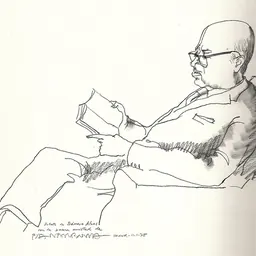
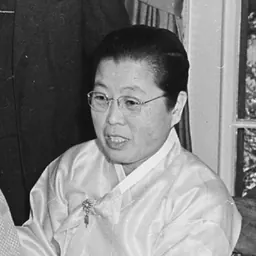

Contemporaries
People whose lives overlapped Parvin E'tesami's


Frequently asked questions
Who was Parvin E'tesami?
Iranian poet (1907–1941)
When was Parvin E'tesami born?
Parvin E'tesami was born on 16 March 1907 in Tabriz.
When did Parvin E'tesami die?
Parvin E'tesami died on 5 April 1941 in Tehran.
What was Parvin E'tesami's occupation?
Parvin E'tesami was a poet, literary scholar, librarian and writer.
What nationality was Parvin E'tesami?
Parvin E'tesami was Iranian.
Sources & further reading
Cite this page
APA: Biography.guide. (2026). Parvin E'tesami. https://biography.guide/parvin-e-tesami/
MLA: "Parvin E'tesami." Biography.guide, https://biography.guide/parvin-e-tesami/.
Chicago: "Parvin E'tesami." Biography.guide. https://biography.guide/parvin-e-tesami/.
Data last updated: 2026-09-22 · Spot an error? Report a correction.
Portrait: Wikimedia Commons · author & licence
Page generated 2026-09-27 04:58 UTC