
Parteniy Zografski
Bulgarian cleric, educator, and writer
About Parteniy Zografski
Lived 1818 – 1876 (aged 57–58). Parteniy Zografski was a Turkish writer, eastern Orthodox priest, philologist, folklorist, translator and educator.
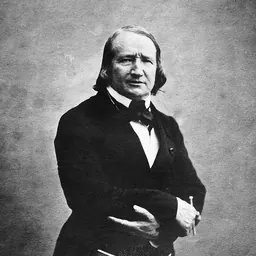
Parteniy Zografski as Metropolitan of Nishava (Bulgarian Exarchate). Essay about the Bulgarian language, published by Zografski in Balgarski knizhitsi (Bulgarian Booklets) magazine in 1858. The Bulgarian church in Istanbul where Parteny Zografski is buried. Parteniy Zografski (; ; born Pavel Hadzhivasilkov Trizlovski; died 7 February 1876) or Parteniy Nishavski was a 19th-century Bulgarian cleric, educator and writer from Galičnik in Ottoman Macedonia, and one of the early figures of the Bulgarian National Revival. In his works he referred to his language as Bulgarian and had a Bulgarian consciousness, though besides contributing to the development of the Bulgarian language, in North Macedonia he is also thought to have contributed to the distinguishment of present-day Macedonian.
Life Zografski was born as Pavel Hadzhivasilkov Trizlovski in Galičnik, Ottoman Empire (present-day North Macedonia), into the family of a rich pastoralist. Zografski started his education in the Saint Jovan Bigorski Monastery near his native village, then he moved to Ohrid in 1836, Through Archimandrite Anatoly, he contacted Vasil Aprilov and continued his studies at the Theological Seminary of Odessa, Russian Empire, and briefly resided in the Căpriana monastery in Moldavia. He was also sent to complete his education in Kiev. Zografski graduated from the Kiev seminary in 1846 and from the Moscow seminary in 1850. He stayed in Paris for several months, studying French. He was patronized by the Russian diplomacy and served as a preacher and confessor in a Russian church there. With the permission of the Russian ambassador Aleksey Lobanov-Rostovsky, he went to the Zograf Monastery. On 23 November 1851, he established a theological school there, which the Greek spiritual authorities closed in the following year. From 1852 to 1855, he taught Church Slavonic at the Halki seminary. He was forced to leave the school because of the Crimean War (1853–1856) and the authorities' suspicion that he was teaching Russian. Due to his strong ties with the Russian embassy, he went to Mount Athos and returned to Istanbul only after the end of the war. Until 1858, he was the director of the Bulgarian school in Istanbul, where he organized teaching based on modern principles. At the same time, he served in the Bulgarian St. Stephen Church and the Russian church. Zografski also collected folk songs. On 29 October 1859, According to Bulgarian academic Simeon Radev, Zografski hated the Greeks and this hatred became even more intense after the death of the Miladinov brothers. In Dojran, he was accused of burning Greek liturgical books. After the establishment of the Bulgarian Exarchate in 1870, he joined it. Thus, the Ecumenical Patriarchate of Constantinople excommunicated him in November 1870 and confirmed the deposition on 16 September 1872. He remained as the Bulgarian Metropolitan of Pirot until 15 October 1874, when he resigned, citing poor health due to the climate. Zografski died in Istanbul on 7 February 1876 and was buried in the courtyard of the Bulgarian St. Stephen Church. In 1857, he espoused this linguistic view in an article published in Tsarigradski vestnik and called "The following article is very important and we encourage readers to read it carefully":
In the next year, Zografski argued that the Macedonian dialect should represent the basis for the common modern "Macedono-Bulgarian" literary standard called simply "Bulgarian" in another article published in Balgarski knizhitsi called "Thoughts about the Bulgarian language":
quote|Our language, as it is well known, is divided into two main dialects, of which one is spoken in Bulgaria and Thrace, and the other one in Macedonia... To promote to the world the Macedonian dialect with all its general and local idioms, as much as we can, we intend to create a Grammar for it, in parallel with the other one... The first and biggest difference between the two dialects is, in our opinion, is the difference in pronunciation or the stress. The Macedonian dialect usually prefers to place the stress in the beginning of the words, and the other one in the end, so in the first dialect you can’t find a word with a stress on the last syllable, while in the latter in most cases the stress is on the last syllable. Here Macedonian dialect is approaching the Serbian dialect...Not only should not and cannot the Macedonian dialect be excluded from the common standard language, it would also have been better if it was accepted as its main basis; the reason being that it is more melodious, more fluent and better structured, and in many ways fuller and richer. However, his textbooks provoked criticism in the Bulgarian press, where his language was described as a mixture of Bulgarian and Serbian and his efforts were denounced as separatist. Per Victor Friedman, the appearance of these textbooks, and the reactions they generated, reflected the development of some form of Macedonian consciousness. In 1870 Marin Drinov, who played a decisive role in the standardization of the Bulgarian language, rejected the proposal of Parteniy Zografski and Kuzman Shapkarev for a mixed eastern and western Bulgarian/Macedonian foundation of the standard Bulgarian language, stating in his article in the newspaper Makedoniya: "Such an artificial assembly of written language is something impossible, unattainable and never heard of." The division of the dialects of the Eastern South Slavic into western and eastern subgroups made by Zografski has continued to be relevant, while the so-called yat border is the most important dividing isogloss there. It divides also the region of Macedonia running along the Velingrad–Petrich–Thessaloniki line.
Since the times of Socialist Federal Republic of Yugoslavia, historians in present-day North Macedonia have insisted Zografski's literary works published in western Macedonian vernacular make him a leading representative of the "Macedonian National Rebirth". He is interpreted by them and literary scholars there as a supporter of an idea for a two-way Bulgaro-Macedonian compromise, not unlike the one achieved by Serbs and Croats with the 1850 Vienna Literary Agreement. Another interpretation of theirs is that he made the first scientific attempt to distinguish the Macedonian language. Zografski is honored in Bulgaria and North Macedonia.
Don’t just read it —
keep it.
Full-length biographies made to live with: read them, listen on the way to work, watch them tonight.
- E-book
- Audio
- Video
Instant download · yours to keep · every purchase keeps this site free
Important facts
People in Parteniy Zografski's life
Named in this biography and alive at the same time


Related people
Same field, nearest in time

Contemporaries
People whose lives overlapped Parteniy Zografski's





Frequently asked questions
Who was Parteniy Zografski?
Bulgarian cleric, educator, and writer
When was Parteniy Zografski born?
Parteniy Zografski was born in 1818 in Galičnik.
When did Parteniy Zografski die?
Parteniy Zografski died on 7 February 1876 in Istanbul.
What was Parteniy Zografski's occupation?
Parteniy Zografski was a writer, eastern Orthodox priest, philologist, folklorist, translator and educator.
What nationality was Parteniy Zografski?
Parteniy Zografski was Turkish.
Sources & further reading
· Wikipedia: Parteniy Zografski
Cite this page
APA: Biography.guide. (2026). Parteniy Zografski. https://biography.guide/parteniy-zografski/
MLA: "Parteniy Zografski." Biography.guide, https://biography.guide/parteniy-zografski/.
Chicago: "Parteniy Zografski." Biography.guide. https://biography.guide/parteniy-zografski/.
Data last updated: 2026-09-20 · Spot an error? Report a correction.
Page generated 2026-09-27 05:18 UTC