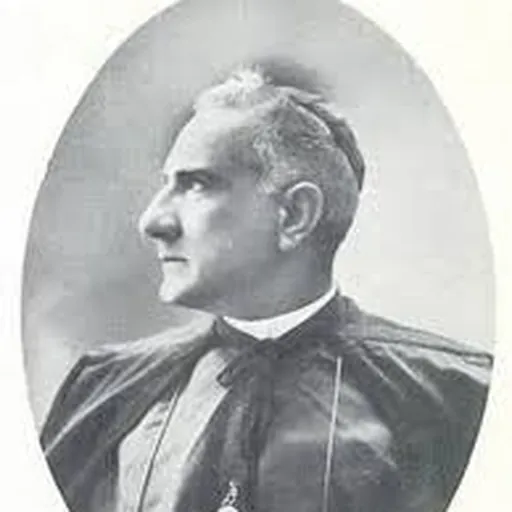
About Paolo Miraglia-Gulotti
Lived 1857 – 1918 (aged 61). Paolo Miraglia-Gulotti was an Italian and American catholic priest.
Paolo Vescovo Miraglia-Gulotti (March 22, 1857 – July 25, 1918) was an excommunicated bishop for Independent Catholic churches in the Kingdom of Italy and the United States and was the leader of the Italian National Catholic Church.
Miraglia-Gulotti is considered an .
Miraglia-Gulotti was censured in Sicily for his preaching. Carini died suddenly, on June 25, 1895, and, he used "" (Catholic-Independent Church of Italy and among the Italians abroad) to identify his sect in 1910. which began in a former stable of an old palazzo with church furnishing principally provided by Mazzini's niece, "and with much else that is expressive of loyal and national feeling, and which is not to be seen in any other place of worship with which I am acquainted in Italy." His congregation had just that church, and "is spoken of contemptuously as the congregation of Signor Abbate's stable", she wrote, as the Abbate family own the palazzo.
On April 15, 1896, Miraglia, who resided in Piacenza but was a priest of the Roman Catholic Diocese of Patti, Sicily, was excommunicated for, what was called, his "incredible, audacious, and obstinant scandals which long troubled the Roman Catholic Diocese of Piacenza". That year, Nevin introduced in The Churchman the "modern Savonarola", Nevin wrote "he has placed himself under wise guidance, and will not be apt to do anything rashly or ignorantly" but failed to include any specifics. The following week, The Churchman only hinted at the secular side of that movement by publishing a story from Milan's Corriere della Sera which wrote: "The struggle is now not only religious, but civic. The partisans of the bishop will hear of no truce with the partisans of Miraglia, and whenever they can, remove them from the employments that they hold." Within a year, on August 31, 1897, he attended the Union of Utrecht's 4th International Old Catholic Congress in Vienna.
According to The Guardian, Miraglia's "adherents declared themselves to be the Chiesa Autonoma Italo-Internazionale" on October 21, 1897, after Miraglia returned from the International Old Catholic Congress in Vienna. He founded a weekly newspaper, titled Girolamo Savonarola, which he used as his organ. Campello made at least four visits to England where he was received at gatherings in Lambeth Palace, by the Archbishop of Canterbury, and in Fulham Palace, by the Bishop of London. He was licensed in 1883 by Bishop Abram Newkirk Littlejohn, of the Episcopal Diocese of Long Island, to work as a priest "wherever there may be lawful opportunity" for Campello's reformation efforts in Italy, The refused to consecrate Campello in 1901, according to Oeyen, "because of his limited number of baptisms and marriages and his close relationships with Anglicans, Methodists, and Waldenses". On May 6, 1900, while the Holy See examined Vilatte's case, Vilatte consecrated Miraglia in Piacenza; According to Peter-Ben Smit, in Old Catholic and Philippine Independent Ecclesiologies in History, "the orders of in general, and specifically those of [...] Miraglia, and of all those consecrated by them, are not recognized, and all connections with these persons are formally denied" by the . In 1901, Tony André Florence, in a report about the liberal movement in Italy presented to the International Council of Unitarian and Other Liberal Religious Thinkers and Workers in London, wrote that Miraglia's "desire to be at the head of a personal movement, after separating him from the Old Catholics whose ideas were akin to his, threw him suddenly into a false path." His consecration by Vilatte "lost him the sympathy of many, and his profession of faith completed their disappointment." Florence wrote that Miraglia's "reformatory movement, therefore, is now in suspense," after he was obliged to refuge abroad.
While the reported, in The Times, that although the "discreditable incident" of Miraglia "having arrogated to himself the dignity" of bishop-elect and his consecration happened, the work of the "real bishop-elect", Campello, was going on independently, with headquarters at Rome. It is unclear if the two juxtaposed groups were concurrent factions of one movement.
After the Italian Court of Cassation had upheld a sentence of three years in prison for various earlier judgments, Miraglia fled to Switzerland and then London. His church in Piacenza was disbanded in 1901.
Already a convicted fugitive who evaded Italian justice, Miraglia was then involved with religious associations in France. For example, a parish church in Piedigriggio, Corsica, was confiscated by the government from the Roman Catholic Diocese of Ajaccio and devolved to a religious association formed on December 11, 1906. The parish's priest disappeared after he signed a declaration of adherence to the sect. From May, 1907, Jacques Forcioli, a Miraglia ordained priest working for that religious association, conducted schismatic services. In November, a lawsuit was filed by a replacement priest appointed to serve the parish by the Bishop of Ajaccio, against the mayor and Forcioli, demanding the restitution of the church. The court rendered a judgment which condemned the mayor, declared that religious association illegal, and ordered the restoration of the property to the 's priest.
Vilatte and Miraglia united in a joint effort, and except for the brief interval, , when Vilatte unsuccessfully attempted to organize a religious association in France, their work had chiefly been in the Midwestern United States.
According to Thomas E. Watson, in Watson's Jeffersonian Magazine, after being "arrested like a common criminal" Miraglia was deported from the United States, on August 4, 1910, "as though he were [...] an enemy to society." Two days before his deportation, the New York Times reported that Miraglia, "self-appointed head" of the Catholic Independent Church of Rome, was detained on Ellis Island "on the charge that he is an undesirable citizen" after being apprehended in Springfield, Massachusetts. He admitted that "while in Piacenza and Parma he served several terms and was heavily fined for libel, and while a professor at the Patti University he forged the signatures of aculty to fake diplomas, which he sold to deficient students."
In 1915, Miraglia assisted Vilatte in Frederick Ebenezer Lloyd's consecration.
On February 15, 1915, The Evening World reported that he was "charged with obtaining alms under false pretenses," after the Bureau of Charities went to his mission and "found only an empty shack," and arrested along with two of his alleged accomplices by detectives. While in court, a Deputy United States Marshal arrested him "on the charge of writing vicious letters" to a woman.
On July 25, 1918, Miraglia died at Oak Forest Hospital of Cook County of myocarditis.
Don’t just read it —
keep it.
Full-length biographies made to live with: read them, listen on the way to work, watch them tonight.
- E-book
- Audio
- Video
Instant download · yours to keep · every purchase keeps this site free
Important facts
People in Paolo Miraglia-Gulotti's life
Named in this biography and alive at the same time
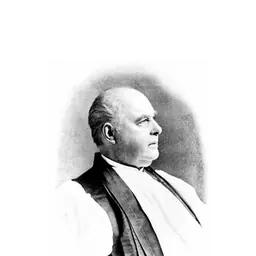

Related people
Same field, nearest in time
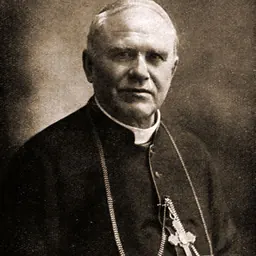
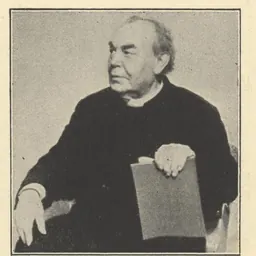
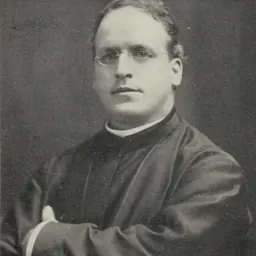
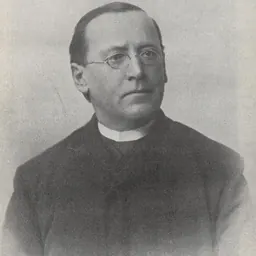
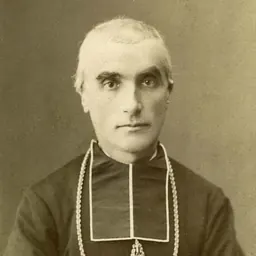
Contemporaries
People whose lives overlapped Paolo Miraglia-Gulotti's





Frequently asked questions
Who was Paolo Miraglia-Gulotti?
Italian Roman Catholic priest (1857-1918)
When was Paolo Miraglia-Gulotti born?
Paolo Miraglia-Gulotti was born on 22 March 1857 in Ucria.
When did Paolo Miraglia-Gulotti die?
Paolo Miraglia-Gulotti died on 25 July 1918 in Chicago.
What was Paolo Miraglia-Gulotti's occupation?
Paolo Miraglia-Gulotti was a catholic priest.
What nationality was Paolo Miraglia-Gulotti?
Paolo Miraglia-Gulotti was Italian and American.
Sources & further reading
· Wikipedia: Paolo Miraglia-Gulotti
· DBpedia: Paolo Miraglia-Gulotti
Cite this page
APA: Biography.guide. (2026). Paolo Miraglia-Gulotti. https://biography.guide/paolo-miraglia-gulotti/
MLA: "Paolo Miraglia-Gulotti." Biography.guide, https://biography.guide/paolo-miraglia-gulotti/.
Chicago: "Paolo Miraglia-Gulotti." Biography.guide. https://biography.guide/paolo-miraglia-gulotti/.
Data last updated: 2026-09-21 · Spot an error? Report a correction.
Portrait: Wikimedia Commons · author & licence
Page generated 2026-09-27 04:59 UTC