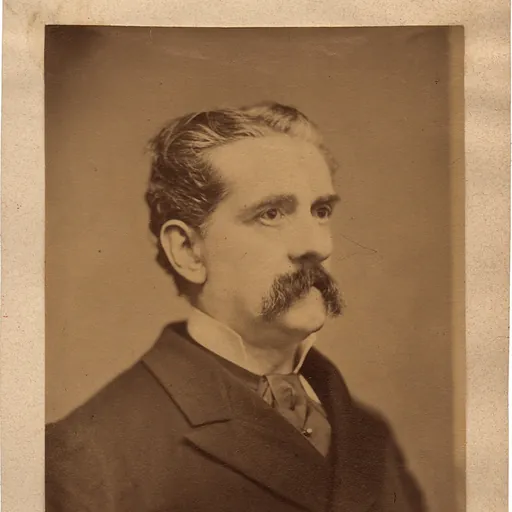
About Paolo Ferrari
Lived 1822 – 1889 (aged 66). Paolo Ferrari was an Italian writer, comedy writer, dramaturge, short story writer and playwright.
Paolo Ferrari (1822–1889), Italian dramatist, was born at Modena. His numerous works, chiefly comedies, and all marked by a fresh and piquant style, are the finest product of the modern Italian drama. After producing some minor pieces, in 1852 he made his reputation as a playwright with Goldoni e le sue Sedici Commedie. Among numerous later plays his comedy Parini e la Satira had considerable success. Ferrari may be regarded as a follower of Carlo Goldoni, modelling himself on the French theatrical methods. in 1860 he was appointed professor of history at Modena and afterwards at Milan. His collected plays were published in 1877–1880 in 14 volumes.
Biography The son of an officer, he graduated from the University of Modena and Reggio Emilia with a law degree. Of liberal ideas, he soon began both his activities as a patriot and Conspiracy and his career as a playwright, in which he achieved considerable success with brilliant comedies in the Goldonian style, including Goldoni and his sixteen new comedies (1851), judged by Luigi Capuana to be “the finest comedy written in Italian in the first half of the running century,” La satira e Parini (1853) and, in Modenese dialect, La medseina d'onna ragaza amalèda (1859), later translated and performed in Italian as well. La medseina d'onna ragaza amalèda (1859), later also translated and performed in Italian. From Modena, where he was secretary of the University and professor of history in the city high school, he moved in 1861 to the Scientific-Literary Academy of Milan, where he was professor of Modern History and then of Literature and Aesthetics, also holding the position of dean between 1875 and 1877.
In the Lombard capital, he was briefly a city councilor, maintained fertile relations with intellectuals and politicians of the time, such as Pietro Cossa, Felice Cavallotti and Giuseppe Giacosa, and, with literary production, switched to the bourgeois theater with theses, moralistic with plays such as Il duello (1868), Il ridicolo (1872), Il suicidio (1875), and Le due dame (1877), which were favorably received by the public but earned him, over the years, increasing criticism, including that of Benedetto Croce, who called them “embodied categorical imperatives.” His Manuscript are preserved in the Museo del Teatro alla Scala, next to which is the square named after him. He was married to Ersilia Branchini and fathered seven children. He is buried in Modena.
Dedicated to Paolo Ferrari are a street in Modena, where the Museo Casa Enzo Ferrari is located, and, in Milan, the square adjacent to the La Scala theater.
Don’t just read it —
keep it.
Full-length biographies made to live with: read them, listen on the way to work, watch them tonight.
- E-book
- Audio
- Video
Instant download · yours to keep · every purchase keeps this site free
Important facts
People in Paolo Ferrari's life
Named in this biography and alive at the same time


Related people
Same field, nearest in time

Contemporaries
People whose lives overlapped Paolo Ferrari's



Frequently asked questions
Who was Paolo Ferrari?
Italian writer (1822–1889)
When was Paolo Ferrari born?
Paolo Ferrari was born on 5 April 1822 in Modena.
When did Paolo Ferrari die?
Paolo Ferrari died on 9 March 1889 in Milan.
What was Paolo Ferrari's occupation?
Paolo Ferrari was a writer, comedy writer, dramaturge, short story writer and playwright.
What nationality was Paolo Ferrari?
Paolo Ferrari was Italian.
Sources & further reading
· DBpedia: Paolo Ferrari (writer)
Cite this page
APA: Biography.guide. (2026). Paolo Ferrari. https://biography.guide/paolo-ferrari/
MLA: "Paolo Ferrari." Biography.guide, https://biography.guide/paolo-ferrari/.
Chicago: "Paolo Ferrari." Biography.guide. https://biography.guide/paolo-ferrari/.
Data last updated: 2026-09-22 · Spot an error? Report a correction.
Portrait: Wikimedia Commons · author & licence
Page generated 2026-09-27 05:03 UTC