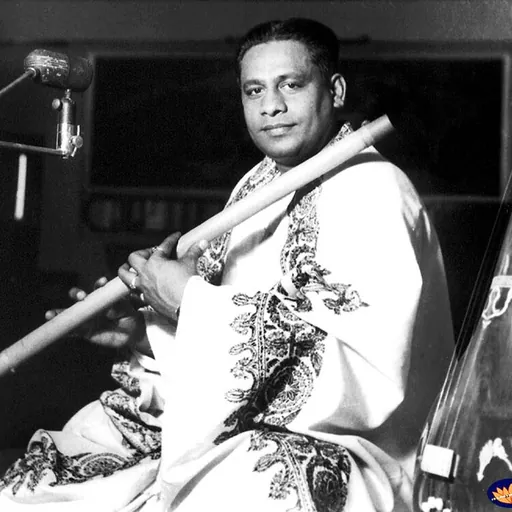
About Pannalal Ghosh
Lived 1911 – 1960 (aged 48). Pannalal Ghosh was an Indian musician, composer, music educator, flautist and flutist.
Pannalal Ghosh ( 24 July 1911 – 20 April 1960), also known as Amal Jyoti Ghosh, was an Indian flute (bansuri) player and composer. He was a disciple of Allauddin Khan, and is credited with popularising the flute as a concert instrument in Hindustani classical music and also the "Pioneer of Indian Classical Flute".
Early life Pannalal Ghosh was born on 24 July 1911 in Barisal, Bengal Presidency, British India. He was named Amal Jyoti Ghosh with Pannalal having been his nickname. His father, Akshay Kumar Ghosh, was a sitarist. Ghosh received his initial training in music from his father, learning to play the sitar. Two apocryphal incidents in his childhood are believed to have influenced Ghosh in taking up the flute.
He was married to Parul Ghosh (née Biswas) in 1924 when she was only nine and he was thirteen years old. She was the younger sister of Ghosh's friend Anil Biswas who went on to become a celebrated music composer. Parul was a talented singer herself and later became a well-known playback singer. In 1928, Ghosh became a part of the Indian Independence Movement. He joined a gymnasium and learnt martial arts, boxing and stick fighting.
Career Flutes of Ghosh kept in a bag with his name embroidered on the top flap. Collection of Raja Dinkar Kelkar Museum, Pune. Having assisted in music production while he was in Calcutta working with New Theatres Ltd. In 1940 he came to Bombay to further expand his music career. Sneh Bandhan (1940) was his debut film as an independent music composer. The popular songs from the film were "Aabroo Ke Kamaanon Mein" and "Sneh Bandhan Mein Bandhe Hue" sung by Khan Mastan and Bibbo. Pannalal Ghosh jointly scored the background for "Aandhiyan" in 1952 along with Ustad Ali Akbar Khan and Pandit Ravi Shankar. He was the first to introduce the seven-hole flute.
Innovations Pannalal Ghosh incorporated what is known as the Teevra-Madhyam Hole which is also known as the Dhruva-Madhyam hole, placed off the centre-line of fingering holes, at the bottom of the flute. Veteran flautist Nityanand Haldipur who is his direct disciple explains that this hole was designed specifically to play the Teevra-Madhyam (‘Ma' or 4th note) of the lower octave especially in Raagas such as Puriya, Darbari and Bihag where a Madhyam to Pancham meend (glide) is required. It can even give the kharaj ka gandhar (3rd note ‘Ga' of the lower octave) too. The hold too was changed by the late legend to enable the little finger to reach this hole. For Raagas such as Darbari where the lower octave (Mandra Saptak) is explored in detail, Pannalal Ghosh invented another bass flute with just 4 holes which was almost 40-42 inches long. This additional hole makes the Indian flute playable almost exactly like the Western recorder, which only has another additional rear hole, placed above towards the mouthpiece, that remains closely held by the left thumb. The long bamboo flutes he devised are popularly played by subsequent flautists to render Hindusthani classical music.
Notable students Devendra Murdeshwar V.G. Karnad Nityanand Haldipur
Don’t just read it —
keep it.
Full-length biographies made to live with: read them, listen on the way to work, watch them tonight.
- E-book
- Audio
- Video
Instant download · yours to keep · every purchase keeps this site free
Important facts
People in Pannalal Ghosh's life
Named in this biography and alive at the same time




Related people
Same field, nearest in time
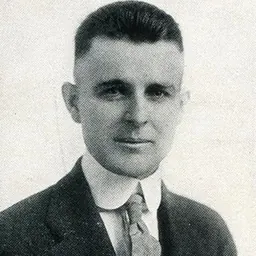
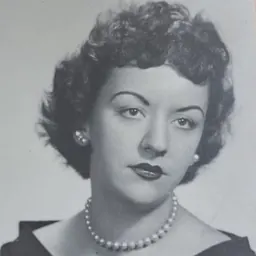
Contemporaries
People whose lives overlapped Pannalal Ghosh's





Frequently asked questions
Who was Pannalal Ghosh?
Indian bansuri player (1911-1960)
When was Pannalal Ghosh born?
Pannalal Ghosh was born on 24 July 1911 in Barishal.
When did Pannalal Ghosh die?
Pannalal Ghosh died on 20 April 1960 in New Delhi.
What was Pannalal Ghosh's occupation?
Pannalal Ghosh was a musician, composer, music educator, flautist and flutist.
What nationality was Pannalal Ghosh?
Pannalal Ghosh was Indian.
Sources & further reading
Cite this page
APA: Biography.guide. (2026). Pannalal Ghosh. https://biography.guide/pannalal-ghosh/
MLA: "Pannalal Ghosh." Biography.guide, https://biography.guide/pannalal-ghosh/.
Chicago: "Pannalal Ghosh." Biography.guide. https://biography.guide/pannalal-ghosh/.
Data last updated: 2026-09-23 · Spot an error? Report a correction.
Portrait: Wikimedia Commons · author & licence
Page generated 2026-09-27 05:06 UTC