
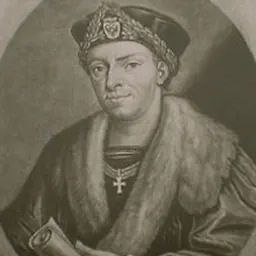
Pánfilo de Narváez
Spanish conquistador and soldier in the Americas
About Pánfilo de Narváez
Lived 1470 – 1528 (aged 57–58). Pánfilo de Narváez was a Spanish conquistador.
Birth and family Pánfilo de Narváez was born in Castile (in either Navalmanzano, near Cuéllar, or Valladolid) in 1470
Early years as conquistador Narváez took part in the Spanish conquest of Jamaica in 1509. In 1511, he went to Cuba to participate in the conquest of that island under the command of Diego Velázquez de Cuéllar.
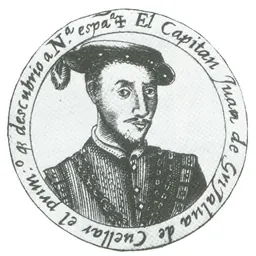
He led expeditions to the eastern end of the island in the company of Bartolomé de las Casas and Juan de Grijalva. De las Casas (who was an eyewitness) reported that Narváez presided over the massacre of Caonao, where Spanish troops killed a village full of natives who had come to meet them with food. After the massacre Narváez asked de las Casas, "What do you think about what our Spaniards have done?" De las Casas replied, "I send both you and them to the Devil!"
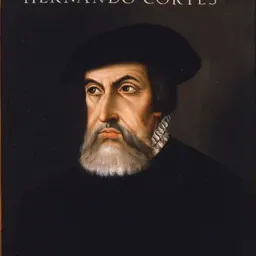
Expedition to Mexico Diego Velázquez de Cuéllar, the governor of Cuba, sponsored Hernán Cortés to man an expedition to Mexico in 1519. With second thoughts about Cortés' loyalty, however, he recalled the expedition shortly after it began. Cortés disobeyed, proceeding with the expedition that would result in the Spanish conquest of the Aztec Empire. Narváez (arriving from Cuba) was named governor of Mexico by Velázquez, who sent him and 1,400 men on 19 ships to México to intercept Cortés.
Narváez disembarked at Veracruz, where Cortés had left a small garrison and set out with the rest of his men for the Aztec capital of Tenochtitlan. The garrison was manned by Cortés' captain, Gonzalo de Sandoval, who captured some of Narváez's men and sent them to Tenochtitlan to alert Cortés. Unable to defeat the garrison, Narváez went to the Totonac town of Cempoala and set up camp. The expedition arrived there in April 1528, weakened by storms and desertions. Narváez landed with 300 men at the mouth of Boca Ciega Bay, north of Tampa Bay at the present-day Jungle Prada Site in St. Petersburg, among hostile natives.
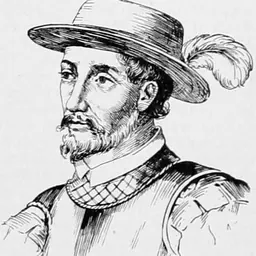
He led an excursion inland, where he discovered the southern shore of present-day Old Tampa Bay. Narváez continued along its coastline and arrived at the main village of the Tocobaga Indians (present-day Safety Harbor), where he discovered "many boxes from Castile" and several European artefacts. Recent research suggests that he may have found the remnants of the 1521 settlement established and abandoned by Juan Ponce de León.
Finding their landing place unsuitable for settlement, Narváez ordered the expedition to split into 100 men and 10 women aboard ships and 300 men and 42 horses travelling by land. They planned to head north along the coast, planning to re-unite at a large bay that his pilots assured him was nearby. There was no large harbour north of their landing site, and Narváez never saw his ships again.
His expedition moved north until it reached the present-day St. Marks River, in the territory of the Apalachee people. Unable to find the gold and other riches he sought and tired of hostilities with the natives, Narváez ordered the construction of four rafts in an attempt to reach Pánuco (his original destination).
A storm drowned most of his remaining 240 men near Galveston Island, with only about 80 swept ashore. Narváez and a small group of men were carried out to sea and were never seen again.
Only four men survived the six years it took for the remainder of the expedition to find its way back. It was eight years from their initial landing in Florida before they arrived in Culiacán (Sinaloa), where they found Melchor Diaz mayor and captain of the province. Álvar Núñez Cabeza de Vaca, Andrés Dorantes de Carranza, Alonso del Castillo Maldonado and the Moroccan slave Estevanico (Esteban) had remained in captivity on (or near) Galveston Island for six years.
Cabeza de Vaca wrote a relación about the journey on foot by these four survivors across the present-day southwestern United States and northern Mexico. It was the first book describing the people, animals, flora and fauna of inland North America.
Don’t just read it —
keep it.
Full-length biographies made to live with: read them, listen on the way to work, watch them tonight.
- E-book
- Audio
- Video
Instant download · yours to keep · every purchase keeps this site free
Important facts
People in Pánfilo de Narváez's life
Named in this biography and alive at the same time

Related people
Same field, nearest in time


Contemporaries
People whose lives overlapped Pánfilo de Narváez's




Frequently asked questions
Who was Pánfilo de Narváez?
Spanish conquistador and soldier in the Americas
When was Pánfilo de Narváez born?
Pánfilo de Narváez was born in 1470 in Navalmanzano.
When did Pánfilo de Narváez die?
Pánfilo de Narváez died in 1528 in Mississippi.
What was Pánfilo de Narváez's occupation?
Pánfilo de Narváez was a conquistador.
What nationality was Pánfilo de Narváez?
Pánfilo de Narváez was Spanish.
Sources & further reading
· Wikipedia: Pánfilo de Narváez
Cite this page
APA: Biography.guide. (2026). Pánfilo de Narváez. https://biography.guide/panfilo-de-narvaez/
MLA: "Pánfilo de Narváez." Biography.guide, https://biography.guide/panfilo-de-narvaez/.
Chicago: "Pánfilo de Narváez." Biography.guide. https://biography.guide/panfilo-de-narvaez/.
Data last updated: 2026-09-26 · Spot an error? Report a correction.
Page generated 2026-09-27 05:16 UTC