
Álvar Núñez Cabeza de Vaca
Spanish explorer of the New World
About Álvar Núñez Cabeza de Vaca
Lived 1485 – 1556 (aged 70–71). Álvar Núñez Cabeza de Vaca was a Spanish conquistador, explorer, military personnel, writer, historian and seafarer.
Álvar Núñez Cabeza de Vaca (; 1488/90/92 after 19 May 1559) was a Spanish explorer of the New World, and one of four survivors of the 1527 Narváez expedition. During eight years of travelling across what is today the Southwestern United States, he became a trader, evangelist, and faith healer to various Native American tribes before reconnecting with Spanish civilization in Mexico in 1536.
After returning to Spain in 1537, he wrote an account of his experiences, first published in 1542 as La relación y comentarios ("The Account and Commentaries" ), and later retitled Naufragios y comentarios ("Shipwrecks and Commentaries"). Cabeza de Vaca is sometimes considered a proto-anthropologist for his detailed accounts of the many tribes of Native Americans that he encountered. He has been portrayed as a unique explorer with a focus on expansion and faith conversion.
In 1540, Cabeza de Vaca was appointed adelantado of what is now Paraguay, where he was governor and captain general of New Andalusia. He worked to build up the population of Buenos Aires, but in 1544 he was charged with poor administration and arrested. He was subsequently transported to Spain for trial in 1545. Although his sentence was eventually commuted, he never returned to the Americas.
Early life and family Coat of Arms of Cabeza de Vaca from the Archivo de Indias, Sevilla, Spain. Reprinted in The Odyssey of Cabeza de Vaca by Morris Bishop. New York: The Century Co., 1933.
Álvar Núñez Cabeza de Vaca was born around 1490 in the Andalusian town of Jerez de la Frontera, Cádiz. His father, Francisco de Vera Mendoza y Hinojosa, was an , a rank of minor Spanish nobility. His mother was María Teresa Cabeza de Vaca y Zurita, also from an hidalgo family. He was named after his mother's great-grandfather, Álvar Núñez Cabeza de Vaca, but the real influence in his life was his paternal grandfather, Pedro de Vera y Mendoza.
Pedro de Vera was described by contemporaries as an expert in fighting battles on land and sea. He led raids against the Moors in North Africa and in 1483 completed the conquest of Grand Canaria, one of the major islands of the Canaries. He was appointed military governor of the island and used his position to capture Canary natives (Guanches) and sell them as slaves in Spain. When natives on the neighbouring island of Gomera revolted, he brutally put down the rebellion, killing males over the age of fifteen and selling the women and children into slavery. He was heavily fined for his actions and recalled to Castile in 1490. Cabeza de Vaca would have heard of these exploits growing up; many years later he named a province in South America, Vera, in honour of his grandfather.
Cabeza de Vaca's father and grandfather died around 1506, and his mother died in 1509, leaving behind a modest estate for her seven children. His younger siblings went to live with their aunt, but Álvar had already entered the service of Juan Alfonso Pérez de Guzmán, 3rd Duke of Medina Sidonia in 1503. The house of Medina Sidonia was one of the most powerful in Andalusia and was a dominant force in Seville, the commercial centre of Spain's growing overseas empire. Cabeza de Vaca served as a page and then chamberlain for the duke. In 1511 he travelled to Italy to fight against the French in the Italian Wars. In February 1512 he took part in the Battle of Ravenna where the Spanish were badly defeated, and Cabeza de Vaca was wounded. He later served as the royal standard-bearer in Gaeta, near Naples.
In 1513 he returned to Spain, still in the service of Medina Sidonia. At some point he married María Marmolejo, a member of a prominent converso family in Seville. When the Revolt of the Comuneros broke out in 1520 against the new Spanish king, Charles V, Cabeza de Vaca fought alongside the duke on behalf of the crown. When the comuneros tried unsuccessfully to seize control in Seville in September, the duke put him in charge of defending one of the city gates; in December he fought to liberate the city of Tordesillas; and on 23 April 1521 he participated in the defeat of the comuneros at the battle of Villalar. Later in 1521, when the French king, Francis I, invaded Navarre, Cabeza de Vaca fought against them in the battle of Puente de la Reina.
In 1527, Cabeza de Vaca appeared at the royal court in Valladolid and received an appointment as royal treasurer for an expedition to be led by conquistador Pánfilo de Narváez to explore and conquer La Florida, a portion of North America roughly comprising today's southeastern United States. The reasons for his selection are not known but his history of loyal military service to the crown was certainly a critical qualification. He also had a relative, Luis Cabeza de Vaca, serving on the all-important Council of the Indies.
Narváez expedition
On 11 December 1526, Charles V commissioned Pánfilo de Narváez to explore, conquer, and settle a portion of North America called La Florida, a territory vaguely described as stretching along the Gulf coast from Mexico to Florida. Cabeza de Vaca was named treasurer by royal appointment, a position that put him second in command and made him chiefly responsible for looking after the emperor's interests during the expedition. He was promised an annual salary of 130,000 maravedies, payable upon his return. Their fleet of five vessels set sail from Spain on 17 June 1527, carrying 600 soldiers and colonists, including a few married women and enslaved Africans.
When they stopped in Hispaniola for supplies, Narváez lost more than 140 of his men, who chose to stay behind rather than continue with the expedition. They spent forty-five days on the island re-provisioning the fleet, and bought a sixth ship. They were especially anxious to acquire horses, but there was a shortage of them in Hispaniola, so the expedition continued to Cuba, where they hoped to recruit more men and buy horses. Narváez anchored at Santiago de Cuba and ordered Cabeza de Vaca to take two ships and proceed further up the coast to pick up additional provisions at Trinidad. In October, while Cabeza de Vaca was ashore negotiating for supplies, a hurricane hit the coast, resulting in the destruction of both ships and the loss of sixty men and twenty horses. Narváez arrived in early November to pick up the survivors. Fearful of encountering another storm, Narváez decided to overwinter in Cuba. The four remaining ships anchored in the Bay of Jagua under the command of Cabeza de Vaca.
While Cabeza de Vaca watched over the ships and crew, Narváez remained on shore to find replacements for the lost ships and hire more men. In February 1528, he returned to the Bay of Jagua with one additional ship and another one waiting for them in Havana. They resumed their expedition to La Florida with the intention of first stopping in Havana to pick up the final ship and more supplies. Before reaching Havana, however, they were hit by another storm and blown off course into the Gulf of Mexico. Short of supplies and fresh water, they decided to push on toward Florida rather than try to get back to Cuba. In April they sighted land, anchored and went ashore. Although the location of their landing has been much debated, more recent opinion leans toward the vicinity of Tampa Bay.
During a quick reconnaissance of the area, they came upon a few small villages of Indians belonging to the Safety Harbor culture. Communicating with them through sign language, the Spanish were informed that a community or region called Apalachee lay to the north and was rich with food and gold. Cabeza de Vaca later noted that whenever Narváez expressed interest in something, the Indians assured him it could be found in great quantities at Apalachee. As a result, Narváez was determined to lead a force north into the interior to find this rich country.
Despite strong objections from Cabeza de Vaca, Narváez decided to split his expedition. He would lead some 300 men and 42 horses overland to Apalachee while the remaining crew, including the women, would sail ahead to find a suitable harbour and await their return. Cabeza de Vaca protested that dividing their forces would put both groups in danger without any certainty that they would be able to find each other again. He advised that everyone remain with the ships until a suitable harbour could be found to serve as their base camp. Narváez ignored his advice and suggested that if Cabeza de Vaca was afraid, he should stay with the ships. Cabeza de Vaca rejected the suggestion of cowardice and participated in the overland march. He later wrote, "I preferred risking my life to placing my honour in jeopardy."
Narváez and his men set off overland in early May 1528. They marched north for 15 days without seeing any Indians or native settlements. Then, as they were attempting to cross a swift-flowing river (probably the Withlacoochee), they were confronted by a group of 200 Indians. The encounter quickly turned into a fight, and the Indians were driven off. Nearby, the Spaniards found a village where they stayed for several days and helped themselves to the stored maize. Cabeza de Vaca pleaded with Narváez to send a scouting expedition downriver in hopes of finding a bay where their ships might be waiting. Narváez relented and ordered Cabeza de Vaca to lead a reconnaissance. After two attempts to find their way through the swamps and heavy forest, their search yielded no ships or suitable harbour.
Narváez still hoped to find riches at Apalachee, so the expedition pressed forward using captive Indians as guides. Seven weeks after leaving their ships, they came upon the largest village they had found so far, a collection of forty houses. Their guides assured them this was a major Apalachee settlement, so Narváez ordered Cabeza de Vaca to lead about fifty soldiers to seize the village. There was no resistance to their attack and Cabeza de Vaca found only women and children whom he rounded up to serve as hostages. A thorough search of the houses found plenty of food but none of the hoped-for gold and gems.
Apalachee had no gold but had only corn, but the explorers were told a village known as Aute, about 5 or 9 days away, was rich. They pushed on through the swamps, harassed by the Native Americans. A few Spanish men were killed and more wounded. When they arrived in Aute, they found that the inhabitants had burned down the village and left. But the fields had not been harvested, so at least the Spanish scavenged food there. They tried to repair the rafts, using what remained of their own clothes as oakum to plug holes, but they lost the rafts to a large wave. Sculpture of a thinly-clad Cabeza de Vaca on display at the Whitehead Museum in Del Rio, Texas, as he might have appeared to Indians in the lower Rio Grande area around 1536. As the number of survivors dwindled rapidly, they were enslaved for four years by various American Indian nomadic tribes of the upper Gulf Coast. The tribes to which Cabeza de Vaca was enslaved included the Hans and the Capoques, and tribes later called the Karankawa and Coahuiltecan. Only four men managed to escape: Cabeza de Vaca, Andrés Dorantes de Carranza, Alonso del Castillo Maldonado, and an African slave of Dorantes, Estevanico.
During his wanderings, passing from tribe to tribe, Cabeza de Vaca later reported that he developed sympathies for the indigenous peoples. He became a trader and a healer, which gave him some freedom to travel among the tribes. His group attracted numerous native followers, who regarded them as "children of the sun", endowed with the power to heal and destroy. As Cabeza de Vaca grew healthier, he decided that he would make his way to Pánuco, supporting himself through trading. discovered by Aleixo Garcia overland to the district's Spanish capital, Asunción, far inland on the great Paraguay River. Cabeza de Vaca is thought to have been the first European to see the Iguaçu Falls.
In March 1542, Cabeza de Vaca met with Domingo Martínez de Irala and relieved him of his position as governor. The government of Asunción pledged loyalty to Cabeza de Vaca, and Irala was assigned to explore a possible route to Peru. Once Irala returned and reported, Cabeza de Vaca planned his own expedition. He hoped to reach Los Reyes (a base that Irala set up) and push forward into the jungle in search of a route to the gold and silver mines of Peru. On 5 April 1542, Cabeza de Vaca prohibited the bartering of indigenous women for metal objects, imposing penalties of economic fines, exile, or forced labor on brigantines; and on 19 March 1544, before being arrested, he issued a further decree explicitly forbidding any person from "taking" Guaraní women from their villages for service, under identical penalties. In his own account presented to the Council of the Indies in December 1545, Cabeza de Vaca also denounced that the Franciscan friars Armenta and Lebrón kept more than thirty indigenous women aged twelve to twenty enclosed in their houses "as if they were their wives." The resistance of the colonists and royal officials to these measures was one of the principal causes of his arrest in 1544. See also: Indigenous women in the conquest of Paraguay.
During Cabeza de Vaca's absence, Irala had stirred up resistance to his rule and capitalized on political rivalries. They wandered along the Texas coast as prisoners of the Han and Capoque American Indians for two years, while Cabeza de Vaca observed the people, picking up their ways of life and customs. They travelled through the American Southwest and ultimately reached Mexico City, nearly eight years after being wrecked on the island.
In 1537, Cabeza de Vaca returned to Spain, where he wrote his narratives of the Narváez expedition. These narratives were collected and published in 1542 in Spain. They are now known as The Relation of Álvar Núñez Cabeza de Vaca. The narrative of Cabeza de Vaca is the "first European book devoted completely to North America." His detailed account describes the lives of numerous tribes of American Indians of the time. Cabeza de Vaca showed compassion and respect for native peoples, which, together with the great detail he recorded, distinguishes his narrative from others of the period.
According to Cabeza de Vaca, his greatest challenge came when he attempted to bring peace between the conquering Spanish army and the Natives. As Cabeza approached the area of Spanish settlement, he and his companions grieved to see the destruction of Indigenous villages and their inhabitants' enslavement. Cabeza claimed that, out of fear of the Spanish army, many Natives chose to hide in the forest and risk starvation, leaving fertile land uncultivated.
Possible Karankawan groups: Capoques – Cocos Deaguanes – Cujanes Quevenes – Copanes Guaycones – Guapites Camones – Karankaguases?
Related to Karankawa: Charruco – Bidai-Orcoquiza Han – Bidai-Orcoquiza
Possible Tonkawan groups: Mendica – Tamiques Mariames – Jaranames Iguaces – Anaquas
Possible Coahuiltecan or desert groups: Quitoles The "Fig People" Acubadaos Avavares Anegados Cutalchuches Maliacones Susolas Comos – Comecrudo Cuayos Arbadaos Atayos – Adai Caddo Indian Nation Cuchendados
Comentarios In 1555, after a four-year position as Adelantado in Rio de la Plata, Cabeza de Vaca wrote from memory a chronicle of his time in South America. It is believed that his secretary at the time, Pero Hernández, transcribed Cabeza de Vaca's account in what is known as Comentarios. The publication of Comentarios was appended to La relación as a joint publication in Valladolid, Spain, entitled: Naufragios. At that time, explorers often published their reports of travels in foreign lands.
Later editions In 1906, Naufragios was published in a new edition in Madrid, Spain. The introduction says the intent of this edition was to publicize Cabeza de Vaca's observations and experiences to strengthen authentic representations. This has been described as having the objective of portraying Cabeza de Vaca as less aggressive , while trying to authenticate his role as a sympathetic observer of the natives.
Place in Chicano literature Herrera (2011) classifies Cabeza de Vaca's La Relacion as the first major contribution to Chicano literature. Scholars have identified five major periods of Chicano literature: Spanish Mexican, Mexican American, Annexation, Chicano Renaissance, and Modern. Cabeza de Vaca is classified as part of the Spanish Mexican period; he recounted eight years of travel and survival in the area of Chicano culture: present-day Texas, New Mexico, and northern Mexico. His account is the first known written description of the American Southwest.
Representation in other media Laila Lalami's novel, The Moor's Account (2014), is a fictional memoir of Estevanico, the Moroccan slave who survived the journey and accompanied Cabeza de Vaca through the Southwest. He is considered to be the first black explorer of North America.
Lord Buckley created a monologue The Gasser based on Haniel Long's novella. This was first recorded in 1954 and again in 1959.
His story is noted in the first episode of Ken Burns' The West, a PBS documentary which first aired in 1996.
Russell Persson's The Way of Florida (Little Island Press, 2017) is a highly stylized novelization of Cabeza de Vaca's Relación.
The Great Journey of Álvar Núñez Cabeza de Vaca is a work composed between 1981 and 1988 by Colin Matthews.
He appears as a possible conquistador for the Spanish Empire in Civilization VII.
Ancestors
Don’t just read it —
keep it.
Full-length biographies made to live with: read them, listen on the way to work, watch them tonight.
- E-book
- Audio
- Video
Instant download · yours to keep · every purchase keeps this site free
Important facts
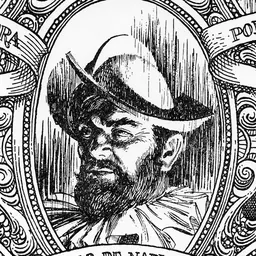
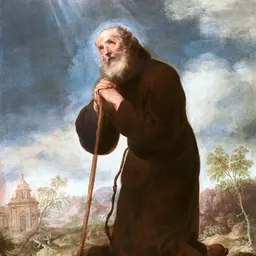
People in Álvar Núñez Cabeza de Vaca's life
Named in this biography and alive at the same time




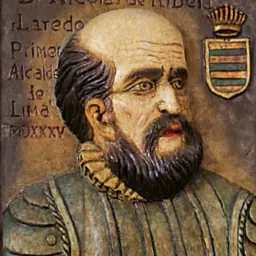
Related people
Same field, nearest in time

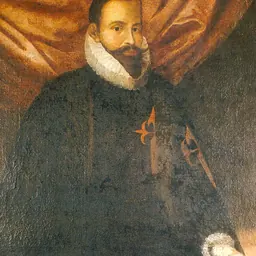

Contemporaries
People whose lives overlapped Álvar Núñez Cabeza de Vaca's
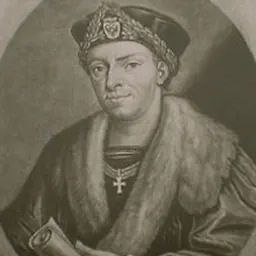





Frequently asked questions
Who was Álvar Núñez Cabeza de Vaca?
Spanish explorer of the New World
When was Álvar Núñez Cabeza de Vaca born?
Álvar Núñez Cabeza de Vaca was born in 1485 in Jerez de la Frontera.
When did Álvar Núñez Cabeza de Vaca die?
Álvar Núñez Cabeza de Vaca died in 1556 in Seville, Valladolid.
What was Álvar Núñez Cabeza de Vaca's occupation?
Álvar Núñez Cabeza de Vaca was a conquistador, explorer, military personnel, writer, historian and seafarer.
What nationality was Álvar Núñez Cabeza de Vaca?
Álvar Núñez Cabeza de Vaca was Spanish.
Sources & further reading
· Wikipedia: Álvar Núñez Cabeza de Vaca
· DBpedia: Álvar Núñez Cabeza de Vaca
Cite this page
APA: Biography.guide. (2026). Álvar Núñez Cabeza de Vaca. https://biography.guide/alvar-nunez-cabeza-de-vaca/
MLA: "Álvar Núñez Cabeza de Vaca." Biography.guide, https://biography.guide/alvar-nunez-cabeza-de-vaca/.
Chicago: "Álvar Núñez Cabeza de Vaca." Biography.guide. https://biography.guide/alvar-nunez-cabeza-de-vaca/.
Data last updated: 2026-09-20 · Spot an error? Report a correction.
Page generated 2026-09-27 05:17 UTC