
About Panama Al Brown
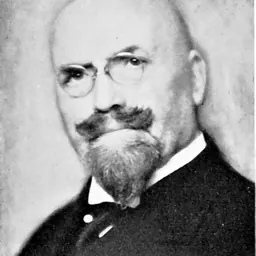
Lived 1902 – 1951 (aged 48). Panama Al Brown was a Panamanian boxer, dancer and composer.
Early life Alfonso Teofilo Brown was born on July 5, 1902, to Afro-Caribbean immigrants in the City of Colón, Panama. His father, Horace Brown, died when Brown was 13, and his mother, Esther Lashley, worked as a cleaner. His first exposure to boxing came while working as a young adult clerk for the United States Shipping Board, at the Panama Canal Zone, witnessing American soldiers boxing. On November 10 of that year, he knocked out Antoine Merlo in his Paris debut, at the Salle Wagram.
He enjoyed Paris so much that he decided to stay there for the rest of his life. In Paris he trained under Eugene Bullard who served as a fighter pilot in World War I. He became a hugely popular boxer in France, and fought on the European continent 40 times between 1929 and 1934. Over the next three years, he beat several fighters there, including former world champion Eugene Criqui.
An interesting case happened when he fought Gustav Humery, on January 29, 1929. Brown and Humery had previously agreed that they would not salute by touching gloves before the fight, and when the bell rang, Brown struck quickly, breaking Humery's jaw with his first punch and sending him to the floor. With the referee's count of ten seconds, the fight lasted a total of fifteen seconds, one of the quickest knockouts in boxing history.
World bantamweight champion On June 18, 1929, Brown made history by becoming the world's first Latin American world champion. He beat Gregorio Vidal by a fifteen-round decision to win the vacant NYSAC and lineal bantamweight titles at the Queensboro Stadium, Long Island. He became a national idol in Panama, and an instant celebrity almost everywhere else in Latin America. Magazines such as Ring En Español were still talking about his achievement sixty years later. Soon after he lost a ten-round, non-title fight to Battling Battalino. He was then awarded the NBA bantamweight title on October 8, 1929. However, he was briefly stripped of his NBA title on February 3, 1930. On February 8, 1930, Brown beat Johnny Erickson by disqualification in the first defense of his NYSAC title.
On February 19, 1934, Brown defended his IBU title against Young Perez at the Palais des Sports, Paris, in what would be the first of three encounters between the two boxers. Brown had a significant height and reach advantage, and proved too much for the Tunisian, who lost on points. Shortly after the NBA stripped Brown of his title for failing to defend it against their leading contender Rodolfo Casanova.
Brown retained his title nine times and had countless other fights before a rematch with Humery that ended in disaster: on May 17, 1934, Brown was disqualified in round six at Paris for using illegal tactics. A riot started and Brown suffered several broken bones and was sent into semi-unconsciousness by fans before the police could help him. Twenty minutes later, the locale where the rematch was held had almost been entirely destroyed. After the loss he chose to retire from boxing, instead performing in a cabaret. Suffering from the prolonged effects of drug use, he was persuaded by Jean Cocteau to detox, receiving treatment at the Sainte-Anne Asylum, and begin training for a comeback to boxing. He had a rematch with Sangchili on March 4, 1938, avenging his earlier loss with a fifteen-round decision to win the vacant IBU bantamweight title,
Personal life Brown quickly fell in love with Paris, and as a result spent much of his life there. He was noted for dressing elegantly, and enjoyed the night life of the city, frequenting bars and jazz clubs. Brown was gay and was involved in a long-term romantic relationship with Jean Cocteau. He owned a number of cars including a 1929 Packard 645 Sport, and several Bugattis. He joined Josephine Baker's La Revue nègre as a tap-dancer, and made his cabaret debut as a song-and-dance man at the Caprice Viennoise.
During the early 1930s, Brown contracted syphilis, and suffered from sores on his back. He recovered well enough to continue his boxing career, though without antibiotics it remains unknown as to what extent he overcame the infection.
Professional boxing record All information in this section is derived from BoxRec, unless otherwise stated.
Official record
All newspaper decisions are officially regarded as “no decision” bouts and are not counted in the win/loss/draw column.
Unofficial record
Record with the inclusion of Newspaper decisions in the win/loss/draw column.
Titles in boxing Major world titles NYSAC bantamweight champion (118 lbs) NBA (WBA) bantamweight champion (118 lbs) (2×)
The Ring magazine titles The Ring bantamweight champion (118 lbs)
Regional/International titles European bantamweight champion (118 lbs) (2×)
Undisputed titles Undisputed bantamweight champion (2×)
Don’t just read it —
keep it.
Full-length biographies made to live with: read them, listen on the way to work, watch them tonight.
- E-book
- Audio
- Video
Instant download · yours to keep · every purchase keeps this site free
Important facts
People in Panama Al Brown's life
Named in this biography and alive at the same time
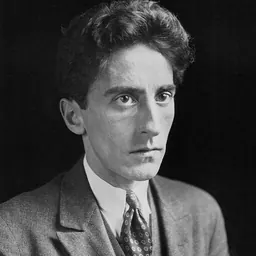

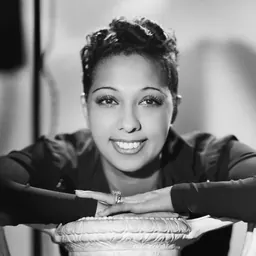


Related people
Same field, nearest in time

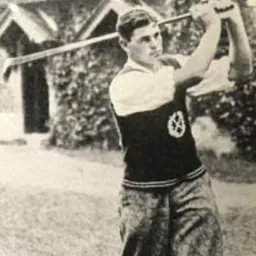
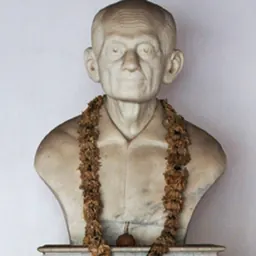


Contemporaries
People whose lives overlapped Panama Al Brown's



Frequently asked questions
Who was Panama Al Brown?
boxer (1902–1951)
When was Panama Al Brown born?
Panama Al Brown was born on 5 July 1902 in Colón City.
When did Panama Al Brown die?
Panama Al Brown died on 11 April 1951 in Staten Island.
What was Panama Al Brown's occupation?
Panama Al Brown was a boxer, dancer and composer.
What nationality was Panama Al Brown?
Panama Al Brown was Panamanian.
Sources & further reading
Cite this page
APA: Biography.guide. (2026). Panama Al Brown. https://biography.guide/panama-al-brown/
MLA: "Panama Al Brown." Biography.guide, https://biography.guide/panama-al-brown/.
Chicago: "Panama Al Brown." Biography.guide. https://biography.guide/panama-al-brown/.
Data last updated: 2026-09-26 · Spot an error? Report a correction.
Page generated 2026-09-27 05:13 UTC