
About Pan Wen-Yuan
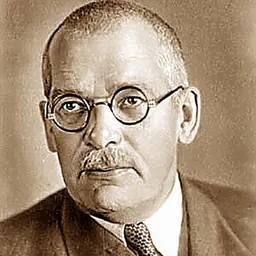
Lived 1912 – 1995 (aged 82). Pan Wen-Yuan was a Chinese and American scientist.
Pan Wen-Yuan (; July 15, 1912 – January 3, 1995) was a Taiwanese-American electrical engineer. Following a three-decade-long career as a researcher at RCA, he played a key role in establishing the integrated circuit (IC) industry in Taiwan in the 1970s and is known as the "father" of Taiwan's IC industry. After his death, the Industrial Technology Research Institute of Taiwan set up the Pan Wen Yuan Foundation and the Pan Wen Yuan Prize to reward people who have made significant contributions to Taiwan's semiconductor industry. Pan was a fellow of the Institute of Electrical and Electronics Engineers (IEEE) and the American Association for the Advancement of Science (AAAS).
Early life and education Pan was born on July 15, 1912, in Suzhou, Jiangsu, Republic of China. He earned his E.E. degree in 1939 and Ph.D. in 1940. His doctoral dissertation was "A Complete Analysis of the Resistance Coupled Amplifier Using Pentode Tubes", supervised by Frederick Terman.
Career in the United States As World War II/War of Resistance was beginning in China in 1937, Pan left for the United States and worked as a research scientist at the Radio Research Laboratory at Harvard University, which was established by Terman. With his main research area in ultra high frequency technology, he published more than 100 papers and was awarded 30 US patents and 200 international patents. He was elected a Fellow of the Institute of Radio Engineers (a predecessor of the IEEE) in 1958, and a Fellow of the American Association for the Advancement of Science (AAAS) in 1961. Premier Chiang Ching-kuo tasked Fei Hua, then Secretary-General of the Executive Yuan, with deciding on a major project in science and technology to implement. Fei convened with Pan and , the Secretary General of Telecommunications, and the three agreed that Taiwan should develop an electronics industry. He also helped Minister Sun identify and recruit Chinese engineers in the US to establish the Electronics Research and Service Organization (ERSO) under Taiwan's Industrial Technology Research Institute (ITRI). Pan persuaded RCA, which had decided to exit the semiconductor industry, to sell its obsolete seven-micron CMOS technology to ITRI. Forty ERSO engineers were sent to RCA to receive training for a year, and RCA helped the ERSO build its first IC fabrication plant, which produced its first wafers in 1977–1978. By 1979, the ERSO plant had achieved better yields than RCA itself. To commemorate Pan's contributions, the ITRI and many industry leaders jointly established the Pan Wen Yuan Foundation.
Pan is honored as the "father" of Taiwan's IC industry despite having never studied, settled, or worked for pay in Taiwan.
Don’t just read it —
keep it.
Full-length biographies made to live with: read them, listen on the way to work, watch them tonight.
- E-book
- Audio
- Video
Instant download · yours to keep · every purchase keeps this site free
Important facts
People in Pan Wen-Yuan's life
Named in this biography and alive at the same time

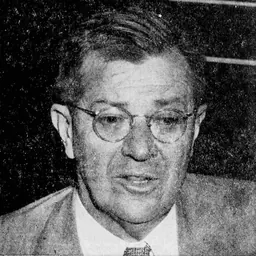
Related people
Same field, nearest in time

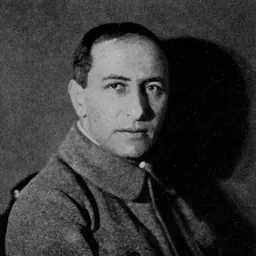
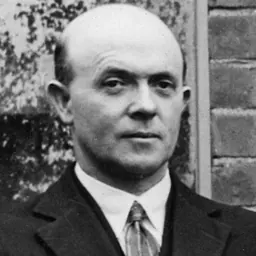
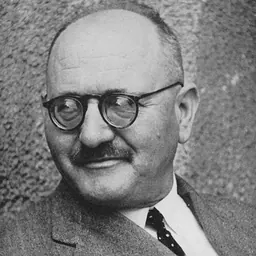

Contemporaries
People whose lives overlapped Pan Wen-Yuan's






Frequently asked questions
Who was Pan Wen-Yuan?
Chinese-American electrical engineer
When was Pan Wen-Yuan born?
Pan Wen-Yuan was born on 27 August 1912 in Suzhou.
When did Pan Wen-Yuan die?
Pan Wen-Yuan died on 3 January 1995 in United States.
What was Pan Wen-Yuan's occupation?
Pan Wen-Yuan was a scientist.
What nationality was Pan Wen-Yuan?
Pan Wen-Yuan was Chinese and American.
Sources & further reading
Cite this page
APA: Biography.guide. (2026). Pan Wen-Yuan. https://biography.guide/pan-wen-yuan/
MLA: "Pan Wen-Yuan." Biography.guide, https://biography.guide/pan-wen-yuan/.
Chicago: "Pan Wen-Yuan." Biography.guide. https://biography.guide/pan-wen-yuan/.
Data last updated: 2026-09-20 · Spot an error? Report a correction.
Page generated 2026-09-27 05:26 UTC