
About Pamphilus of Caesarea
Lived 250 – 309 (aged 58–59). Pamphilus of Caesarea was a presbyter and librarian.
Pamphilus (; latter half of the 3rd century – February 16, 309 AD), was a priest of Caesarea and chief among the biblical scholars of his generation. He was the friend and teacher of Eusebius of Caesarea, who recorded details of his career in a three-book Vita that has been lost.
Biography A native of Phoenicia, Eusebius' Martyrs of Palestine attests that Pamphilus was of a rich and honorable family of Beirut. This work also asserts that he gave all his property to the poor and attached himself to the "perfect men". Photius quotes Pamphilus's Apology for Origen to the effect that Pamphilus went to Alexandria, where his teacher was Pierius, the head of the famous catechetical school there, before settling in Caesarea Maritima, where he was ordained a priest. In Alexandria, Egypt, Pamphilus became devoted to the works of Origen of Alexandria. Photius says that Pamphilus was born at Berytus, and a scholar of Pierius, who collected sacred literature. According to Eusebius, he suffered martyrdom in the third year of the Diocletianic persecution, after spending two years in prison. While he was in prison, Pamphilus and Eusebius worked together on five books in defense of Origen.
The Diocletianic persecution began in earnest in the year 303. In 306 a young man named Apphianus—a disciple of Pamphilus "while no one was aware; he even concealed it from us who were even in the same house" —interrupted the governor in the act of offering sacrifice, and paid for his boldness with martyrdom. His brother Aedesius, also a disciple of Pamphilus, suffered martyrdom about the same time at Alexandria under similar circumstances. and upon refusing to offer sacrifice, was cruelly tortured, and then relegated to prison. In prison he continued copying and correcting manuscripts. He also composed, in collaboration with Eusebius, also imprisoned,
Veneration Pamphilus is regarded as a saint by the Roman Catholic Church and the Eastern Orthodox Church. His feast day is celebrated on 16 February (the RC Church lists an additional commemoration on 1 June).
Works and influence Of the Apology for Origen only the first book is extant, in a Latin version made by Rufinus. It begins with describing the extravagant bitterness of the feeling against Origen. He was a man of deep humility, of great authority in the Church of his day, and honoured with the priesthood. He was above all things anxious to keep to the rule of faith that had come down from the Apostles. The soundness of his doctrine concerning the Trinity and the Incarnation is then vindicated by copious extracts from his writings. Then nine charges against his teaching are confronted with passages from his works. Jerome stated in his De Viris illustribus that there were two apologies—one by Pamphilus and another by Eusebius. He discovered his mistake when Rufinus's translation appeared in the height of the controversy over Origen, and rushed to the conclusion that Eusebius was the sole author. He charged Rufinus, among other things, with palming off under the name of the martyr what was really the work of the heterodox Eusebius, and with suppressing unorthodox passages. As to the first accusation there is abundant evidence that the Apology was the joint work of Pamphilus and Eusebius. Against the second may be set the negative testimony of Photius who had read the original; "Photius, who was severe to excess towards the slightest semblance of Arianism, remarked no such taint in the Apology of Origen which he had read in Greek." The canons of the alleged Council of the Apostles at Antioch were ascribed by their compiler (late fourth century) to Pamphilus. The ascription to Pamphilus, by Gennadius, of a treatise Contra mathematicos was a blunder due to a misunderstanding of Rufinus's preface to the "Apology". A Summary of the Acts of the Apostles among the writings associated with Euthalius bears in its inscription the name of Pamphilus. While defending Origen from accusations that he held and taught certain heterodox doctrines, Pamphilus endorses universal reconciliation as the orthodox understanding of apokatastasis. Late 19th-century universalist historians Hosea Ballou II and J. W. Hanson have cited Pamphilius, among other Fathers of the Church, as an example of early Christian universalism, although the exact conception of apokatastasis in patristic writings generally, and Origenian thought in particular, is disputed among historical theologians. David Hume adopted the evocative pseudonym Pamphilus for his Dialogues Concerning Natural Religion.
Don’t just read it —
keep it.
Full-length biographies made to live with: read them, listen on the way to work, watch them tonight.
- E-book
- Audio
- Video
Instant download · yours to keep · every purchase keeps this site free
Important facts
People in Pamphilus of Caesarea's life
Named in this biography and alive at the same time
Related people
Same field, nearest in time

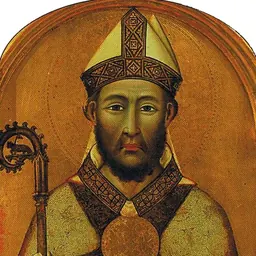


Contemporaries
People whose lives overlapped Pamphilus of Caesarea's

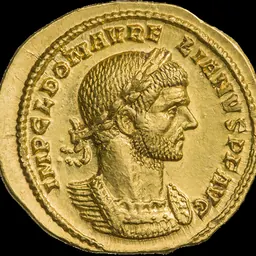
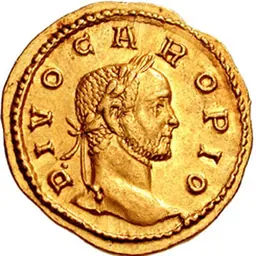
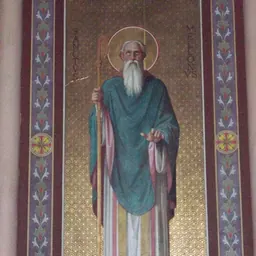

Frequently asked questions
Who was Pamphilus of Caesarea?
Presbyter of Caesarea
When was Pamphilus of Caesarea born?
Pamphilus of Caesarea was born in 250 in Beirut.
When did Pamphilus of Caesarea die?
Pamphilus of Caesarea died on 16 February 309 in Caesarea Maritima.
What was Pamphilus of Caesarea's occupation?
Pamphilus of Caesarea was a presbyter and librarian.
Sources & further reading
· Wikipedia: Pamphilus of Caesarea
· DBpedia: Pamphilus of Caesarea
Cite this page
APA: Biography.guide. (2026). Pamphilus of Caesarea. https://biography.guide/pamphilus-of-caesarea/
MLA: "Pamphilus of Caesarea." Biography.guide, https://biography.guide/pamphilus-of-caesarea/.
Chicago: "Pamphilus of Caesarea." Biography.guide. https://biography.guide/pamphilus-of-caesarea/.
Data last updated: 2026-09-20 · Spot an error? Report a correction.
Page generated 2026-09-27 05:34 UTC