
About Pamela Hallock
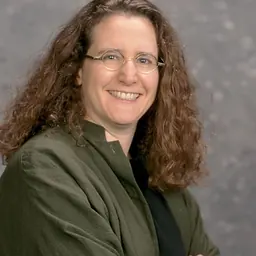
Born 1948. Pamela Hallock is an American researcher, oceanographer and marine biologist.
Pamela Hallock Muller is a scientist, oceanographer and professor at the University of South Florida in the College of Marine Science.
Overview Hallock Muller's research has focused on reef-associated Foraminifera and algal symbiosis, extending into coral-reef ecology, paleobiology and carbonate sedimentology.
She has worked as a diversity and inclusion advocate who has promoted gender equality within academia and marine science.
Early years and education Hallock Muller was born in 1948 on a small ranch on the Rosebud Reservation in south-central South Dakota, Pamela Hallock attended elementary school in a one-room schoolhouse and started high school in Mission before her family moved to Missoula, Montana in 1963, where she completed high school.
She received her Bachelor's degree in zoology from the University of Montana, Missoula in 1969, and married a fellow zoology major, Robert Muller, in summer 1969. She received her Master's and Ph.D. degrees in oceanography from the University of Hawaii in 1972 and 1977.
She has spoken on the discrimination that she faced as a young woman in academia.
Early career Pamela Hallock Muller started as an assistant professor at the University of Texas of the Permian Basin in Odessa, TX, in 1978. She then moved to the University of South Florida as an associate professor in 1983 where she became a full professor in 1988.
Research Hallock Muller uses field studies to understand the role of nutrients, light and ocean chemistry in coral reefs, carbonate sedimentology and paleoceanography. She has studied algal symbiosis in the context of carbonate production, community structure and evolution of coral reefs.
A key aspect of her research is the study of reef-associated Foraminifera, including distributions, population dynamics and functional morphologies, with applications in studies of environmental quality, paleoenvironments, carbonate sedimentation, and global environmental change. Dr. Muller and her students are steadily working in aquatic environments, using bioindicator technology to aid in identifying the global warming effects on coral reefs in the Florida Keys area.
Her 1986 paper in PALAIOS with colleague Wolfgang Schlager-”Nutrient excess in the demise of coral reefs and carbonate platforms”-was named one the “Landmark Papers in Carbonate Sedimentology and Stratigraphy” by the American Association of Petroleum Geologists 100th Anniversary Committee in 2017.
She participated in a 10-day saturation mission in the NOAA-National Undersea Research Center's Aquarius Habitat in 1994. She also participated in the International Ocean Discovery Program's Leg 194 in 2001.
Awards and honors 1999 Association for Women Geoscientists Outstanding Educator Award 2012 Alfred P. Sloan Foundation Minority Ph.D. Program's Mentor of the Year 2012 Elected Fellow, The Paleontological Society 2013 Named one of the Top 25 women professors in Florida in 2013. 2014 USF graduate-mentor award 2015 Joseph A. Cushman Award for Excellence in Foraminiferal Research 2016 USF graduate-mentor award. 2017 Who's Who Lifetime Achievement - Education, Science 2018 Hallock & Schlager (1986) named one of ten “Landmark Papers in Carbonate Sedimentology and Stratigraphy” by the American Association of Petroleum Geologists 2019 Raymond C. Moore Medal for Excellence in Paleontological Research, Society for Sedimentary Geology 2021 Elizabeth Hurlock Beckman Award, American Psychological Association
Selected publications Hallock, P. 1985. Why are larger foraminifera large? Paleobiology 11:195-208 Hallock, P. and W. Schlager. 1986. Nutrient excess and the demise of coral reefs and carbonate platforms. Palaios 1:389–398 Hallock, P. and E. C. Glenn. 1986. Larger foraminifera: a tool for paleoenvironmental analysis of Cenozoic carbonate facies. Palaios 1:55–64 Hallock, P. 1987. Fluctuations in the trophic resource continuum: a factor in global diversity cycles? Paleoceanography 2:457-471 Hallock, P. 1988. The role of nutrient availability in bioerosion: consequences to carbonate buildups. Palaeogeography, Palaeoclimatology, Palaeoecology 63:275–291 Cockey, E.M., P. Hallock, and B. Lidz. 1996. Decadal scale changes in benthic foraminiferal assemblages off Key Largo, Florida. Coral Reefs 15:237–248 Hallock, P. 2000. Symbiont-bearing foraminifera: harbingers of global change. Micropaleontology 46(Suppl. 1): 95-104 Hallock, P., Lidz, B.H., Cockey-Burkhard, E.M., and Donnelly, K.B. 2003. Foraminifera as bioindicators in coral reef assessment and monitoring: The FORAM Index. Environmental Monitoring and Assessment 81: 221-238 Pomar, L., P. Hallock. 2008. Carbonate factories: A conundrum in sedimentary geology. Earth Science Reviews 87: 134-169 Ross, B.J., Hallock, P. 2016. Dormancy in the Foraminifera: A review. Journal of Foraminiferal Research 46: 358-368
Other interests When not working, Dr Hallock Muller enjoys scuba diving, kayaking, and traveling. She also volunteers as a member of ARCS Tampa Bay since 2011, a science judge for the Spoonbill Regional National Ocean Sciences Bowl, a judge for local, regional, and state science fairs in Florida, and with the Pinellas Coastal Cleanup.
Don’t just read it —
keep it.
Full-length biographies made to live with: read them, listen on the way to work, watch them tonight.
- E-book
- Audio
- Video
Instant download · yours to keep · every purchase keeps this site free
Important facts
People in Pamela Hallock's life
Named in this biography and alive at the same time

Related people
Same field, nearest in time




Contemporaries
People whose lives overlapped Pamela Hallock's


Frequently asked questions
Who is Pamela Hallock?
American marine biologist
When was Pamela Hallock born?
Pamela Hallock was born on 2 June 1948 in Pierre.
What is Pamela Hallock's occupation?
Pamela Hallock is a researcher, oceanographer and marine biologist.
What nationality is Pamela Hallock?
Pamela Hallock is American.
Sources & further reading
Cite this page
APA: Biography.guide. (2026). Pamela Hallock. https://biography.guide/pamela-hallock/
MLA: "Pamela Hallock." Biography.guide, https://biography.guide/pamela-hallock/.
Chicago: "Pamela Hallock." Biography.guide. https://biography.guide/pamela-hallock/.
Data last updated: 2026-09-20 · Spot an error? Report a correction.
Page generated 2026-09-27 05:21 UTC