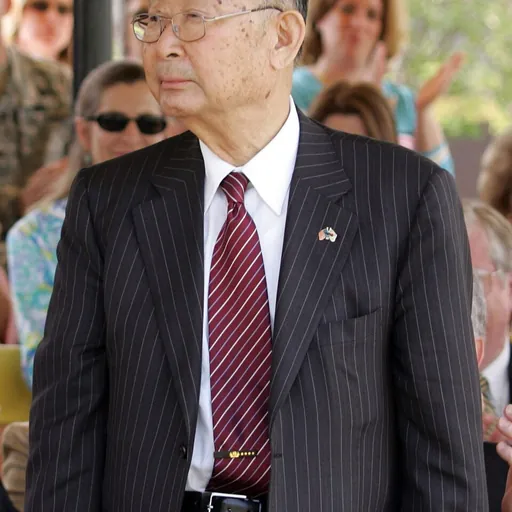
About Paik Sun-yup
Lived 1920 – 2020 (aged 99). Paik Sun-yup was a South Korean military personnel, politician, diplomat and writer.
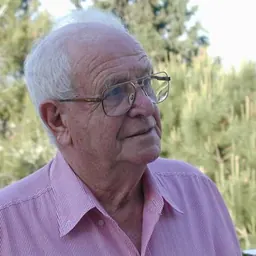
Paik Sun-yup (; November 23, 1920 – July 10, 2020) was a Republic of Korea Army four-star general who became the Chairman of the Joint Chiefs of Staff from 1959 to 1960. Paik is best known for his service during the Korean War, becoming the first four-star general in the history of the South Korean military, and for his service as a diplomat and statesman for South Korea.
Early life and education Paik was born in Tokhung in Kangso County, South Pyeongan Province (called Heian'nan-dō - the Japanese transliteration of the Sino-Korean name Pyeongan-namdo, i.e. south Pyeongan province - during Japanese occupation), Korea, Empire of Japan on November 23, 1920. He was the second of three siblings, with an older sister and younger brother, being raised by a widowed mother. In 1925 the Paik family moved to Pyongyang (called Heijō during Japanese occupation), where they lived under deplorable conditions in a single, rented room. Unable to feed her family, Paik's mother attempted to commit family-suicide with her children by jumping from the Taedong River Bridge (at the time the Daidō River Bridge) but was dissuaded from doing so by her eldest daughter. After the end of World War II, he returned to Pyongyang and started working as an assistant to Kim Ku (a leader of the Korean independence movement against the Empire of Japan). In December 1945, he fled south due to the rising communist's presence. After safely reaching South Korea, he enlisted in the Constabulary, the predecessor of the ROK Army, as a first lieutenant. In this role, he was tasked with suppressing communist guerrillas (the Yeosu–Suncheon rebellion). While undertaking this responsibility, he helped Park Chung Hee, who was at the time being tried as a communist, by persuading President Syngman Rhee to commute his sentence and have him released. Paik eventually had him reinstated into the army during the Korean War.
By August, Paik was told to report back to the ROK I Corps where he oversaw the heavy fighting around the 38th parallel at the Punchbowl,
On January 30, 2019, a group in consisting of retired South Korean generals of which Paik served as an advisor, released a statement criticizing the administration of South Korean President Moon Jae-in and the Comprehensive Military Agreement which was signed with North Korea at the September 2018 inter-Korean summit in Pyongyang.
He died on July 10, 2020, at the age of 99, four months short of his 100th birthday and was buried in Daejeon National Cemetery. Ministry of Patriots and Veterans Affairs claimed the reason Paik was buried in Daejeon National Cemetery was because the designated area for generals in Seoul National Cemetery was full.
Awards and decorations
Historical photos
Don’t just read it —
keep it.
Full-length biographies made to live with: read them, listen on the way to work, watch them tonight.
- E-book
- Audio
- Video
Instant download · yours to keep · every purchase keeps this site free
Important facts
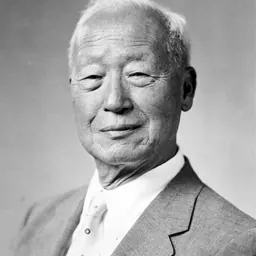
People in Paik Sun-yup's life
Named in this biography and alive at the same time


Related people
Same field, nearest in time



Contemporaries
People whose lives overlapped Paik Sun-yup's





Frequently asked questions
Who was Paik Sun-yup?
South Korean military officer (1920–2020)
When was Paik Sun-yup born?
Paik Sun-yup was born on 23 November 1920 in Kangso.
When did Paik Sun-yup die?
Paik Sun-yup died on 10 July 2020 in Seoul.
What was Paik Sun-yup's occupation?
Paik Sun-yup was a military personnel, politician, diplomat and writer.
What nationality was Paik Sun-yup?
Paik Sun-yup was South Korean.
Sources & further reading
Cite this page
APA: Biography.guide. (2026). Paik Sun-yup. https://biography.guide/paik-sun-yup/
MLA: "Paik Sun-yup." Biography.guide, https://biography.guide/paik-sun-yup/.
Chicago: "Paik Sun-yup." Biography.guide. https://biography.guide/paik-sun-yup/.
Data last updated: 2026-09-23 · Spot an error? Report a correction.
Portrait: Wikimedia Commons · author & licence
Page generated 2026-09-27 05:05 UTC