
About Padmanabhan Palpu
Lived 1863 – 1950 (aged 86). Padmanabhan Palpu was an Indian author and philosopher.
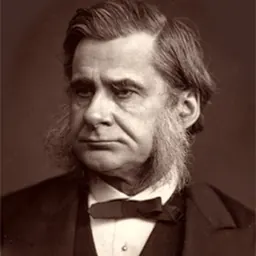
Padmanabhan Palpu (2 November 1863 – 25 January 1950) was a physician from the Kingdom of Travancore who served as a chief medical officer of Mysore State.
He led social activism for the Ezhava community in Kerala and led a movement for social equality. In 1903, he founded the Sree Narayana Dharma Paripalana Yogam (Society for the Propagation of the teachings of Sree Narayana Guru), whose first president was Narayana Guru, who sought an end to the caste system and preached his concept of "one caste, one religion, one god." His son Nataraja Guru became a successor of Narayana Guru. Palpu has been described as the "political father" of the Ezhavas. Sajil Sreedhar wrote a novel titled Athmasourabham based on the life of Dr.Palppu which was published in Yoganadam magazine owned by SNDP Yogam.
Early life and education Palpu was born in vanchiyoor ambalathu mukku Pettah, Thiruvananthapuram, then in the Kingdom of Travancore, India. His family (Thachakudi bloodline)consisted of wealthy and well-educated members who came from the Ezhava caste. The Ezhavas were traditionally occupied as warriors, arurvedic doctors, businessmen , weavers, farmers, toddy tappers. In addition, many had involvements in agriculture and ayurvedic medicine, He then wrote the examination for admission to medical studies. He was denied the admission though he ranked second. It was common knowledge that his caste-related birth determined the decision, even though the official reason given was that he was beyond the age limit. Like his older brother, he seems to have been able to use his family's association with Christian missionaries to avoid the usual rule in the kingdom that Ezhavas were forbidden from school attendance. He was subsequently refused admission to Travancore Medical College due to his caste. From 1885, he attended Madras Medical College, which was outside the kingdom, having raised money to do so through subscriptions and taking on debt. and many forward caste doctors would in any event refuse to work with backward caste colleagues. He was able to work for the British there as a public health doctor. and he again made demands in 1895, when he petitioned the Diwan of Travancore, S. Shungrasoobyer, with a statement explaining the ways in which the Ezhavas suffered discrimination. He noted that if members of the community wanted education or government jobs then their only recourse was to convert from Hinduism to Christianity. Shungrasoobyer was slow in responding but in February 1896, when Palpu had taken leave from his job in Bangalore, Mysore, to press the matter in Thiruvananthapuram, he told Palpu that the government would open as many of its schools as possible to Ezhavas and that it would consider applications from qualified Ezhavas for posts in all departments other than Revenue.
In practice, when some Ezhava graduates applied for government jobs soon after Shungrasoobyer's announcement, they were told that there were no vacancies. Thus, later in 1896, Palpu again took leave from his job to campaign in Travancore. The bar from education in government schools was noted as being inequitable given their claim that the Ezhavas paid more taxes than any other community in the kingdom. The petition was published in the Madras Mail in September of that year.
Legacy
Dr. Palpu College of Arts and Science in Pangode is named after him. Palpu influenced the political philosophy of C. Kesavan.
Don’t just read it —
keep it.
Full-length biographies made to live with: read them, listen on the way to work, watch them tonight.
- E-book
- Audio
- Video
Instant download · yours to keep · every purchase keeps this site free
Important facts
People in Padmanabhan Palpu's life
Named in this biography and alive at the same time

Related people
Same field, nearest in time




Contemporaries
People whose lives overlapped Padmanabhan Palpu's

Frequently asked questions
Who was Padmanabhan Palpu?
Indian bacteriologist
When was Padmanabhan Palpu born?
Padmanabhan Palpu was born on 2 November 1863 in Pettah, Thiruvananthapuram.
When did Padmanabhan Palpu die?
Padmanabhan Palpu died on 25 January 1950.
What was Padmanabhan Palpu's occupation?
Padmanabhan Palpu was an author and philosopher.
What nationality was Padmanabhan Palpu?
Padmanabhan Palpu was Indian.
Sources & further reading
· Wikipedia: Padmanabhan Palpu
Cite this page
APA: Biography.guide. (2026). Padmanabhan Palpu. https://biography.guide/padmanabhan-palpu/
MLA: "Padmanabhan Palpu." Biography.guide, https://biography.guide/padmanabhan-palpu/.
Chicago: "Padmanabhan Palpu." Biography.guide. https://biography.guide/padmanabhan-palpu/.
Data last updated: 2026-09-20 · Spot an error? Report a correction.
Page generated 2026-09-27 05:24 UTC