
Paddy Harmon
American sports promoter
About Paddy Harmon
Lived 1876 – 1930 (aged 54). Paddy Harmon was an American.
Patrick 'Paddy' Thomas Harmon (May 25, 1876 - July 22, 1930) was an Irish American businessman and sports promoter based in Chicago, Illinois, United States. He is noted for the building of Chicago Stadium arena in 1929, then the world's largest indoor arena. Born in poverty to immigrant parents, he became an entrepreneur, owning dance halls and promoting cycling races and boxing matches. He succeeded in getting the Stadium built, even helping to fight a fire on its roof, but was ousted within a year of its opening. He died due to injuries sustained in a car crash less than a year later. He poured his entire fortune into the Stadium, leaving only his Stadium shares, and the $2.50 in his pockets to his family. His funeral was held in the Stadium, paid for by friends. The Stadium itself went bankrupt in the Depression, leaving his shares worthless.
Biography Family Harmon was born in Chicago to Patrick J. Harmon and Mary Harmon, nee O'Sullivan, Irish immigrants from County Kerry. He was one of ten children, along with brothers Daniel, John, Martin, and Maurice; and sisters Catherine, Margaret, Estelle, Mary and Nell.
Harmon was married twice. In 1901, he married Marie Albertine Sauvageau, originally of Grondines, Quebec. He later married Mary J. Reilly of Chicago. Mary and Patrick had a daughter Patricia Mary, born in November 1926. Harmon also adopted a son Frank. In 1909, Harmon helped build the "Ice Palace" ice skating rink, in an attempt to have year-round ice skating and ice hockey. However, the building's refrigeration system was not up to the task. It was converted to a dance hall. Harmon took it over and operated it as "Paddy Harmon's Dreamland Ballroom". By the 1920s, Harmon owned two popular ballrooms in Chicago, (the Arcadia and Dreamland) and, in 1922, won the contract to operate the ballroom at the end of the Navy Pier.
Harmon also was a sports promoter, initiating a six-day cycling race event in 1912 Boxing was made illegal and Harmon only returned to being a boxing promoter after the legalization of professional boxing in Illinois in 1926 In 1926, Harmon expressed interest in buying a National Hockey League (NHL) ice hockey franchise, and had an option to buy the players of the Saskatoon Sheiks pro team, but was unsuccessful, losing out to Huntington Hardwick.
Harmon's biggest project was announced in 1926: the Chicago Stadium, to be located in his old "Valley" neighbourhood. It was very ambitious. At first, the project envisioned 39,000 seats. Harmon invested in the project of a total cost of . The Stadium opened in March 1929 with a boxing match. Several weeks later, a disgruntled workman set a fire on the Stadium's roof, which was in its final stages of completion. Harmon himself climbed up to the roof to help fight the fire, pouring water on the fire, while 10,000 persons were seated inside waiting for a boxing match. The stadium opened in March 1929 with a bout between Tommy Loughran and Mickey Walker for a purse of (won by Loughran). The Stadium held a lightweight championship fight between Sammy Mandell and Tony Canzoneri on August 3, 1929. Harmon had to provide 959 free tickets to the Illinois Boxing Commission for the fight, for which he complained to the press.
The Stadium was not an immediate success for Harmon, who owned 42.5% of the Stadium's stock. Harmon reached an impasse trying to get the Chicago Black Hawks NHL ice hockey team as a tenant, leaving the Stadium without ice hockey. Harmon enlisted veteran hockey executive Frank Patrick to try and get a second NHL franchise for Chicago, but the NHL refused to hear the application without the Black Hawks' consent. Harmon, along with Stadium investor James Norris, threatened to form a new hockey league, and alternatively was also interested in purchasing the Ottawa Senators NHL hockey team which was in financial trouble. The Black Hawks instead signed a lease to play another season in the Chicago Coliseum. Matters came to a head in November 1929. The Stadium shareholders forced Harmon to resign as Stadium president, while allowing him to continue in sports promotion for the Stadium. The Stadium board then signed an agreement with the Black Hawks only weeks later, accepting the Black Hawks' terms.
On December 9, 1929, not long after Harmon's ouster, an attempted bombing occurred at Norris' estate when Sidney Strotz, treasurer of the Stadium, was visiting. The fuse on a stick of dynamite placed in the dining room had gone out, preventing its explosion. Norris had purchased $600,000 of Stadium stock and had controlling interest. It was speculated by the Chicago Tribune that gangsters angry with the ouster of Harmon had placed the dynamite.
After his ouster, Harmon campaigned in a Republican Party primary for the sheriff of Cook County, Illinois but was defeated.
Harmon was asked about his success as a promoter:
Harmon also was well-known for giving to children at each Christmas.
Death Harmon died from injuries sustained in an automobile crash. Harmon lost control of his vehicle at high speed on the Northwest Highway between Des Plaines and Mount Prospect, Illinois. His car flipped over after losing control on the soft shoulder of the highway. He died in the Des Plaines Hospital from bleeding in his lungs. He asked that his body be placed in the Chicago Stadium.
Harmon's funeral service was held in the Stadium. The eulogy was read by Judge John Lyle: "Paddy was gruff, but back of the gruffness was a heart bigger than Chicago. Either you were his friend or you weren't - there was no middle ground." He had no life insurance and no bank account. His friends paid for the funeral. According to the Stadium president Sidney Strotz, Harmon had an estimated $70,000 to $90,000 only months before. The money disappeared without any accounting. In August 1930, the Stadium held a fund-raising boxing show to set up a trust fund for Harmon's three-year-old daughter Patricia. Gate revenues were $44,000, raising $10,000 for the fund. Later that year, May Harmon would file for bankruptcy, citing $92,000 in liabilities ($91,000 in a debt related to building the Stadium) and $150 in assets.
Legacy The Stadium was known as the "House That Paddy Built", a monument to Harmon's ambition. The Stadium struggled for several years after the death of Harmon and was placed into receivership in 1933. It was bought in 1935 by Norris and Arthur Wirtz for .
It was reported in 1933 that Frank E. Harmon, Paddy's son, had become a boxing promoter, promoting a match at the Coliseum. Frank had been in charge of the concessions at the Stadium from the start until it went into receivership.
Don’t just read it —
keep it.
Full-length biographies made to live with: read them, listen on the way to work, watch them tonight.
- E-book
- Audio
- Video
Instant download · yours to keep · every purchase keeps this site free
Important facts
People in Paddy Harmon's life
Named in this biography and alive at the same time


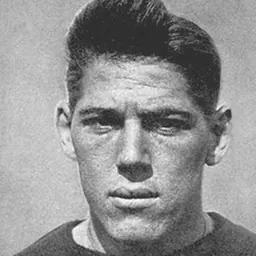
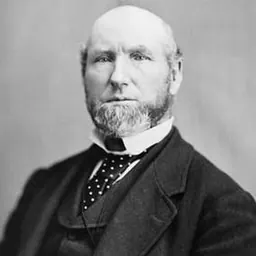

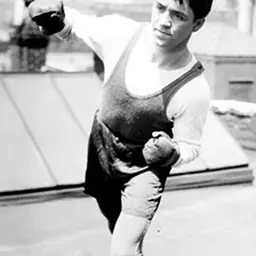
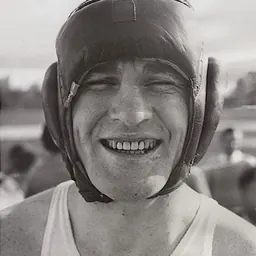
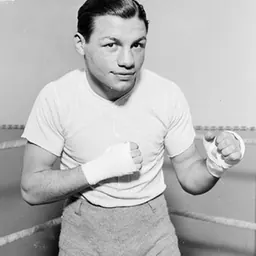
Contemporaries
People whose lives overlapped Paddy Harmon's

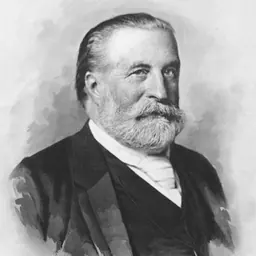
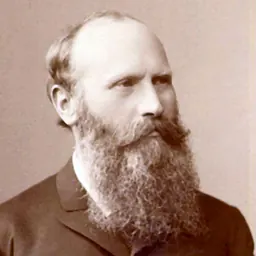
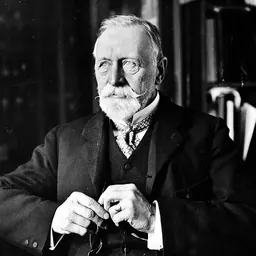
Frequently asked questions
Who was Paddy Harmon?
American sports promoter
When was Paddy Harmon born?
Paddy Harmon was born on 25 May 1876 in Chicago.
When did Paddy Harmon die?
Paddy Harmon died on 22 July 1930 in Des Plaines.
What nationality was Paddy Harmon?
Paddy Harmon was American.
Sources & further reading
Cite this page
APA: Biography.guide. (2026). Paddy Harmon. https://biography.guide/paddy-harmon/
MLA: "Paddy Harmon." Biography.guide, https://biography.guide/paddy-harmon/.
Chicago: "Paddy Harmon." Biography.guide. https://biography.guide/paddy-harmon/.
Data last updated: 2026-09-20 · Spot an error? Report a correction.
Page generated 2026-09-27 05:28 UTC