
About P. T. Narasimhan
Lived 1928 – 2013 (aged 84). P. T. Narasimhan was a chemist.
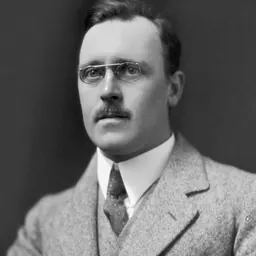
Palliakaranai Thirumalai Narasimhan (28 July 1928 – 3 May 2013), popularly known as PTN or Jim, was an Indian theoretical chemist, one of the pioneers of computational chemistry in India and a professor at the Indian Institute of Technology, Kanpur. He was known for his studies on quantum-mechanical interpretation of magnetic resonance data and his contributions in developing IIT Kanpur into a Centre of Excellence in academic research in the basic sciences. He was an elected fellow of the Indian National Science Academy, Indian Academy of Sciences and the National Academy of Sciences, India. The Council of Scientific and Industrial Research, the apex agency of the Government of India for scientific research, awarded him the Shanti Swarup Bhatnagar Prize for Science and Technology, one of the highest Indian science awards, in 1970, for his contributions to chemical sciences.
Biography
P. T. Narasimhan, born on 28 July 1928 in Cuddalore, a coastal town in the south Indian state of Tamil Nadu, did his graduate studies (BSc) at the Madras Christian College of the University of Madras and passed a master's degree from the same college. Subsequently, he joined the Indian Institute of Science and secured a PhD in physical chemistry in 1955 under his Ph.D. mentor R. S. Krishnan. His post-doctoral research was at the laboratory of Max T. Rogers of the Michigan State University from 1957 to 1959 and with Martin Karplus, the recipient of Nobel Prize in Chemistry in 2013 during 1959 to 1961; starting at University of Illinois and when Karplus moved to Columbia University, Narasimhan followed him. His studies of the structure and properties of molecules were based on quantum-mechanical interpretation of magnetic resonance data and those studies assisted in widening the understanding of chemical bonding, conformation, chemical reactivity and electrical and magnetic properties of molecules. His contributions helped in the development of dynamic nuclear polarization at X-band in India, covering both the instrumentation and chemical applications. in peer-reviewed journals and mentored 20 doctoral researchers. K. D. Sen, N. Chandrakumar, S Shankar, and Manvendra Krishna Dubey (MS 1979) and he guided many researchers in their work. He organized an active research school at the Indian Institute of Technology, Kanpur featuring scholars from physics and chemistry departments which worked on the theoretical and experimental aspects of magnetic resonance. He was one of the founders of the Association of Magnetic Resonance Spectroscopists of India and served as its secretary. He was associated with the International Society of Magnetic Resonance as a member of its council and chaired the national advisory committee of the IX International Symposium on Nuclear Quadrupole Resonance held in Kanpur in 1988.
Awards and honors The Council of Scientific and Industrial Research awarded Narasimhan the Shanti Swarup Bhatnagar Prize, one of the highest Indian science awards, in 1970. In 1980, he received the Sir C. V. Raman Award for Research in Physical Sciences of the University Grants Commission of India. He was an elected fellow of the Indian Academy of Sciences (1971), the National Academy of Sciences, India and the Indian National Science Academy (1972) and an Institute Fellow of the Indian Institute of Technology, Kanpur (2013). The Archive for Organic Chemistry issued a festschrift on him by way of volume VIII in 2004. Srinivasa Ramanujan Institute for Basic Sciences (SRIBS) and Indian Institute of Information Technology and Management, Kerala jointly conducted a four-day national workshop on computational chemistry in June 2013 which was dedicated to the memory of Narasimhan.
Selected bibliography
Don’t just read it —
keep it.
Full-length biographies made to live with: read them, listen on the way to work, watch them tonight.
- E-book
- Audio
- Video
Instant download · yours to keep · every purchase keeps this site free
Important facts
People in P. T. Narasimhan's life
Named in this biography and alive at the same time


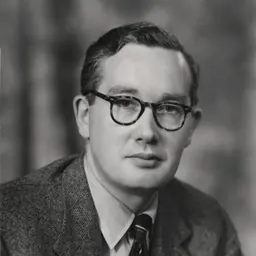
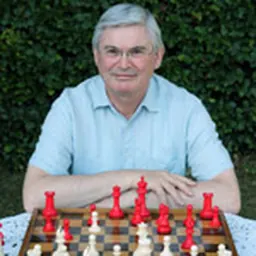
Related people
Same field, nearest in time




Contemporaries
People whose lives overlapped P. T. Narasimhan's


Frequently asked questions
Who was P. T. Narasimhan?
Indian theoretical chemist (1928-2013)
When was P. T. Narasimhan born?
P. T. Narasimhan was born on 28 July 1928 in Cuddalore.
When did P. T. Narasimhan die?
P. T. Narasimhan died on 3 March 2013 in Sunnyvale.
What was P. T. Narasimhan's occupation?
P. T. Narasimhan was a chemist.
What nationality was P. T. Narasimhan?
P. T. Narasimhan's recorded nationality: Indian nationality.
Sources & further reading
Cite this page
APA: Biography.guide. (2026). P. T. Narasimhan. https://biography.guide/p-t-narasimhan/
MLA: "P. T. Narasimhan." Biography.guide, https://biography.guide/p-t-narasimhan/.
Chicago: "P. T. Narasimhan." Biography.guide. https://biography.guide/p-t-narasimhan/.
Data last updated: 2026-09-20 · Spot an error? Report a correction.
Page generated 2026-09-27 05:08 UTC