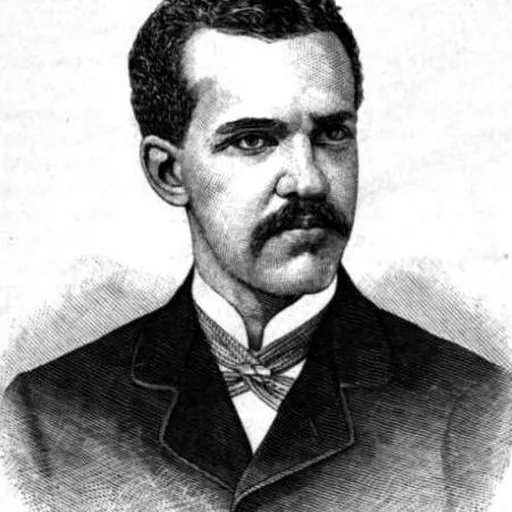
About P. Henry Dugro
Lived 1855 – 1920 (aged 64). P. Henry Dugro was an American politician, lawyer and judge.
Philip Henry Dugro (October 3, 1855 – March 1, 1920) was an American lawyer, judge, and U.S. Representative from New York, serving from 1881 to 1883. He is best known for a 1909 ruling in which he argued that the reputations of African Americans had less legal value than those of whites.
Biography Born in New York City, Dugro attended the public schools and was graduated from the school of arts of Columbia College, New York City, in 1876 and from the law department of the same institution in 1878. He was admitted to the bar in the latter year and commenced practice in New York City.
State legislature He was a member of the New York State Assembly (New York Co., 14th D.) in 1879.
Congress and judicial office Dugro was elected as a Democrat to the Forty-seventh Congress (March 4, 1881 – March 3, 1883). He was not a candidate for reelection.
He resumed the practice of law in New York City and also entered the real estate business. He declined the office of state commissioner of immigration in 1885. He served as judge of the Superior Court of New York County from 1887 to 1896, when the Superior Court was merged with and into the state Supreme Court. He was elected to the New York Supreme Court in 1896.
Racist ruling in Griffin v. Brady In 1909, Dugro gained national attention for his decision in a case involving George W. Griffin, an African-American Pullman porter. On a train headed to Montreal, a railroad executive named Daniel N. Brady (a brother of Diamond Jim Brady) accused Griffin of stealing his wallet. Griffin was pulled off the train and detained for hours before being released for lack of evidence.
Griffin then sued Brady in Dugro's New York court for false arrest and imprisonment. A jury found in Griffin's favor and awarded him $2,500 in damages . Dugro said that the amount was excessive and ordered it reduced to $300 because of Griffin's race — that a black man's reputation was not as harmed by a false accusation as a white man's:
He would not be hurt just as much if put in prison as every other man would be. That depends on a man's standing, what his circumstances are, and if he is a colored man, the fact that he is a colored man is to be considered. You cannot say he is just the same as a white man when you come to say how much shame he will suffer. Is it likely that when a colored man is arrested and imprisoned he feels just as much shame as a white man might? In this sort of community, I dare say the amount of evil that would flow to the colored man from a charge like this would not be as great as it probably would be to a white man.
Griffin appealed the ruling three times, seeking restoration of the $2,500 judgment, but he was denied each time; however, the final appeal, in an opinion written by Edward Everett McCall, resulted in the damages being raised to $1,000. Two later legal scholars called the case "perhaps the most celebrated instance of racial devaluation in early-20th-century tort litigation." The writer and activist James Weldon Johnson wrote of Dugro:
Death Dugro remained on the New York Supreme Court bench until his death in New York City on March 1, 1920. He was interred in Woodlawn Cemetery.
Don’t just read it —
keep it.
Full-length biographies made to live with: read them, listen on the way to work, watch them tonight.
- E-book
- Audio
- Video
Instant download · yours to keep · every purchase keeps this site free
Important facts
People in P. Henry Dugro's life
Named in this biography and alive at the same time


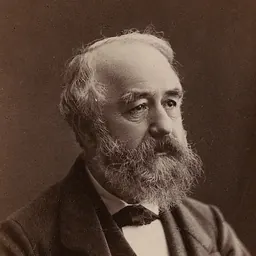
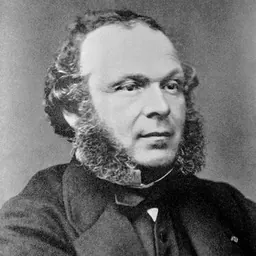
Related people
Same field, nearest in time





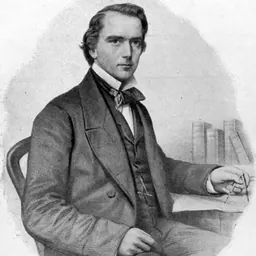
Contemporaries
People whose lives overlapped P. Henry Dugro's



Frequently asked questions
Who was P. Henry Dugro?
American politician (1855-1920)
When was P. Henry Dugro born?
P. Henry Dugro was born on 3 October 1855 in New York City.
When did P. Henry Dugro die?
P. Henry Dugro died on 1 March 1920 in New York City.
What was P. Henry Dugro's occupation?
P. Henry Dugro was a politician, lawyer and judge.
What nationality was P. Henry Dugro?
P. Henry Dugro was American.
Sources & further reading
Cite this page
APA: Biography.guide. (2026). P. Henry Dugro. https://biography.guide/p-henry-dugro/
MLA: "P. Henry Dugro." Biography.guide, https://biography.guide/p-henry-dugro/.
Chicago: "P. Henry Dugro." Biography.guide. https://biography.guide/p-henry-dugro/.
Data last updated: 2026-09-21 · Spot an error? Report a correction.
Portrait: Wikimedia Commons · author & licence
Page generated 2026-09-27 05:00 UTC