
About Owen Bieber
Lived 1929 – 2020 (aged 90). Owen Bieber was an American trade unionist, known for United Auto Workers.
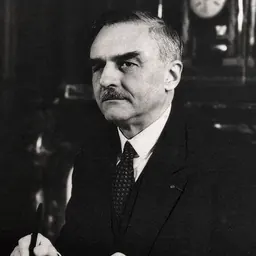
Owen Frederick Bieber (; December 28, 1929 – February 17, 2020) was an American labor union activist. He was president of the United Auto Workers (UAW) from 1983 to 1995.
Born in Michigan, Bieber joined the McInerney Spring and Wire Company, an automotive parts supplier in Grand Rapids, after finishing high school. His father was also employed at the company, and had co-founded a UAW local there. Bieber himself became active within the local, rising from shop steward to its president between 1949 and 1956. In 1961 he became a part-time union organizer for the UAW's international union and retired as president of the local a year later, to work full-time for the international UAW. In 1980 he was elected as the head of the UAW's General Motors Department.
After a hotly contested election in 1983, he was chosen to head the union in October of that year. His time as president of the union was marked by support of several political causes, including the boycott against South African apartheid and opposition to the North American Free Trade Agreement. He oversaw the union during the shrinking of the automobile manufacturing industry in the US, and led them through a number of tense negotiations with the Big Three automobile manufacturers that included strikes and other labor action. While he set a goal of adding new union members throughout his presidency, he largely failed as union organizing efforts at Honda and Nissan plants were defeated. His presidency also saw the splintering of his own union, with the Canadian division breaking off to form its own independent organization (the Canadian Auto Workers), amid deep internal divisions which developed throughout his term. He retired from the UAW in 1995.
Early life and career Owen F. Bieber was born in December 1929 to Albert F. and Minnie (Schwartz) Bieber in the hamlet of North Dorr, Dorr Township, Allegan County, Michigan. His father was of German descent and an autoworker at McInerney Spring and Wire Company (an automotive parts supplier) who had co-founded UAW Local 687. It was the first UAW local organized within the city limits of Grand Rapids, Michigan. The family were devout Roman Catholics, and Bieber attended Visitation Elementary School (a two-room school) and Catholic Central High School in nearby Grand Rapids. As a child, he worked pulling weeds in onion and celery fields. "You had to bend 8- and 9-gauge spring wire, sometimes five wires at a time. Those Hudsons, they had a seat four miles long ... It was a hard job. After the first hour in there, I felt like just leaving. If my father hadn't worked there, too, I probably would've", he later said. They maintained a home in North Dorr as well as Southfield. He was elected to Local 687's collective bargaining committee in 1955, Bieber retired as Local 687's president in 1962, and took a full-time position as an international representative and organizer with the UAW. In 1974, Robinson stepped down as director of Region 1D due to ill health. Bieber was elected as his successor, and held the position until 1980. The UAW Steering Committee (a body of about 400 local union presidents) unanimously endorsed Bieber for the position. Also nominated for vice president slots were Donald Ephlin, Ray Majerus, and Stephen Yokich. UAW membership had fallen to 1.2 million from a peak of 1.5 million in 1979. In November 1981, however, GM began using its worker participation program to convince its unionized employees to reopen their contract. Bieber strongly criticized the company for generating "distrust of the U.A.W. leadership", a "captive audience", and perverting the worker participation program into a means to "propagandize or parrot the current views of the chairman of the board of G.M. as to how to save G.M. through worker sacrifice." The union agreed to enter into talks in January 1982, hoping to win job security commitments for its members in exchange for wage and benefit concessions. The contract concessions were (at the time) the largest ever made to GM. Bieber angrily denounced the pay plan however, the damage was done. Bieber began local bargaining over the work rules, but angry workers refused to negotiate any changes and bargaining ended in July 1982 with no changes.
In his last year as GM Department director, Bieber discussed with GM the impact outsourcing was having on UAW members. When GM signed a compact with Toyota to co-own and co-manufacture automobiles in California, Bieber worked to prevent UAW members in affected GM plants from engaging in a wildcat strike.
UAW presidential race The UAW constitution barred anyone over the age of 65 from running for president of the union. 64-year-old Douglas Fraser won re-election as UAW president in July 1981, but was barred from seeking a third term. In January 1982, Owen Bieber, Donald Ephlin (director of the Ford Department), Raymond Majerus (secretary-treasurer and director of the Aerospace Department and American Motors Department), and Stephen Yokich (director of the Agricultural Implement and Skilled Trades Department) were considered his most likely successors. At that time, Bieber and Majerus seemed to have the most support from the union's executive board.
It is a tradition in the UAW for the union's executive board to bar candidates from campaigning while contract negotiations are going on, to prevent any campaign from distracting union members or inflaming member opinions. Traditionally, the 26 Administrative Caucus members sitting on the UAW's executive board met first to select the caucus' official nominees for national office, then referred these nominees to the union's Administrative Caucus-dominated Steering Committee, which then ratified the board's choice. Delegates to the union's annual convention voted on these nominees (with no direct election by the membership). Although these procedures did not preclude the Steering Committee from rejecting the "official" slate or challengers from running for office, Support for the four candidates had not changed by this time. Days later, a survey of 130 UAW local leaders in Michigan showed that Ephlin and Bieber had the most grassroots support, with Majerus a distant fourth behind Yokich. But Majerus appeared to have far more support on the UAW executive board, where African American vice president Marc Stepp was vocal in his support of the Majerus campaign. One media report estimated that Majerus had the support of as many as 10 of the 26 board members, while Bieber (whose campaign had been targeting regional directors and workers) may have had as many as 12 votes.
As the UAW executive board gathered to make its decision, the race had shifted and Bieber appeared to have majority support on the board. Press reports indicated that Ephlin had a chance, if the board deadlocked over Bieber and Majerus. Ephlin, who had the fewest votes, withdrew from the race, and the board voted 15 to 11 to support Bieber. Majerus withdrew, and the board took a third ballot to make its decision unanimous (a tradition within the union). But the convention delegates overwhelmingly rejected the proposal by a 3-to-1 margin. No opposition candidate emerged, and Bieber was elected President of the UAW on May 18, 1983. His election marked the end of an era in the UAW. Worried that Fraser's seat would become the "UAW seat", Chrysler chief executive officer Lee Iacocca threatened not to appoint Fraser's successor to the board of directors. Fraser persuaded Iacocca that appearances would be served if Fraser stayed on a board for one more year, and then the new UAW president could be elected. Bieber joined the Chrysler board in October 1984, and remained on it until 1991. The UAW went without representation on Chrysler's board for the next seven years, until Stephen Yokich joined the board of the now-German owned company in 1998. Bieber joined the National Labor Committee, a group which opposed U.S. support for the Contras in Nicaragua. The group successfully overcame vocal opposition from staunch anti-communists on the AFL-CIO executive council to win approval of a resolution that put the labor federation in favor of a negotiated settlement and criticized the Reagan administration of seeking only a military solution. Later that year, he traveled to South Africa, where he met with several cabinet ministers and angrily demanded that the government release anti-apartheid labor leaders who had been jailed but never charged with any crimes. His efforts reached a high point in 1993, when Bieber the chief executive officers of Chrysler, Ford, and General Motors met with President-elect Bill Clinton—winning Clinton's support for the domestic auto industry. But less than a year later, Clinton won passage of the North American Free Trade Agreement over Bieber's strenuous objections. the union negotiated a minor contract extension on September 5, and a day later had a new agreement. The contract provided an average wage increase of $2.42 an hour over two years and restored an annual 3 percent wage and quarterly cost of living increases (both of which the company had rejected in July). During the press conference in which he discussed the contract's successful ratification, Bieber fell from the dais and suffered a slight concussion (for which he was briefly hospitalized).
The second round of talks (which occurred about 15 months later) involved GM. Traditionally, the UAW chose one of the "Big Three" (Chrysler, Ford, and General Motors) automakers as a strike target, and negotiate a contract with that company. This contract usually set a standard which the other companies adhered to. Ford or GM was the more common target, as they were much larger than Chrysler. Negotiations with GM began first, with the company asking for a profit-sharing plan rather than wage increases, layoffs of about 19 percent of its 370,000 workers, and a lower wage tier for new workers. Bieber kept Ford and GM guessing as to which company would be the strike target, but finally chose GM on September 6. The talks broke down shortly thereafter, and Bieber called a nationwide strike against General Motors on September 14 as the economy continued to perform only weakly. Over the next six days, more than 91,000 GM workers walked picket lines at 33 plants in 12 states. A contract was agreed to (and successfully ratified) on September 20 which not only gave workers annual pay increases of 2.5 percent and established a $1 billion fund that paid laid off workers a portion of their salary until they were retrained or rehired. The contract, which the union and company called "historic,"
Another strike followed at Chrysler the next year. The Ford and GM contracts reopened a pay gap between those companies and Chrysler which the UAW sought to close in late 1984 by asking Chrysler if it would reopen its contract. Chrysler refused, pointing to a no-strike clause in the contract. UAW workers had rejected a 1982 contract which contained profit-sharing, and their 1983 agreement did not have any income security provisions like Ford's and GM's. The two sides reached an agreement (which was successfully ratified) on October 23 that gave autoworkers a $2,120 non-wage bonus, pay increases and wage parity with the GM and Ford, profit sharing, and payments to workers displaced by new technology.
Bieber announced in December 1985 that he would again seek election as UAW president. He won reelection with no opposition in June 1986.
Bieber oversaw a fourth round of collective bargaining talks in 1987. Ford was chosen as the strike target this time, and after a slight contract extension the union reached a tentative contract with the company on September 17. Bieber agreed to establish joint committees at the national and local levels to explore the use of work teams, changing inefficient work rules, and reducing the number of job classifications. In exchange, the company agreed to a 3 percent annual wage increase in the first year with lump-sum payments equal to 3 percent of wages in the second and third years, no layoffs (except through attrition), an increase in the layoff income security fund to $500 (although it was capped at that amount), pension contribution increases, improvements in health benefits, and increased profit sharing. Twenty-one days later, GM agreed to a very similar contract. GM agreed to close no more plants, institute no more layoffs (so long as sales volumes did not decrease), the same wage and lump-sum package, the same profit sharing arrangement, similar work team and job classification study committees, and establish quality improvement committees in all plants.
The success of the GM and Ford pacts led Chrysler to enter into early talks once more with the union. After just seven weeks of bargaining, Bieber announced a contract which gave company workers a 3 percent annual pay increase over two years and a $1,000 bonus. However, the Chrysler contract did contain a historic clause which prohibited the company from issuing cash or stock bonuses to its executives if its employees did not receive payments under the profit sharing agreement. His election was by acclamation.
By 1990, Bieber was once more negotiating a contract with GM. However, his control of the collective bargaining process was not as strong as in the past. A local struck the GM plant in Flint, Michigan, on August 8, 1990, about a month before the national contract with the company ended. Bieber had little to do with the strike, which was approved by GM Department Director Stephen Yokich (by now considered Bieber's most likely successor). Bieber did not need a contract extension this time, and negotiated a contract identical in wage structure to the 1987 agreement. A Ford contract followed in early October 1990, and a Chrysler contract 20 days later, both of which were very similar to the GM agreement.
Bieber suffered a serious loss at industrial equipment manufacturer Caterpillar Inc., however. The UAW struck Caterpillar in 1982, a strike that (by 1993) was the longest in UAW history and which had severely drained the union's strike fund. By 1989, the UAW was praising the Caterpillar contract. Notwithstanding, Caterpillar began a restructuring program that reduced its workforce by 30 percent while building new plants in the non-union Deep South. By 1991, only 25 percent of its workforce belonged to the UAW. Caterpillar refused, instead demanding major concessions such as a two-tier wage system, the right to subcontract work out to non-union companies, the imposition of 12-hour work shifts, weaker safety rules, a weaker grievance system, greatly scaled back health benefits, and the right to impose flexible work schedules on workers. Soon more than 13,400 Caterpillar workers were walking the picket line. Caterpillar announced an impasse on March 5, and on April 1 sent all workers a letter demanding that they return to work by April 6 or the company would permanently replace them. Between 400 and 1,200 workers crossed the picket line to return to work (estimates very widely). At the urging of federal mediators, Bieber met one-on-one with Caterpillar Chief Executive Officer Donald V. Fites. Bieber left the meeting convinced that the UAW was left with no alternative but to accept Caterpillar's offer.
Bieber announced he would run for reelection as UAW president in 1992. In January 1992, shortly after Bieber's candidacy was approved by the Administrative Caucus and Steering Committee, he was challenged for the presidency by Jerry Tucker, a former executive board member and leader of the reformist "New Directions" caucus. During the convention, it was apparent that Stephen Yokich was now Bieber's "heir apparent."
Bieber's final round of collective bargaining talks came in 1993, but once more his control of the union's bargaining apparatus was apparent. In August and September 1992, GM workers in Lordstown, Ohio, struck a critical GM parts plant with Yokich's permission, idling many other GM plants and throwing 40,000 other GM employees out of work. The Detroit Free Press later said that Bieber formally approved the strike, but Yokich was the "quarterback" who actually led the union through it. Bieber chose Ford as the strike target, and the company focused on reining in health care costs as its major goal. A new contract was reached on September 15, 1993, but the deal was considered a failure since Bieber was unable to win any major changes to the old agreement. Ford asked for a six-year rather than a three-year agreement, and thereafter gave this goal up and promised instead to increase pension payouts by 17 percent for certain veteran workers. A contract with GM followed the next month. GM sought to reduce its pension costs, but failed. GM, however, forced workers to agree to use vacation time rather than use layoff pay during the summer production shutdown, and gained the right to stop paying layoff pay to workers who refuse jobs at nearby plants. The union also won GM's consent to extend its existing collective bargaining relationship over the new GM-owned Saturn Corporation plant in Spring Hill, Tennessee. The National Right to Work Legal Defense Foundation challenged the right of GM to recognize the UAW at the Saturn plant and the right of UAW members to bid first on jobs at the new plant. But the general counsel of the National Labor Relations Board ruled in June 1986 that the bidding rights were properly part of bargaining between GM and the UAW over plant closures that led to the creation of Saturn, and that early extension of the contract was permissible given the number of bidding, existing UAW members. In a speech after winning reelection in 1986, Bieber pledged to organize many Japanese-owned plants in the U.S. Bieber later called these his "most painful" experiences as UAW president. Left-wing labor leaders grew in power within the Canadian UAW throughout the 1970s, and many Canadian union members increasingly perceived their unions as vehicles for political power and control. The American UAW became further paralyzed because it could not act against non-union plants without angering those workers—workers essential (the UAW leadership felt) to the future growth of the union. Moreover, the Canadian leadership felt that giving in to employer demands for "jointedness" (the term of joint quality committees, work teams, profit sharing, and similar initiatives) encouraged the union to collude with management against workers.
The break began in 1984. That year, the Canadian UAW leadership learned that Bieber had actively resisted and counteracted their attempts to avoid a concessionary contract. The Canadian UAW locals at General Motors rejected the contract negotiated by Bieber and his team, and 36,000 union members went out on strike in October. Angry at Bieber's interference, White and the Canadian leadership offered a resolution before the UAW executive board which would have limited American interference in Canadian UAW affairs. White's proposal gave the Canadian leadership exclusive control over collective bargaining and strike authorizations, removed international UAW authority over Canadian staff, and granted the Canadians unrestricted access to the UAW strike fund. Bieber strongly opposed the plan, and the UAW executive board rejected it by a vote of 24-to-1. The international UAW executive board agreed not to interfere with that process.
Internal dissent Bieber's 1985 reelection was not without controversy, and the UAW saw its first substantial internal leadership challenges since the 1940s during his presidency.
In 1985, the "New Directions" caucus was formed by UAW local presidents unhappy with the job loss, concessionary bargaining, and "jointedness" being promoted by Bieber and the UAW executive board. It was one of the two most important union reform movements in the American labor movement in the last two decades of the 20th century (the other being Teamsters for a Democratic Union). Five days into his candidacy, Tucker was fired for disobeying a UAW rule which required staff to take a leave of absence at least 90 days before an election date. The election controversy deeply embarrassed Bieber and the UAW (which had long prided itself on its internally democratic procedures). Although Tucker lost his challenge to the 90-day rule, a court held that the UAW had improperly expended union funds to support Worley and had intimidated Tucker's supporters. In a special election held in 1988, Tucker defeated Worley for the Region 5 directorship and joined the UAW executive board.
The Saturn contract upset many New Directions caucus members, who saw Bieber's advocacy of the contract as another sign of the union's refusal to fight concessions. New Directions members pledged to challenge Bieber's support for "jointedness" at the UAW convention in June 1989. Tucker ran for reelection as Director of Region 5, and ran a candidate for the director of Region 1. Bieber's speech had a strong effect on the convention delegates. The delegates easily defeated several procedural votes which would have placed New Directions resolutions on the agenda, and the weakness of the dissidents surprised many observers. His was the first serious leadership challenge in 40 years. The vote was the first roll call vote for president in the union since 1974. That a quarter of the delegates supported New Directions' direct election of the UAW president indicated, however, that the movement still had significant support among a minority of UAW members. Although he failed to force the Big Three to buy parts only from unionized companies, he was able to resist employer pressure for deep concessions.
But in the final year of his presidency, Bieber appeared exhausted by the duties of office. A reporter for the Detroit Free Press described him as tired and less vocal than he once was, and noted that the 64-year-old Bieber spent as much time as possible at his vacation home. and Stephen Yokich succeeded him as UAW president.
Bieber died on February 17, 2020, at age 90.
Other activities Bieber was a self-described "staunch Democrat". In 1992, Bieber was unable to win AFL-CIO support for a Democratic presidential primary candidate after his preferred candidate, Senator Tom Harkin, withdrew from the race in March 1992.
Bieber was elected to the Executive Council of the AFL-CIO shortly after assuming the UAW presidency, and served as chair of the Committee on Reindustrialization of the AFL-CIO's Industrial Union Department. However, in 1995 he was one of several AFL-CIO presidents who secretly worked to depose Lane Kirkland as president of the labor federation. The 11 union leaders had enough votes to unseat Kirkland. Bieber strongly supported the successful candidacy of John Sweeney as his successor. Evers-Williams' backers persuaded Bieber that his attendance was critical to the vote, and he attended the meeting. Gibson was dismissed as president on February 18, 1995, by a vote of 30 to 29.
Bieber was also heavily involved in his local community as well. He served on the board of directors of Project Rehab (a Michigan-based alcohol and drug rehabilitation service agency), the Michigan League for Human Services, West Michigan Comprehensive Health Planning Unit, the Michigan State Health Advisory Board, and the Michigan State Mental Health Board. He also was a member of the Personnel and Labor Advisory Council of Grand Valley State College.
Don’t just read it —
keep it.
Full-length biographies made to live with: read them, listen on the way to work, watch them tonight.
- E-book
- Audio
- Video
Instant download · yours to keep · every purchase keeps this site free
Important facts
People in Owen Bieber's life
Named in this biography and alive at the same time





Related people
Same field, nearest in time



Contemporaries
People whose lives overlapped Owen Bieber's

Frequently asked questions
Who was Owen Bieber?
American labor union activist (1929–2020)
When was Owen Bieber born?
Owen Bieber was born on 28 December 1929 in Dorr Township.
When did Owen Bieber die?
Owen Bieber died on 17 February 2020 in Detroit.
What was Owen Bieber's occupation?
Owen Bieber was a trade unionist.
What was Owen Bieber known for?
Owen Bieber was known for United Auto Workers.
What nationality was Owen Bieber?
Owen Bieber was American.
Sources & further reading
Cite this page
APA: Biography.guide. (2026). Owen Bieber. https://biography.guide/owen-bieber/
MLA: "Owen Bieber." Biography.guide, https://biography.guide/owen-bieber/.
Chicago: "Owen Bieber." Biography.guide. https://biography.guide/owen-bieber/.
Data last updated: 2026-09-22 · Spot an error? Report a correction.
Page generated 2026-09-27 05:18 UTC