
About Ove Gjedde
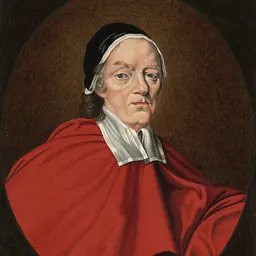
Lived 1594 – 1660 (aged 66). Ove Gjedde was a Danish politician, soldier, naval officer and admiral.
Ove Gjedde (alternatively spelled Giedde; 27 December 1594 – 19 December 1660) was a Danish nobleman and Admiral of the Realm , who established the first Danish colony in Asia.
Born in Tomarps , Denmark–Norway, in 1594 to Brostrup Gjedde and Dorthe Ulfeldt, Ove Gjedde went to Sorø Academy from 1609 to 1612 and studied thereafter at various German universities. In 1616, Gjedde was employed in the Danske Kancelli (Danish Chancellery) and was ordered by King Christian IV of Denmark to lead an expedition to the East Indies in 1618. Gjedde arrived in Ceylon in May 1620 and negotiated trade agreements with Senarat of Kandy and Raghunatha Nayak, ceding the coastal towns of Trincomalee and Tranquebar to the Danish East India Company.
Gjedde returned to Denmark–Norway in February 1622, where he became lensmand (fief-holder) of Brunla and Numedal in the same year. He swapped this position with Tønsberg in 1637 and again with Bratsberg in 1640. Meanwhile, he took command of the Norwegian galley fleet, became land commissioner in 1639, and Oberstleutnant in 1640.
At the outbreak of the Torstenson War, Gjedde became admiral of a Norwegian fleet and in 1645 became a part of the Danish rigsråd (Council of the Realm), subsequently being appointed Admiral of the Realm. In 1646, Gjedde acquired Jungshoved, which he exchanged with Herrevad Abbey in 1649 and thereafter with Helsingborg. Concurrently, he became a part of the interim government that was put in place after Christian IV's death in 1648.
After the Treaty of Roskilde in 1658, Helsingborg was ceded to the Swedish Empire, and Gjedde received Hald fiefdom as compensation. Gjedde went back to Scania in 1658, but was captured and subsequently imprisoned by the Swedes. He was released in 1660 and came to Copenhagen swearing an oath to the new Danish constitution. He would die in September of the same year.
Early life Ove Gjedde was born on 27 December 1594, in Tomarps , Scania, Denmark–Norway, being the fourth son of Brostrup Gjedde and Dorthe Pallesdatter Ulfeldt. In 1609, 13-year-old Ove Gjedde went to Sorø Academy, obtaining his degree in 1610 and finishing at an age of 18. Gjedde continued his education for two years in the Holy Roman Empire, studying at Wittenberg, Jena, and Leipzig, taking degrees in fortification and law. After a short visit to Denmark, where he was informed that his parents had died, Gjedde went to the Netherlands and served the Dutch army, participating in the Siege of Braunschweig in 1615.
Gjedde possibly followed King Christian IV of Denmark back to Copenhagen, who had been present in Braunschweig for some time. Back in Denmark, Gjedde had various occupations, including being a secretary for Danske Kancelli (Danish Chancellery). Gjedde's fleet left Copenhagen on 29 November 1618, for the Kingdom of Kandy in Ceylon, by whom the Danes had been promised economic privileges if they managed to repel the Portuguese from the Island. After a brief stop in England, where Gjedde started to experience difficulties with the crew's discipline, Upon arriving, Gjedde now acted as an independent envoy and negotiator for securing a trade deal with Senarat of Kandy. However, Senerat had already concluded a peace treaty with the Portuguese three years before Gjedde's arrival, and therefore needed no help from the Danes. The treaty with the Portuguese made Senerat acknowledge Portuguese suzerainty over Ceylon, and Senerat could therefore not pay the amount of money promised to the Danes. For Gjedde and the Danes, this meant a depletion in their initial estimated capital, and Gjedde therefore threatened the Senerat if he did not comply. Eventually, Senerat agreed and on 21 August 1620, signed a new treaty, ceding the port of Trincomalee to the Danes and giving them generous commercial privileges.
From Trincomalee, Gjedde continued to the Indian peninsula, reaching Negapatam (present-day Nagapattinam) on 12 September. The next day, Gjedde went to a minor fishing village called Tharangambadi , and with the help of Dutchman Roland Crappé managed to secure a treaty with the Nayak of Thanjavur, Raghunatha. According to the treaty, Tranquebar was ceded to the Danes for two years, and the Danes got the right to erect a fort there with the help of the Nayak's subjects. Gjedde immediately began the construction of the fort, which was personally designed by him. Following this, Gjedde began to prepare for the return voyage, which he would initiate in February 1621, when the fort was deemed finished. After giving a farewell speech, Gjedde left Tranquebar for Ceylon, where he found no colonial progress in Danish Trincomalee. Gjedde continued his voyage home, reaching Copenhagen on 4 March 1622, nine months after departing from Trincomalee.
Civil service in Denmark and Norway Gjedde had completed his mission satisfactorily, yet felt aggrieved by the Company, from which he had expected appreciation for his efforts. Gjedde furthermore bought many farms and estates in the districts of Tjølling and Sandeherred, including Sandsvær and Eiker. Here, Gjedde invested in the Norwegian iron industry, becoming an inspector at Kongsberg Silver Mines in 1628. He had furthermore been elevated to director of the Kongsberg Silver Mines in 1630 and possibly participated in Fossum Ironworks since 1635. Additionally, he exchanged property to obtain significant forests, which he utilized to supply wood for the mines. In 1636, Gjedde fully took over Fussom Ironworks, together with his brother-in-law, Preben von Ahnen, and expanded the mine.
After King Christian IV died in 1648, Gjedde was a part of a small interim government that followed. Gjedde was released in September 1660 and subsequently came to Copenhagen, where he would swear an oath to the new Danish constitution. Together, Gjedde and Dorthe had 12 children, most notably Knud Ovessøn Gjedde and Brostrup Gjedde, both of whom served as county governors in Norway. Gjedde furthermore managed to get Bostrup a mining education, resulting in Bostrup getting a leading position in Norwegian mining administration.
Legacy Ove Gjedde is one of the first Danes to experience globalization, and lived a life intertwined with colonialism, globalization, mercantilism, and capitalism. Gjedde's main achievement was his voyage to India and the subsequent founding of Tranquebar, which is glorified by a couple of books published by Gjedde himself. Later Dano-Norwegian writer, Ludvig Holberg, notes that the habit of drinking tea in Denmark was introduced by Ove Gjedde. In contrast, Gjedde's part in the mining industry is downplayed and rarely mentioned, notwithstanding the big role silver had in Gjedde's life.
Despite the founding of Tranquebar generally being regarded as Gjedde's achievement, his companion and later governor of Danish India, Roland Crappé, was more successful conducting negotiations with the Nayak of Thanjavur. Furthermore, Gjedde often ends up in the shadow of more famous people of the time, such as Jens Munk, Claus Daa, and Cotfitz Utfeldt.
Gallery
References and notes
Don’t just read it —
keep it.
Full-length biographies made to live with: read them, listen on the way to work, watch them tonight.
- E-book
- Audio
- Video
Instant download · yours to keep · every purchase keeps this site free
Important facts
People in Ove Gjedde's life
Named in this biography and alive at the same time




Related people
Same field, nearest in time

Contemporaries
People whose lives overlapped Ove Gjedde's




Frequently asked questions
Who was Ove Gjedde?
Danish admiral (1594-1660)
When was Ove Gjedde born?
Ove Gjedde was born on 17 December 1594 in Tomarps Kungsgård Castle.
When did Ove Gjedde die?
Ove Gjedde died on 19 December 1660 in Copenhagen.
What was Ove Gjedde's occupation?
Ove Gjedde was a politician, soldier, naval officer and admiral.
What nationality was Ove Gjedde?
Ove Gjedde was Danish.
Sources & further reading
Cite this page
APA: Biography.guide. (2026). Ove Gjedde. https://biography.guide/ove-gjedde/
MLA: "Ove Gjedde." Biography.guide, https://biography.guide/ove-gjedde/.
Chicago: "Ove Gjedde." Biography.guide. https://biography.guide/ove-gjedde/.
Data last updated: 2026-09-20 · Spot an error? Report a correction.
Page generated 2026-09-27 05:28 UTC