
About Ōura Kanetake
Lived 1850 – 1918 (aged 68). Ōura Kanetake was a Japanese military personnel and politician, known for Ōura scandal.
Viscount was a politician and bureaucrat in late Meiji and early Taishō period Empire of Japan.
Early life
The Ōura family was hereditary retainers to a branch of the Shimazu clan of Satsuma Domain. As a Satsuma samurai, Ōura Kanetaka participated in the Boshin War and the suppression of the Ōuetsu Reppan Dōmei during the Meiji Restoration. Under the new Meiji government, he joined the fledgling Japanese police force, working his way up through the ranks until he became Assistant Police Inspector of the Tokyo Metropolitan Police Department. In this capacity, he was field commander of the police forces sent to assist the fledgling Imperial Japanese Army in suppressing his fellow Satsuma countrymen in the Satsuma Rebellion.
Political career After serving as appointed governor of Shimane Prefecture (1893–1895), Yamaguchi Prefecture (1895–1896), Kumamoto Prefecture (1896–1898) and Miyazaki Prefecture (1898), Ōura was appointed Superintendent General of the Police, and was given a seat in the House of Peers of the Diet of Japan. One of his proposals while in charge of the police was to relocate impoverished residents of central Osaka to a new planned town in the outskirts, on the theory that poverty was the cause of disease and crime. The plan failed due to strong local opposition. In 1903, under the 1st Katsura administration, Ōura became Minister of Communications. He then served as Minister of Agriculture and Commerce under the 2nd Katsura cabinet and was also chairman of the Japanese committee organizing the Japan–British Exhibition. In 1907, he was raised to the rank and title of danshaku (baron) under the kazoku peerage system. He subsequently served as Home Minister under the 3rd Katsura cabinet and as both Minister of Agriculture and Trade and Home Minister under the 2nd Ōkuma administration. In 1911, his title was elevated to that of shishaku (viscount).
Ōura scandal In December 1914, while in the Ōkuma administration, Ōura was accused of perpetrating voting fraud in the Diet by bribing minor political party and undecided members to influence passage of a military spending bill introduced by Ōkuma to fund two new infantry divisions for the Imperial Japanese Army. A long-time associate of Katsura, Ōura was one of the founding members and leaders of the Rikken Dōshikai political party, and used his position as Home Minister to influence the 1915 General Election in favor the party. Both issues resulted in an upsurge in public criticism from the press and opposition parties, leading to his resignation from the Cabinet in 1915. This incident came to be known as the Ōura scandal.
Later life In his final years, Ōura served as chairman of the Dai Nippon Butoku Kai.
Ōura died in 1918 at the age of 68.
Don’t just read it —
keep it.
Full-length biographies made to live with: read them, listen on the way to work, watch them tonight.
- E-book
- Audio
- Video
Instant download · yours to keep · every purchase keeps this site free
Important facts
Related people
Same field, nearest in time
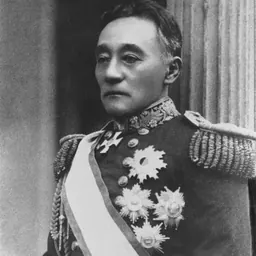
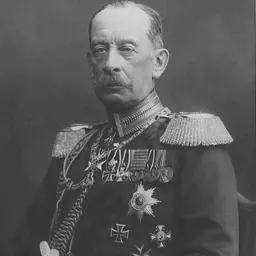


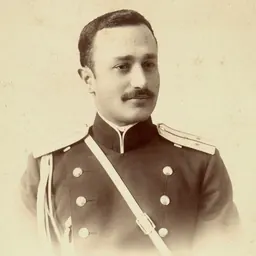

Contemporaries
People whose lives overlapped Ōura Kanetake's
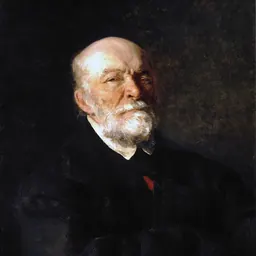


Frequently asked questions
Who was Ōura Kanetake?
Japanese politician
When was Ōura Kanetake born?
Ōura Kanetake was born on 15 June 1850 in Miyanojō.
When did Ōura Kanetake die?
Ōura Kanetake died on 30 September 1918 in Hase.
What was Ōura Kanetake's occupation?
Ōura Kanetake was a military personnel and politician.
What was Ōura Kanetake known for?
Ōura Kanetake was known for Ōura scandal.
What nationality was Ōura Kanetake?
Ōura Kanetake was Japanese.
Sources & further reading
Cite this page
APA: Biography.guide. (2026). Ōura Kanetake. https://biography.guide/oura-kanetake/
MLA: "Ōura Kanetake." Biography.guide, https://biography.guide/oura-kanetake/.
Chicago: "Ōura Kanetake." Biography.guide. https://biography.guide/oura-kanetake/.
Data last updated: 2026-09-22 · Spot an error? Report a correction.
Page generated 2026-09-27 05:32 UTC