
About Ottomar Anschütz
Lived 1846 – 1907 (aged 61). Ottomar Anschütz was a German photographer, inventor, engineer, film director and publisher.
Ottomar Anschütz (16 May 1846 – 30 May 1907) was a German inventor, photographer, and chronophotographer.
He is widely seen as an early pioneer in the history of film technology. At the Postfuhramt in Berlin, Anschütz held the first showing of life sized pictures in motion on 25 November 1894.
Career Anschütz studied photography between 1864 and 1868 under the well-known photographers Ferdinand Beyrich (Berlin), Franz Hanfstaengl (Munich) and Ludwig Angerer (Vienna). He received recognition for his photograph of John of Saxony on horseback in 1867. He then took over his father's company in Lissa, mainly working as a portrait photographer and as a decorative painter.
Anschütz made his first instantaneous photographs in 1881. He developed his portable camera that allowed shutter speeds as short as 1/1000 of a second in 1882. He made a name for himself with sharp photographs of imperial military demonstrations in Breslau in 1882 and gained more fame with pictures of flying white storks (Ciconia ciconia) in 1884—the first photographs of birds in the wild. He organized exhibitions of his work at the Berlin Kriegsakademie and the Düsseldorf Kunsthalle. In 1885, Anschütz started working on chronophotography, leading to very successful exhibitions of motion pictures with his Electrotachyscope from 1887 onward (see below). Anschütz made pictures of the firing of cannonballs at 76 millionths of a second with a shutter that he patented on 11 November 1888 as the Brennebenen-Verschluß, marketed in cameras by C.P. Goerz & Co for almost 30 years. Anschütz designs at least three different camera models for the company in collaboration with Carl Paul Goerz.
Motion picture work
Anschütz started making chronophotographs of horses with 12 cameras in 1885, sponsored by the Prussian minister of Culture. He continued the motion studies of horses with 24 cameras under assignment of the Ministry of War at Königlichen Militärreitinstitut (Royal Military Institute) in Hannover during 1886, resulting in over one hundred series of sequential photographs.
In 1886, Anschütz developed the Electrotachyscope, an early device that displayed short motion picture loops with 24 glass plate photographs on a 1.5 meter wide rotating wheel that was hand-cranked to the speed of circa 30 frames per second. Each image was illuminated by a sparking spiral Geissler tube and displayed on a small opal glass window in a wall in a darkened room for up to seven spectators. Different versions were shown at many international exhibitions, fairs, conventions and arcades from 1887 until at least 1894. From 1890 onward, Anschütz also demonstrated a coin-operated cylindrical Electrotachyscope with six small viewing screens. Starting in 1891, some 152 examples of a coin-operated peep-box Electrotachyscope model were manufactured by Siemens & Halske in Berlin and sold internationally.
Awards Bronze medal at the 1883 photographic exhibition in Brussels Silver medal at the 1889 Photographischen Jubiläumsausstellung in Berlin Gold medal at the 1900 Photographischen Ausstellung in Berlin
Anschütz' many international motion picture exhibitions between 1887 and 1894 probably inspired many other pioneers in the history of film technology. Although there's no discrete evidence, Georges Demenÿ most likely saw Anschütz' "Sprechende Porträts" before developing his Phonoscope in 1891. Edison or his employees may have seen the Electrotachyscope (in New York possibly as early as 1887) and their peep-box Kinetoscope machines were probably influenced by the Siemens & Halske type of Electrotachyscope.
Don’t just read it —
keep it.
Full-length biographies made to live with: read them, listen on the way to work, watch them tonight.
- E-book
- Audio
- Video
Instant download · yours to keep · every purchase keeps this site free
Important facts
People in Ottomar Anschütz's life
Named in this biography and alive at the same time




Related people
Same field, nearest in time
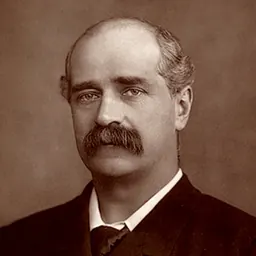
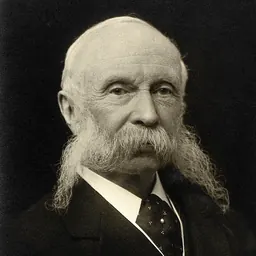
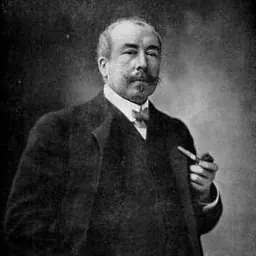



Contemporaries
People whose lives overlapped Ottomar Anschütz's
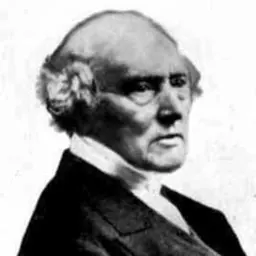



Frequently asked questions
Who was Ottomar Anschütz?
German photographer and inventor (1846–1907)
When was Ottomar Anschütz born?
Ottomar Anschütz was born on 16 May 1846 in Leszno.
When did Ottomar Anschütz die?
Ottomar Anschütz died on 20 May 1907 in Friedenau.
What was Ottomar Anschütz's occupation?
Ottomar Anschütz was a photographer, inventor, engineer, film director and publisher.
What nationality was Ottomar Anschütz?
Ottomar Anschütz was German.
Sources & further reading
Cite this page
APA: Biography.guide. (2026). Ottomar Anschütz. https://biography.guide/ottomar-anschutz/
MLA: "Ottomar Anschütz." Biography.guide, https://biography.guide/ottomar-anschutz/.
Chicago: "Ottomar Anschütz." Biography.guide. https://biography.guide/ottomar-anschutz/.
Data last updated: 2026-09-20 · Spot an error? Report a correction.
Page generated 2026-09-27 05:23 UTC