
About Otto Schott
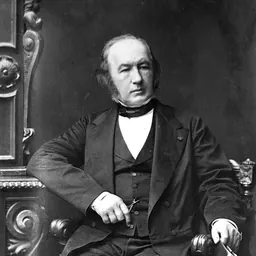
Lived 1851 – 1935 (aged 83). Otto Schott was a German chemist, glassmaker and inventor, known for Borosilicate glass.
Friedrich Otto Schott (1851–1935) was a German chemist, glass technologist, and the inventor of borosilicate glass. Schott systematically investigated the relationship between the chemical composition of the glass and its properties. In this way, he solved fundamental problems in glass properties, identifying compositions with optical properties that approach the theoretical limit. Schott's findings were a major advance in the optics for microscopy and optical astronomy. His work has been described as "a watershed in the history of glass composition". From 1870 to 1873 Schott studied chemical technology at the technical college in Aachen and at the University of Würzburg and at the University of Leipzig. He earned a doctorate in chemistry at Friedrich Schiller University of Jena, specializing in glass science. His doctoral thesis was entitled “Contributions to the Theory and Practice of Glass Fabrication”.
Scientific contributions In 1879, Schott developed a new lithium-based glass that possessed novel optical properties. Schott shared this discovery with Ernst Abbe, a professor of physics at Jena University whose comments on glass had stimulated Schott's interest in the subject.
I recently produced a glass, in which a considerable amount of lithium was introduced, and the specific gravity of which was relatively low. I suspect that such a glass will exhibit excellent optical properties, and I therefore wanted to inquire whether you or one of your colleagues might be willing to test it for refractive index and dispersion to determine whether my above supposition is correct.|Translation of letter dated May 27, 1879.
In response to Abbe's scientific provocation, Schott began a systematic investigation of the properties of glass as the properties varied with the chemical composition. Schott substituted one element for another, such as borate and phosphate for a portion of the silica in the glass and substituting fluoride for oxygen. In 1882, Schott moved to Jena, where he could work more closely with Abbe and Zeiss.
Schott used borosilicate glass to make laboratory and medical supplies, including thermometers, glassware for laboratory use, medicine vials and pharmaceutical tubing. Schott produced domestic glassware under the brandname "Jenaer Glas". He also produced heat resistant lamp cylinders for use in gas lighting. Carl Auer's incandescent gas lamps were first sold in 1894 and became a lucrative source of income for Schott's glassworks. In late 1890s he was also involved in the electrification of the industry in Jena. Schott's business enterprise held a near monopoly on global optical glass from its inception until the start of World War I. The Schott Company's brand became associated with high quality and specialty optics. In 1926, Otto Schott retired from active work at Schott & Gen. Shortly thereafter, Erich Schott took over Otto Schott's responsibilities in managing the company.
Awards and legacy In 1909, Schott received the Liebig Medal from the Association of German Chemists. Otto-Schott-Straße in Jena, Germany, the location of Schott's home, was renamed in Schott's honor. The Schott Glass Museum is on the same premises. Both can be visited. The Schott Glass Museum displays developments in glass science beginning with the innovations of Otto Schott.
Since 1991, the Otto Schott Research Award has been presented every two years to meritorious researchers in the field of glass science and ceramics science. The award is organized and funded by the Abbe Fund of the Carl Zeiss Foundation.
Don’t just read it —
keep it.
Full-length biographies made to live with: read them, listen on the way to work, watch them tonight.
- E-book
- Audio
- Video
Instant download · yours to keep · every purchase keeps this site free
Important facts
People in Otto Schott's life
Named in this biography and alive at the same time


Related people
Same field, nearest in time


Contemporaries
People whose lives overlapped Otto Schott's



Frequently asked questions
Who was Otto Schott?
German chemist, glass technologist, and inventor (1851–1935)
When was Otto Schott born?
Otto Schott was born on 17 December 1851 in Witten.
When did Otto Schott die?
Otto Schott died on 27 August 1935 in Jena.
What was Otto Schott's occupation?
Otto Schott was a chemist, glassmaker and inventor.
What was Otto Schott known for?
Otto Schott was known for Borosilicate glass.
What nationality was Otto Schott?
Otto Schott was German.
Sources & further reading
Cite this page
APA: Biography.guide. (2026). Otto Schott. https://biography.guide/otto-schott/
MLA: "Otto Schott." Biography.guide, https://biography.guide/otto-schott/.
Chicago: "Otto Schott." Biography.guide. https://biography.guide/otto-schott/.
Data last updated: 2026-09-20 · Spot an error? Report a correction.
Page generated 2026-09-27 05:31 UTC