
About Otto Niemeyer
Lived 1883 – 1971 (aged 87–88). Otto Niemeyer was a British banker and politician.
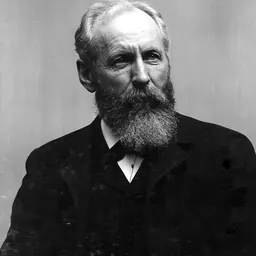
Sir Otto Ernst Niemeyer (23 November 1883 – 6 February 1971) was a British banker and civil servant. He served as a director of the Bank of England from 1938 to 1952 and a director of the Bank for International Settlements from 1931 to 1965.
An Oxford graduate, Niemeyer began working for HM Treasury in 1906 and rose rapidly through the ranks, finishing his time there as controller of finance (1922–1927). He was recruited to the Bank of England by Montagu Norman, and represented the bank at the League of Nations and on a number of missions overseas. His visit to Australia in 1930 contributed to a political crisis that resulted in the Australian Labor Party split of 1931 and the collapse of James Scullin's government.
Personal life Niemeyer was born in Streatham, London, the eldest of three children born to Ethel (née Rayner) and Ernst August Wilhelm Niemeyer. His mother was English. His father, originally from Hanover, Germany, arrived in Britain in 1870 and became a naturalised subject. Niemeyer attended St Paul's School, London before going on to Balliol College, Oxford. He married a distant cousin, Sophie Niemeyer, in 1910, and they had four children together. He retired to Lindfield, Sussex, dying there in 1971 at the age of 87.
Career
Treasury Niemeyer joined HM Treasury in 1906. He rose rapidly through the ranks, becoming deputy controller of finance in 1920 and controller of finance in 1922, succeeding Basil Blackett. He held that position until 1927, serving as the chief adviser to the Chancellor of the Exchequer on financial matters. He took Blackett's place on the financial committee of the League of Nations. According to Frederick Leith-Ross, Niemeyer was "the outstanding Treasury official of the post-war years". His advice was instrumental in the introduction of the British Gold Standard Act 1925, which saw the country return to the gold standard. He left the Treasury at the age of 44, feeling he could advance no further within the department. Niemeyer was elected an executive director of the bank in 1938, alongside Cameron Cobbold, and was briefly mooted as successor to Norman in 1944; his candidacy was vetoed by Winston Churchill. He often filled a sort of diplomatic role for the bank, touring a number of different countries in order to provide advice to foreign governments and check up on the bank's debtors. In this capacity he toured Australia and New Zealand (1930), Brazil (1931), Argentina (1933), India (1936), and China (1941).
Economic historian Alex Millmow has commented that, when Niemeyer, his adviser Professor Theodore Gregory, and assistant Raymond Kershaw (an Australian economist) arrived in July 1930 they were unaware of the political storm they were to cause, for Niemeyer would bring English orthodox economics down on Australia's head. The high point of Niemeyer's tour was his address at the Melbourne Conference of Commonwealth and State leaders, where he said that the 'cold facts must be faced' ... 'In short, Australia is off budget equilibrium, off exchange equilibrium, and faced by considerable unfunded and maturing debts both internally and externally, in addition to which she has on her hands a very large program of loan works for which no financial provision has been made'. He warned Australia had two years 'to get its house in order' before a tranche of external debt matured in 1932. He believed Australians were too optimistic about the country's prospects.
He was critical of Australia's overconfidence and essentially said that Australia was "living beyond its means" and had become prosperous through "mistakes"; that Australians would have to "accept a lower standard of living"; that Australia should continue to exist only as a means to supply Britain with goods; and that its protectionist attitude was deviating Australia from its true purpose.
The federal and state heads of government gave mixed responses to Niemeyer's plan. The governments of Australia later met to negotiate a compromise in 1931, known as the Premiers' Plan. Populists like Jack Lang and former prime minister Billy Hughes decried Niemeyer's diagnosis and therapy. Anti-English and anti-German sentiment were both at play in the general public rejection of Niemeyer's advice, as well as anti-Semitism (it being wrongly assumed that he was Jewish). He was seen as promoting the interests of wealthy overseas bankers at the expense of the Australian people, who were struggling to cope with the Great Depression.
Other activities and honours Outside the Bank of England, Niemeyer was a director of the Bank of International Settlements from 1931 to 1965, at the same time as Walther Funk (1938–1939), serving as chairman from 1937 to 1940 and vice-chairman from 1940 to 1946. He helped set up the National Association for Mental Health, serving as provisional chairman from 1943 to 1946. He was a governor of St Paul's School, Marlborough College, and the London School of Economics, serving as chairman of LSE from 1941 to 1957. Niemeyer was appointed Companion of the Order of the Bath (CB) in 1921, Knight Commander of the Order of the Bath (KCB) in 1924, and Knight Grand Cross of the Order of the British Empire (GBE) in 1927.
Don’t just read it —
keep it.
Full-length biographies made to live with: read them, listen on the way to work, watch them tonight.
- E-book
- Audio
- Video
Instant download · yours to keep · every purchase keeps this site free
Important facts
People in Otto Niemeyer's life
Named in this biography and alive at the same time




Related people
Same field, nearest in time

Contemporaries
People whose lives overlapped Otto Niemeyer's



Frequently asked questions
Who was Otto Niemeyer?
British banker
When was Otto Niemeyer born?
Otto Niemeyer was born in 1883 in Streatham.
When did Otto Niemeyer die?
Otto Niemeyer died on 6 February 1971 in Lanester.
What was Otto Niemeyer's occupation?
Otto Niemeyer was a banker and politician.
What nationality was Otto Niemeyer?
Otto Niemeyer was British.
Sources & further reading
Cite this page
APA: Biography.guide. (2026). Otto Niemeyer. https://biography.guide/otto-niemeyer/
MLA: "Otto Niemeyer." Biography.guide, https://biography.guide/otto-niemeyer/.
Chicago: "Otto Niemeyer." Biography.guide. https://biography.guide/otto-niemeyer/.
Data last updated: 2026-09-25 · Spot an error? Report a correction.
Page generated 2026-09-27 05:10 UTC